Gaza Herald – The cooking gas sector in Gaza faced a severe crisis, officials reported Thursday, with only 20% of the needed supply reaching the enclave and 65% of distribution stations destroyed. The Palestinian Petroleum Authority estimated the sector’s monthly requirement at 8,000 tons, or roughly 260 tons per day, to meet the bare minimum for residents.
During a press briefing, Authority head Eyad Al-Shurbaji revealed that over the past four months, only 361 truckloads of gas, about 7,000 tons, entered Gaza, enough for less than a month’s supply. Families were forced to wait over three months for a single 8-kilogram cylinder, far exceeding its normal three-week consumption period.
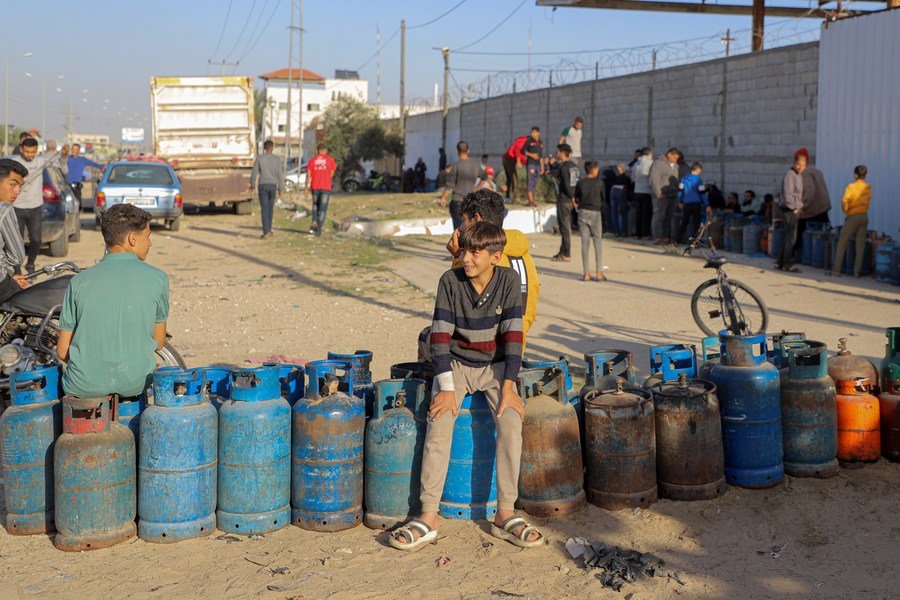
The scarcity fueled black-market activity, as some residents sold their quotas and a portion of gas leaked into unauthorized outlets. Distribution was strictly limited: stations received only 30 cylinders each, down from 100, while individual distributors could fill just one cylinder per trip. Officials implemented weighing systems at distribution points to enforce transparency and curb abuses.
The electronic registration system covered half a million beneficiaries, allowing residents to select authorized distributors online. Allocation favored southern and central Gaza with 60% of gas, while northern Gaza and the city of Gaza received 40%, reflecting population density.
Fuel supplies were equally dire. Before the war, Gaza required 30 million liters per month, half for electricity generation and half for commercial needs. Currently, only 1-3 million liters entered monthly, just 3-10% of demand, distributed under strict humanitarian priorities including hospitals, bakeries, and vital facilities under UN supervision.
Al-Shurbaji urged authorities, particularly the Gaza Management Committee, to take immediate action. He emphasized that the Petroleum Authority remained ready to provide technical expertise to manage the sector efficiently and equitably, stressing that the ongoing shortages posed a major threat to civilian life and essential services across Gaza.