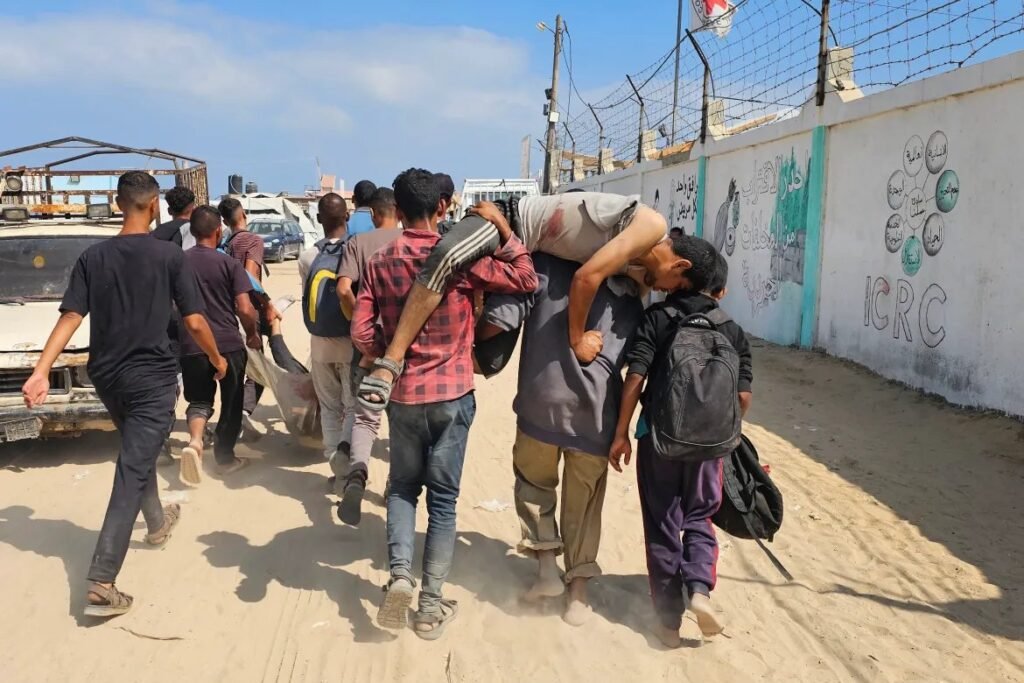
Gaza Herald_ The Israeli war on Gaza has produced one of the largest waves of disabilities in the history of the conflict, after deploying unprecedented firepower and highly explosive weapons that targeted densely populated areas.
With the total collapse of the health system, the shutdown of hospitals, and the prevention of medical teams and vital surgical supplies from entering Gaza, injuries that could have been treated have turned into permanent disabilities.
Amid the absence of rehabilitation services, reconstruction efforts, and the breakdown of the social and economic system, thousands of wounded Palestinians with disabilities face an unbearably harsh reality, where pain becomes a daily way of life and the search for a wheelchair becomes a battle in itself.
A Harsh Reality
Community activist and specialist in the rights of the wounded and people with disabilities, Zarif al-Ghurra, believes that the situation of people with disabilities in Gaza after the war has become one of the most neglected and brutal humanitarian files. Thousands of wounded civilians live without prosthetic limbs or physical therapy, causing disabilities to worsen daily instead of improving.
Al-Ghurra told the Palestinian Information Center that amputation cases alone have created a deep societal crisis: children have lost limbs at ages when they need play and movement the most, and young men who once supported their families can no longer walk, leading to widespread economic and social collapse.
He noted that paralysis in its various forms has become a permanent reality for hundreds of cases that did not receive immediate treatment. The collapse of the health sector has turned many simple injuries into lifelong disabilities.
Al-Ghurra explained that sensory disabilities—especially loss of vision and hearing—inflict a double shock on survivors, as they lose not only their senses but also their tools of communication and learning in a society that lacks an educational environment or proper rehabilitation services.
He added that many wounded people suffer severe disfigurement of the face and body, causing harsh social isolation and urgent need for specialized psychological support—services currently unavailable due to the destruction of hospitals and clinics.
He stressed that war-related psychological disorders, such as PTSD and acute anxiety, have become disabilities affecting behavior, school discipline, and communication, particularly among children who now live with no routine and no safe environment.
Al-Ghurra warned that the interruption of essential medications for people with chronic illnesses has led to the deaths of some and worsened disabilities for others, especially among those with epilepsy or muscular dystrophy. Immediate medical intervention is crucial to save what can still be saved.
He called on international institutions to act immediately to bring in prosthetics and medical supplies, open safe corridors for the evacuation of the wounded, and establish a permanent international fund for the rehabilitation of people with disabilities in Gaza.
A Collapsed Infrastructure
For his part, Director-General of the Gaza Ministry of Health, Munir al-Bursh, said that the unprecedented medical challenges facing health teams in treating the wounded, especially the massive increase in amputation cases since the start of the Israeli military campaign, are overwhelming.
In an interview with the Palestinian Information Center, al-Bursh revealed that the brutal conditions imposed by the assault have placed doctors in impossible situations, noting that amputation has often become the only option to save a wounded person’s life due to the lack of necessary medications and surgical capabilities.
He explained that hospitals are suffering from extreme shortages of medicines and antibiotics after Israel prevented the entry of essential and emergency items, leading to the spread of “antibiotic-resistant microbes” among the injured, forcing doctors to resort to amputation as an emergency measure.
Al-Bursh added that the health infrastructure has collapsed widely, with nearly half of Gaza’s hospitals out of service and a large number of rehabilitation and physical therapy centers shuttered. This has halted long-term rehabilitation programs for wounded individuals who require continuous care.
He disclosed that the Ministry of Health has recorded 6,000 amputation cases since the beginning of the war, including children, women, and youth, all in need of physical therapy and prosthetic limbs that are unavailable within Gaza.
He noted that the number of wounded whose lives have been irreversibly altered, with cases including amputation, paralysis, and sensory and mobility disabilities, has reached 42,000 survivors.
According to al-Bursh, this group faces the real risk of losing mobility or independence for life unless rehabilitation services are urgently restored.
He stated that more than 12,500 patients and wounded individuals require immediate travel for treatment unavailable in Gaza, particularly those with paralysis, spinal injuries, deep burns, and complex limb amputations requiring advanced surgeries and prosthetics.
Al-Bursh said that most evacuation requests remain pending due to Israeli delays in issuing permits, despite being submitted through WHO mechanisms and meeting strict medical procedures.
He highlighted that hundreds of children have fallen ill and even died while awaiting approval to leave for treatment, stressing that these delays amount to a “death sentence” for many patients who cannot afford to wait.
He called on the international community to intervene urgently, open safe corridors for the entry of medicine and medical supplies, allow patient evacuation without delay, and provide emergency rehabilitation programs for thousands of amputees and people with new disabilities created by the war.