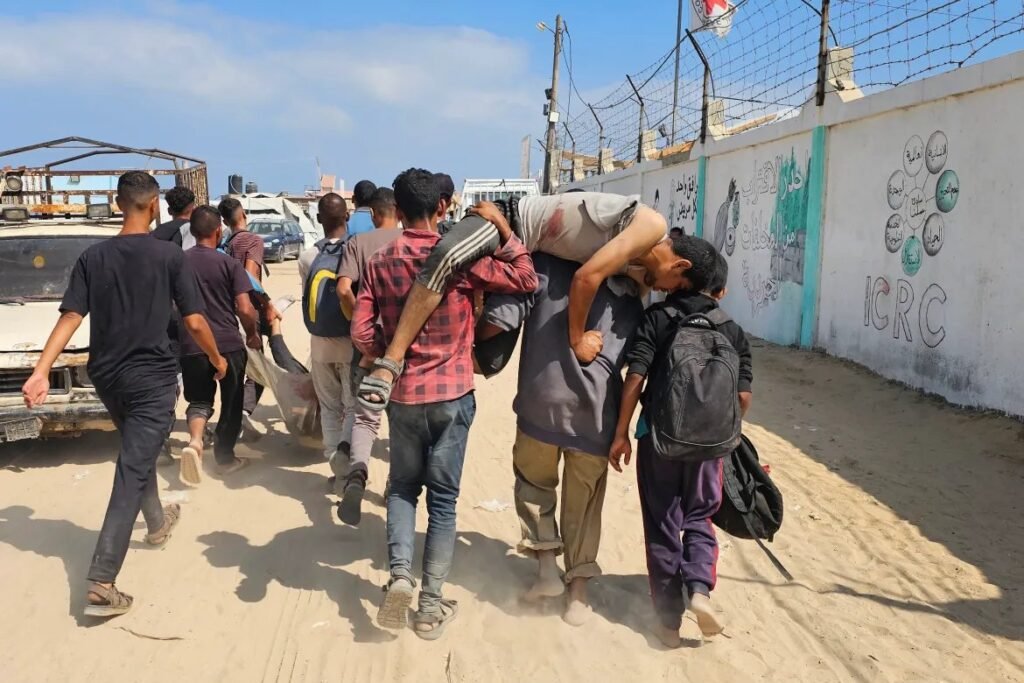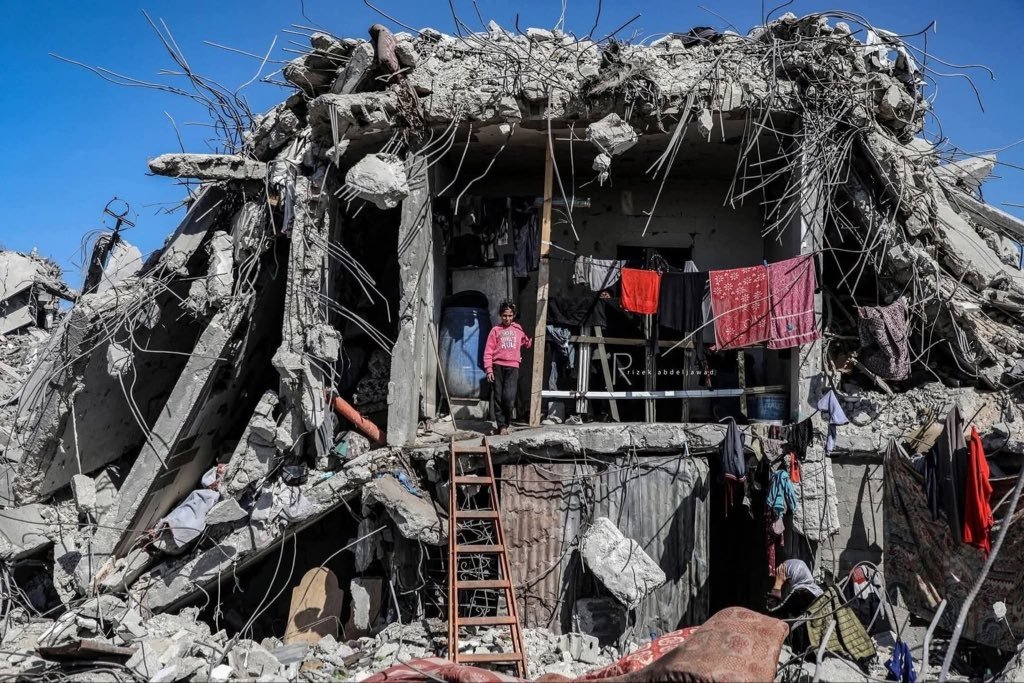
Gaza Herald_ Warnings of a sweeping health and humanitarian collapse are intensifying across the Gaza Strip as the devastation of Israel’s genocidal war continues to cripple every part of civilian life. Communities are facing disintegrating infrastructure, escalating environmental hazards, and rapidly deteriorating medical conditions as essential systems break down.
In Khan Younis, residents in the Al-Amari neighborhood report rising wastewater levels mixed with recent rainfall, forming polluted pools that threaten to spill into nearby homes. Locals say the destruction of sewage and drainage networks has created an imminent environmental disaster, one that could worsen as winter advances and repairs remain impossible under current conditions.
Gaza’s Network of Civil Society
Organizations stated that the enclave is still experiencing what it described as “a real famine,” explaining that humanitarian aid entering through border crossings meets less than a third of the population’s basic needs. UNRWA, despite losing numerous staff and facilities, continues to anchor humanitarian operations in the Strip, though many of its shelters and offices have been bombed or severely damaged.
Stefanos Fotio, director of the UN Food Systems Coordination Center, called for Gaza’s border crossings to be fully reopened so that shattered food supply chains can begin to recover, allowing essential goods, particularly food and medical supplies, to enter without obstruction.
UNRWA estimates that roughly 75,000 displaced Palestinians are now seeking refuge in more than 100 of its heavily compromised buildings. Overcrowding, scarce clean water, limited food, and rampant disease fueled by broken sanitation systems have created what the agency described as “extremely harsh” and increasingly unlivable conditions. The organization warned that without immediate international intervention, Gaza’s humanitarian collapse will be irreversible.
A UN deputy spokesperson reported that approximately 81 percent of Gaza’s buildings and urban structures have been destroyed, calling the scale of devastation “unprecedented in modern history.” The United Nations has formally classified Israel’s campaign in Gaza as an act of genocide, underscoring the catastrophic impact on civilian life.
Civil Defense spokesperson Mahmoud Basal said that unexploded ordnance scattered across the Strip has created a deadly landscape. Vast numbers of bombs, shells, and missiles that failed to detonate now pose life-threatening risks to families, especially children, and he stressed that Gaza lacks the specialized teams and advanced equipment needed to safely remove them.
The Guardian released a detailed analysis calling Gaza “the most difficult humanitarian mission in modern warfare.” According to the report, nearly sixty-one million tons of debris now blanket the territory, and an estimated ten thousand people remain buried beneath the rubble, though the true number may reach fourteen thousand. With Israel blocking the entry of heavy machinery, rescue workers are forced to dig manually using shovels and pickaxes. During the sixteen-day ceasefire, only four hundred seventy-two bodies were recovered.
The report added that seventy-seven percent of Gaza’s road network has been destroyed. Clearing the mountains of debris could take over seven years, especially with the widespread presence of unexploded munitions, which have caused 147 fatal incidents since October 2023, killing fifty-two people.
On the political front, UN Secretary-General António Guterres said the United Nations is seeking to expand humanitarian access and strengthen the fragile ceasefire. Speaking at the Doha Social Development Summit, he confirmed that the Security Council is reviewing a U.S.-proposed resolution to create an international stabilization force in Gaza. He emphasized that any governing or security body established in the Strip must derive its legitimacy from the United Nations and called for a credible political process that guarantees Palestinian self-determination and ends the occupation through a two-state framework.
Reports indicate that the United States distributed the draft resolution to Security Council members on Monday, suggesting that the international force should operate in Gaza for a minimum of two years.
Meanwhile, U.S. intelligence chief Tulsi Gabbard arrived in Israel to oversee the implementation of the ceasefire and discuss post-war planning. Israeli media outlet Israel Hayom reported that Gabbard met with Prime Minister Benjamin Netanyahu and top security officials to address issues including the northern front with Lebanon, regional tensions involving Iran, and the second phase of the ceasefire agreement.
According to Gaza’s Government Media Office, the Israeli military has carried out roughly two hundred violations since the ceasefire began on October 10, highlighting the fragility of the truce and the ongoing suffering endured by Gaza’s population amid one of the worst humanitarian disasters in contemporary history.