Gaza Herald- The moral decay of Israel’s war on Gaza has reached a point where the horror of rape no longer shocks; only the exposure of it does. What should have been a national reckoning over the atrocity instead became a campaign to protect the perpetrators and vilify those who dared to tell the truth.
When a video surfaced last year showing Israeli soldiers raping a blindfolded Palestinian prisoner inside the notorious Sde Teiman detention camp, the outrage in Israel was immediate, but not over the assault. The fury was aimed at the leak itself.
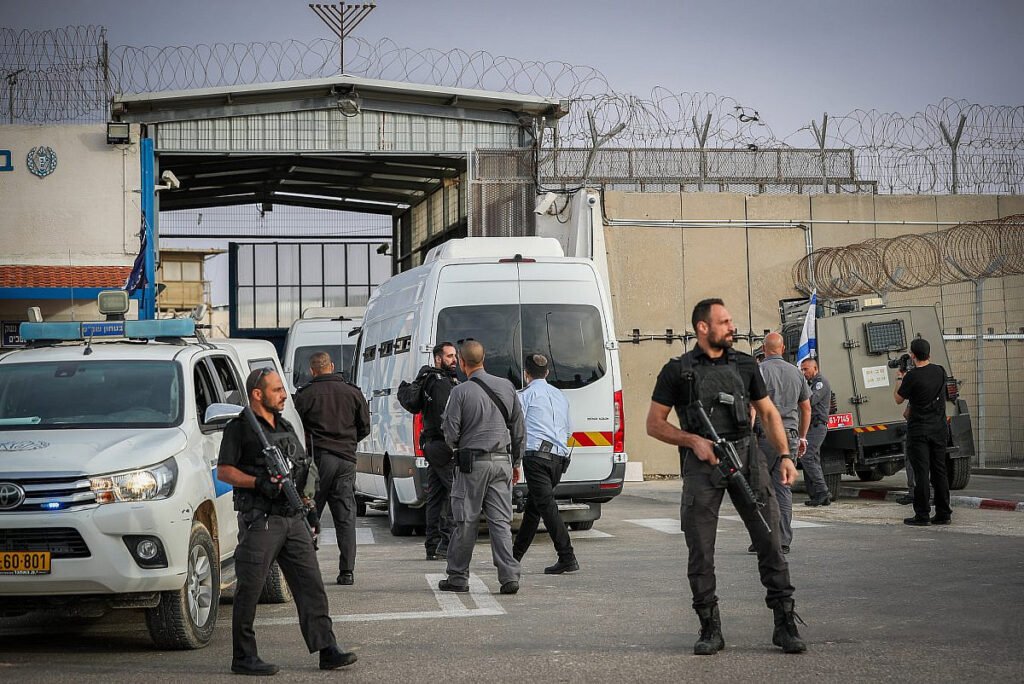
Last week, Yifat Tomer-Yerushalmi, Israel’s military advocate general, resigned after admitting to leaking the CCTV footage. In it, heavily armed soldiers are seen dragging a restrained Palestinian man into a corner before surrounding him with riot shields as they gang-raped him. The victim, according to reports, was later returned to Gaza with a ruptured bowel, lung damage, broken ribs, and injuries consistent with anal penetration.
For this act of exposure, Tomer-Yerushalmi was branded a traitor. Far-right politicians accused her of “betraying” the army. Members of Force 100, the same counterterrorism unit implicated in the assault, released a statement proclaiming, “You tried to break us, but you forgot one thing: we are Force 100.” Their defiance was chilling, their pride unmistakable.
Even as evidence of the assault circulated, Israel’s political elite rushed to defend the soldiers. Finance Minister Bezalel Smotrich denounced Tomer-Yerushalmi for “collaborating in blood libels against the state of Israel.” The accused soldiers held a press conference of their own. not to express remorse, but to demand compensation for “damage to their image.”
A moral reckoning that never came
In a nation that claims to uphold “the rule of law,” such a revelation should have prompted deep moral reflection. Instead, it exposed how normalized the dehumanization of Palestinians has become and how sexual violence now functions as another weapon in Israel’s machinery of occupation.
Outside the High Court, the four masked soldiers boasted that they remain free. “We will prevail,” they said, their faces hidden to evade the International Criminal Court. Prime Minister Benjamin Netanyahu’s response was to call the leak “perhaps the most severe propaganda attacks the state of Israel has experienced since its establishment.” His outrage was directed not at the rapists, but at the woman who revealed their crime.
This inversion of morality is no aberration. It is the logical outcome of a system built on impunity. A recent report by the Israeli human rights group B’Tselem, titled Welcome to Hell, detailed systematic torture and sexual abuse of Palestinian detainees during Israel’s genocidal war on Gaza.
Fifty-five survivors described being beaten, burned with cigarettes, electrocuted, deprived of sleep, and sexually assaulted. One man, Fadi Baker, recounted how soldiers attached clamps to his genitals, tied them to heavy objects, and left him naked in a freezing cell with loud music blasting for days.
The United Nations Human Rights Office has recorded dozens of Palestinian deaths in Israeli custody since October 2023, evidence of a pattern, not an exception.
A system built on impunity
Every time abuse surfaces, Israel’s political class closes ranks. Far-right Knesset members storm military bases, threaten investigators, and denounce the army’s legal corps as “traitors.” On social media, mobs call for the execution of those who expose the crimes. In this atmosphere, justice is impossible because the crime itself is state policy.
From Sde Teiman to the prisons of the Negev, torture and sexual assault have become instruments of control and humiliation. The Israeli claim of being “the most moral army in the world” has been exposed as propaganda designed to mask systemic atrocities.
The leak of the rape footage has therefore done more than reveal a single act of brutality. It has torn through Israel’s myth of moral exceptionalism. What it showed is a society desensitized to Palestinian suffering, where the act of documenting a crime is treated as treason, and the crime itself as heroism.
The silence that enables the crime
In Israel today, the real scandal is not that a Palestinian was raped in custody, but that someone dared to show it. The state’s fury at exposure reflects a deeper rot: a culture that equates justice with betrayal and confuses image with morality.
This is what impunity looks like: a nation that punishes truth-telling and sanctifies violence. In this society, the humanity of the Palestinian is denied even in death, even in violation.
Until Israel confronts the crimes it celebrates and the dehumanization it has institutionalized, there can be no justice and no peace. For now, the only crime that truly matters in Israel is revealing the truth.