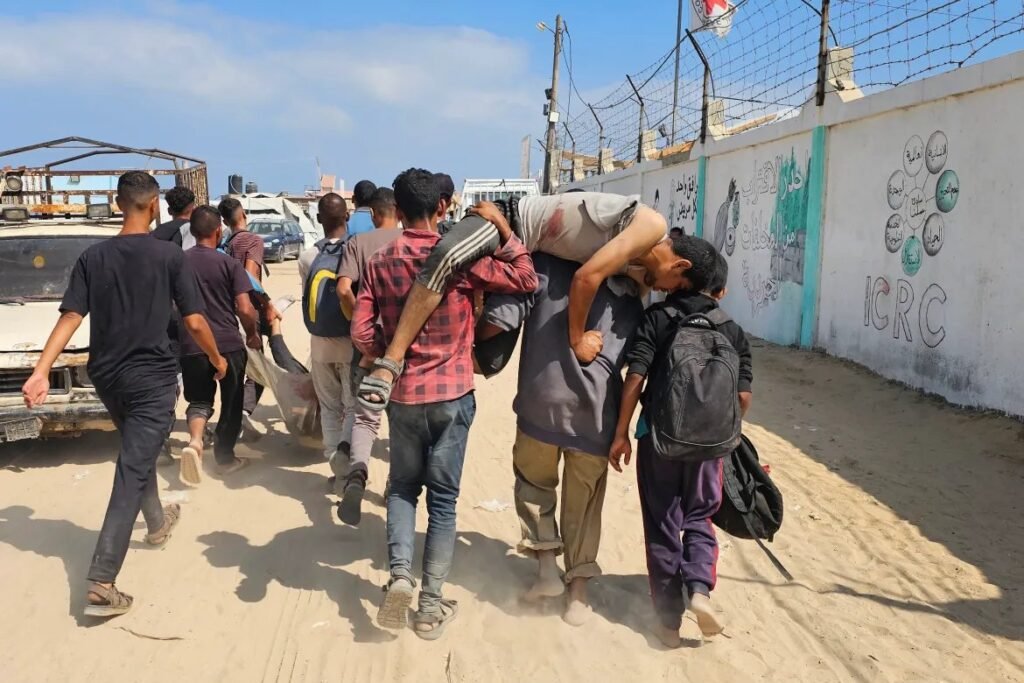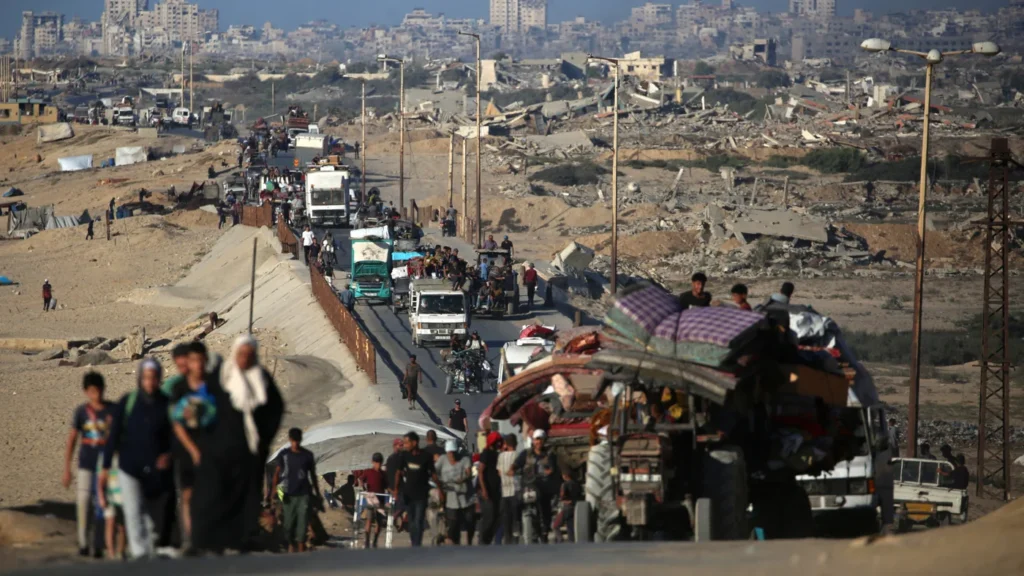
Gaza Herald_After nearly two years of relentless bombardment and starvation, a ceasefire agreement between the Palestinian resistance and the Israeli occupation has finally taken effect in the Gaza Strip. The deal, achieved through mounting regional and international pressure, has brought a fragile calm, one filled with cautious anticipation and weary hope.
While many nations, including Arab and Islamic countries, have hailed the truce as a humanitarian reprieve, Palestinians remain skeptical. The questions loom large: Can the ceasefire hold? Will this agreement pave the way toward lasting peace, or is it merely a pause before Israel resumes its genocidal campaign?
This report explores these questions through insights from two Palestinian political analysts, offering an unfiltered look at the challenges and possibilities that define Gaza’s next phase.
Phases of the Agreement and Prospects for Continuity
Palestinian writer and political analyst Mohammed Al-Qeeq believes the first phase of the ceasefire is likely to proceed without major disruption despite Israel’s refusal to release several prisoners demanded by the resistance. He argues that this stage serves the interests of all involved Palestinians, Israelis, and mediators alike.
However, Al-Qeeq expressed doubts that the second phase will be completed, clarifying that this does not necessarily mean an immediate return to war. Instead, he predicts long and complex negotiations reminiscent of past truce phases, but on a broader scale.
He explained that progress in this second stage will be gradual:
“If the talks move quickly, that would mean the Palestinians are shaping a governing body in Gaza according to the resistance’s vision, something that directly contradicts the Trump-Netanyahu project and could trigger another confrontation that no one truly wants.”
Al-Qeeq believes the coming months will be marked by slow, intricate talks unless Netanyahu decides to “flip the table” and resume his war and displacement plans — a move that remains possible given his political desperation. Yet, he notes that such recklessness is increasingly constrained by the involvement of multiple regional actors, especially the eight Arab and Islamic countries that backed Hamas’s stance on the Trump plan, led by Türkiye.
He also highlights that with Western European governments now involved and Israel’s main pretext for war — the capture of Israeli soldiers, eliminated by their release, the political space for renewed genocide has narrowed.
“The Gaza file has become an international issue,” Al-Qeeq warned. “That makes any return to war extremely risky for Netanyahu unless he loses all reason and chooses to ignore the global consequences.”
Still, he did not rule out the possibility of limited airstrikes designed to reassert Israeli dominance and humiliate Palestinians. He also expects Netanyahu to seek new fronts in the region or accelerate annexation plans in the West Bank, noting that the Sharm el-Sheik Conference appeared less about peace with Palestinians and more about normalizing relations between Israel and Arab regimes.
For Al-Qeeq, the only real guarantee of stability lies in Palestinian unity. He emphasized that internal reconciliation is no longer a luxury but a necessity. “Without national dialogue,” he said, “Israel will continue to dictate life in both Gaza and the West Bank.”
He called for elections or a public referendum to define the next stage, protect the Palestinian cause, and prevent foreign interference in Palestinian decision-making.
No Return to Genocide — But New Battles Ahead
Palestinian writer and analyst Ibrahim Al-Madhoun agrees that Israel was forced to halt its genocidal war on Gaza, but warned that Tel Aviv will continue to search for excuses to resume aggression.
He concurred that the all-out campaign of destruction, invasion, and displacement is unlikely to return in its previous form. Instead, the next phase will witness non-military escalation, intense political, media, and security efforts to weaken Hamas and the Al-Qassam Brigades, and to erode their popular legitimacy.
“The coming stage will be complex and difficult,” Al-Madhoun said, stressing the need for an organized Palestinian strategy to prevent a slide back into war. He urged close coordination with mediators, particularly Egypt, Türkiye, and Qatar, to strengthen their deterrent role and counter any Israeli attempts to reignite violence.
He noted that the regional and international environment remains unpredictable, shaped by fluctuating U.S. policies and shifting alliances. Without serious pressure on Washington to restrain Israel, the possibility of renewed escalation cannot be dismissed.
The Road Ahead
What lies beyond the first phase of this truce is uncertain and fraught with danger. The coming period will test Palestinian resilience, political maturity, and unity more than ever before. Developments in Gaza may soon ripple across the region, influencing conflicts and alliances far beyond Palestine.
Yet amid all this, one truth remains: Palestinians will not surrender their homeland. The struggle may take new forms, diplomatic, social, and political — but it continues to rest on the unbreakable foundations of solidarity, dignity, and the collective determination to survive and rebuild.