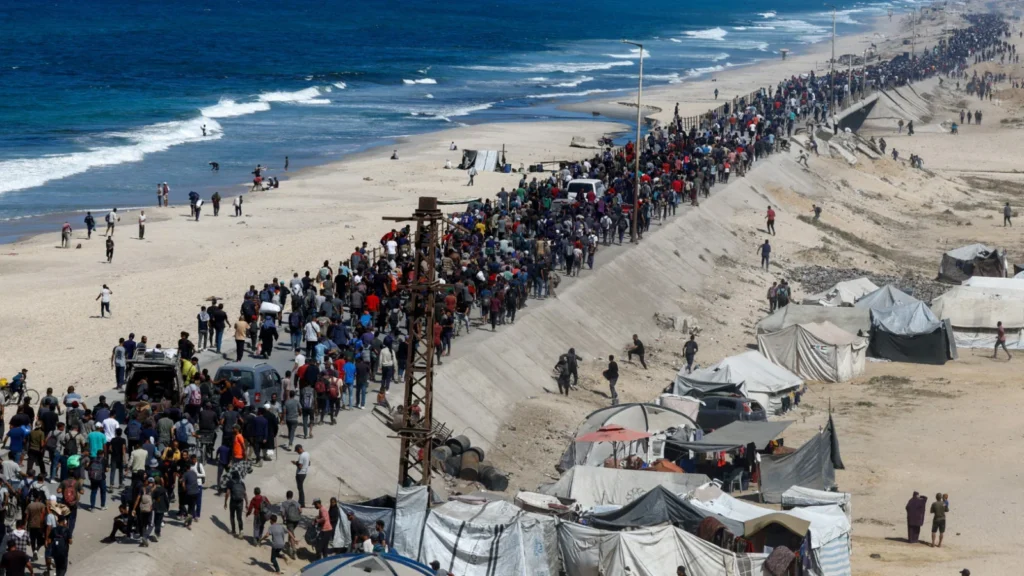
Gaza Herald — As the guns fall silent after two years of relentless bombardment, Gaza City, once the epicenter of destruction, is witnessing the largest movement of return since the war began. More than half a million Palestinians have flooded back into the ruins of their neighborhoods, reclaiming what remains of their homes and lives after the announcement of a ceasefire that many hope will mark the end of Israel’s devastating campaign.
The Gaza Civil Defense confirmed on Saturday that over 500,000 people have returned to the city since the truce took effect on Friday. Spokesperson Mahmud Bassal described “a mass movement” across the battered enclave, signaling both relief and despair as displaced families set up makeshift tents amid the rubble of what was once their community.
Counting the Losses
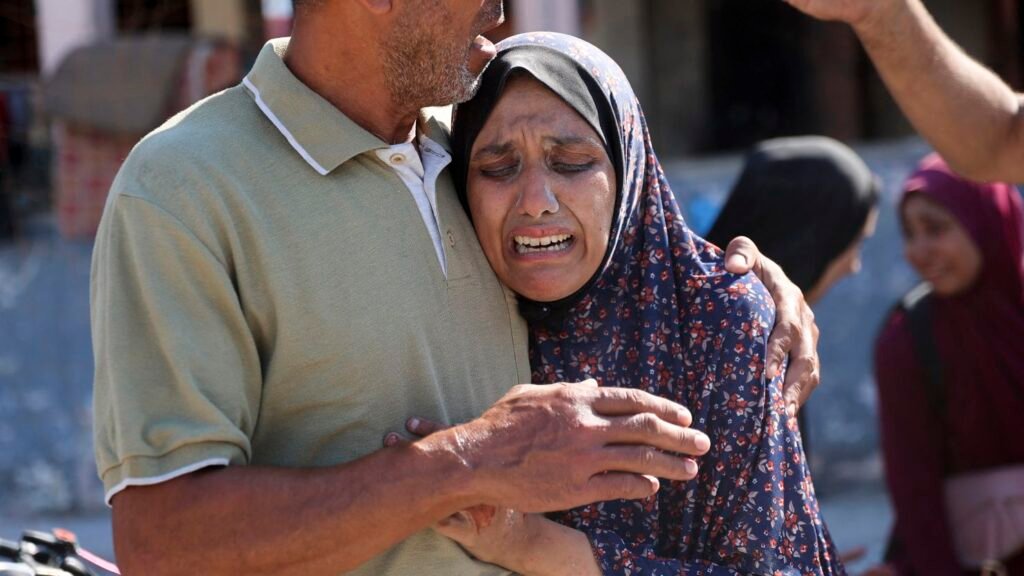
The ceasefire has brought a brief pause, allowing Palestinians to confront the full scale of destruction. Over 67,000 people have been killed in Israel’s assault, according to health officials, while more than 9,500 remain missing under the debris. Civil defense teams, operating with minimal equipment and fuel, have so far recovered the bodies of 155 people and responded to 75 new distress calls since dawn.
The agency has appealed to the International Committee of the Red Cross to coordinate with Israeli authorities to allow access to areas still under occupation, warning that without international intervention, hundreds of bodies may never be retrieved.
Lives Among the Ruins
For those returning to Gaza City, the homecoming is both a victory of endurance and a descent into devastation. Entire neighborhoods have vanished, replaced by vast fields of concrete dust and twisted metal. With aid convoys not expected until Sunday, families are sleeping in tents or under open skies, their only shelter the shattered walls of what once stood as homes, schools, and mosques.
More than 700,000 people were displaced from Gaza City and northern areas during the final months of Israel’s ground invasion. In Khan Younis, the city’s mayor reported that 85 percent of the governorate had been flattened by airstrikes, leaving nearly 400,000 tons of rubble that must be cleared before any reconstruction can begin.
Aid and Political Uncertainty
The ceasefire agreement — brokered through Qatari, Egyptian, and American mediation promises a gradual reopening of Gaza’s border crossings and a significant increase in humanitarian deliveries. Under the first phase of what Washington has called a “20-point peace plan,” crossings will reopen fully on Monday, allowing the entry of 400 aid trucks daily, with the number expected to rise to 600 later in the week.
According to the United Nations, 170,000 metric tons of food, shelter materials, and medical supplies are currently stored in warehouses outside Gaza, ready for immediate dispatch. “What has changed dramatically from yesterday to today is that the guns appear to have been silenced,” said UN spokesperson Stephane Dujarric. “It’s safer for our people to operate.”
The UN Relief and Works Agency (UNRWA), which remains the largest humanitarian actor in Gaza, said its warehouses hold enough supplies to fill 6,000 trucks, enough food to feed every family in Gaza for two to three months. Yet, uncertainty looms over who will be permitted to deliver the aid.
Sam Rose, UNRWA’s Director of Affairs in Gaza, told Middle East Eye that despite the agency’s capacity, Israeli restrictions continue to impede its operations. “We’re ready to move, but the ‘no-contact’ policy prevents our trucks from entering Gaza,” Rose said. “We have food for millions, but we need permission to distribute it.”
He stressed that UNRWA’s decades-long presence in Gaza gives it a unique ability to coordinate fair and efficient aid distribution. “If we are excluded, everyone’s work inside Gaza becomes harder,” he added.
Rebuilding Amid the Rubble
Even as aid discussions continue, the enormity of Gaza’s destruction is beginning to surface. Satellite imagery and municipal assessments suggest that over 70 percent of the Strip’s infrastructure has been damaged or destroyed. Clearing the debris alone could take years.
Still, amid the ruins, Gaza’s people are moving forward. Children have returned to playgrounds that no longer exist, and shopkeepers are reopening stalls on streets carved through rubble. The act of return, for many, is not merely about survival, it is a declaration of belonging.
The return of hundreds of thousands to Gaza City marks a symbolic victory for a population that Israel’s war sought to erase. It is a reminder that, despite famine, displacement, and unimaginable loss, Gaza’s people remain unbroken. As the ceasefire unfolds and the world debates the terms of aid and reconstruction, Palestinians are already rebuilding not only their homes, but their claim to existence. Whether this truce signals genuine peace or merely a pause in the cycle of violence, one truth endures: Gaza’s people are still here, rooted in their land, refusing to disappear.