
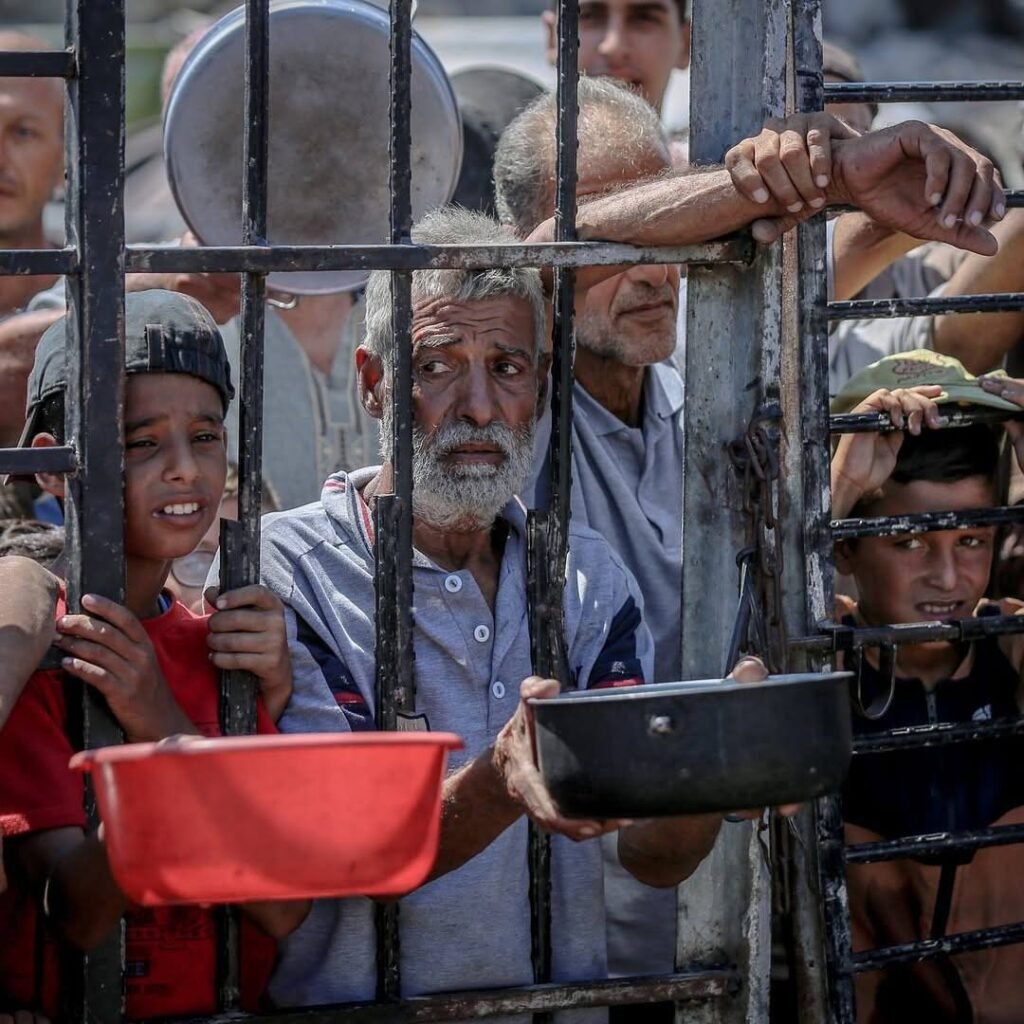
Gaza Herald —Amid the destruction and displacement left by Israel’s ongoing war on Gaza, life has forced Palestinians to reinvent survival itself. With the economy shattered, raw materials scarce, and basic supplies cut off, Gazans have created new professions, born from necessity, grief, and resilience. From rebuilding graves using rubble, to recharging phones with solar panels, to hand-sewing baby diapers, these acts of labor reflect not only survival but defiance in the face of systematic annihilation.
Restoring Banknotes
In Gaza, where banks are closed and money has burned, soaked, or decayed, a new craft has quietly emerged, restoring damaged banknotes. The job, known as currency restoration, involves carefully cleaning old or corroded bills and coins using delicate, non-chemical methods to preserve their value and authenticity. These restorers often work without proper tools, improvising with brushes, fabric, and patience—reviving what war tried to erase.
Grave-Making from Rubble
For 58-year-old Hayat Abu Hatab, grave-making became both livelihood and duty. With cemeteries overflowing and construction materials banned, she and her family crush tiles and stones from bombed homes to use as gravel substitutes. “The number of martyrs keeps rising,” she says, mixing cement with trembling hands. “We build graves from the ruins of their own homes.”
Her grandchildren collect debris, carrying buckets of shattered concrete to help prepare the burial sites. In a Gaza starved of cement and iron, the family’s work has become essential. “Sometimes,” she adds, “we had to bury people in the sand because no graves were ready.”
Bartering and Street Trade
With money scarce and markets destroyed, barter has become the primary means of exchange. Families sell or trade parts of the humanitarian aid they receive—flour, canned food, or clothes—to buy medicine or diapers. “People exchange what they have just to survive,” says one resident from Rafah, who now sells canned goods on a small table in the street.
Lighter Refills
In a place where even fire has become a luxury, residents have turned to refilling disposable lighters as a new means of survival. With Israel banning their entry into the Gaza Strip and the few that make it through selling for as much as $10, Gazans have learned to improvise.
In makeshift workshops or on street corners, men can be seen carefully puncturing used lighters and injecting them with traces of gas salvaged from old canisters. It’s a delicate process; one mistake could cause an explosion, yet it has become a small but vital trade.
For many, these refilled lighters are not just for cigarettes but for cooking, heating, and lighting small fires when no gas, electricity, or kerosene is available. In the absence of normal life, even the faint spark of a lighter has become a symbol of resilience, a flicker of control amid a siege designed to extinguish every flame of survival.
Egg Selling and Firewood Collecting
Because eggs and poultry are banned from entering Gaza, anyone who owns chickens holds a “precious treasure.” Others turn to gathering firewood for cooking. The price of wood varies by tree. Olive wood sells for 2 shekels per kilo, lemon wood for 4, yet even this simple work is risky, especially near border areas or military zones.
Pedal-Powered Tailoring
When electricity and fuel vanished, Gazans turned to pedal power. In Rafah, tailor Naseem Qishta attached his sewing machine to a bicycle wheel, enabling it to operate by pedaling. “It’s the only way to keep working,” he explains. Most who practice this craft are teenagers, adapting creativity to crisis.
Tent-Building and Toilet Construction
Displacement has created new trades. Tent makers like Tamer Barakat, a carpenter turned craftsman, now assemble shelters from wooden poles and plastic sheets for displaced families. “I earn about 100 shekels per tent,” he says, “enough to feed my family.”
Others, like Raed Jabr from Jabalia, have become “toilet builders,” digging small pits and covering them with metal or concrete slabs for makeshift sanitation in the camps. “It’s hard work and needs strength,” he says, “but it’s necessary when thousands live without basic facilities.”
Charging Phones for a Fee
In the refugee camps, solar panels have given rise to a new micro-economy: phone-charging stations. Wael Salama, displaced from Deir al-Balah, charges phones for 1 shekel, power banks for 2, and laptops for 5. “It’s my only income,” he says. “Without electricity, people will pay anything to stay connected.”
Handmade Diapers
With imported diapers unavailable or unaffordable, prices have risen twentyfold. Suhail Abdel-Ghany in Rafah opened a small sewing workshop to produce cloth diapers from cotton and fabric scraps. Each handmade diaper costs just 1 shekel instead of 4. The factory employs displaced women like Umm al-Mu’tasim and Umm Sohaib, who sit behind sewing machines to support their families. “We found a way to feed our children and help other mothers,” they say. “Every stitch is survival.”
Clothing, Cooling, and Water Tank Repair
With Gaza plunged into total darkness for nine consecutive months, the absence of electricity has reshaped daily life and created new trades born of necessity. Residents have turned to solar panels, not as a luxury but as a last resort to keep life going. Small ventures have sprung up some people now offer phone and battery charging services, others run washing machines for a fee, while the most fortunate operate small refrigerators to chill and freeze water bottles. Each bottle bears its owner’s name, a simple mark of survival in a world without power.
Along the coastal road in central Gaza, fifty-year-old Sobhi Hnaideq can be seen heating an iron rod over charcoal embers to repair damaged water tanks, a scene that has become increasingly common. Shrapnel from nearby bombings leaves deep punctures in plastic tanks, forcing families to patch them instead of replacing them.
Two years into Israel’s genocidal war, Gaza’s professions have become more than a means of survival they are an act of defiance, a language of endurance written in dust and blood. Where the world has stripped life of normality, Gazans still build, sew, barter, and mend not because they have the luxury of choice, but because existence itself has become resistance. In the ruins of homes and the shadows of graveyards, people carve out fragments of life from the wreckage, shaping bread from rubble and hope from despair. Every hammer strike, every stitch, every flame that mends what war has shattered is Gaza’s quiet declaration to the world: we are still here.
With new tanks scarce and their prices soaring beyond reach, Hnaideq uses primitive tools, a heated metal rod, a knife, and fire to melt and seal the holes. His method is far from perfect, but it works. From beneath a makeshift tent beside his workspace, he supports his family, one tank at a time, in a city where every drop of water and every flicker of light must be fought for.

