Gaza Herald – Hamas announced Friday its agreement to release all Israeli captives in Gaza, living and dead, under the framework of President Donald Trump’s latest proposal, but firmly rejected any plan that would place Gaza under foreign governance.
The group said the decision came after “in-depth consultations” with Palestinian factions, leadership ranks, and mediators. Hamas reiterated that while it is prepared to hand over the administration of Gaza to a transitional Palestinian technocratic body supported by national consensus and backed by Arab and Islamic states, it will not allow foreign actors or outside governors to rule the enclave.
The announcement followed Trump’s threats on TruthSocial earlier in the day, where he demanded Hamas release all captives by Sunday evening and urged an immediate agreement. Hours later, Trump appeared to soften his stance, writing that Israel must “immediately stop bombing Gaza” to ensure hostages can be released safely. He claimed Hamas’s statement showed readiness for “a lasting peace.”
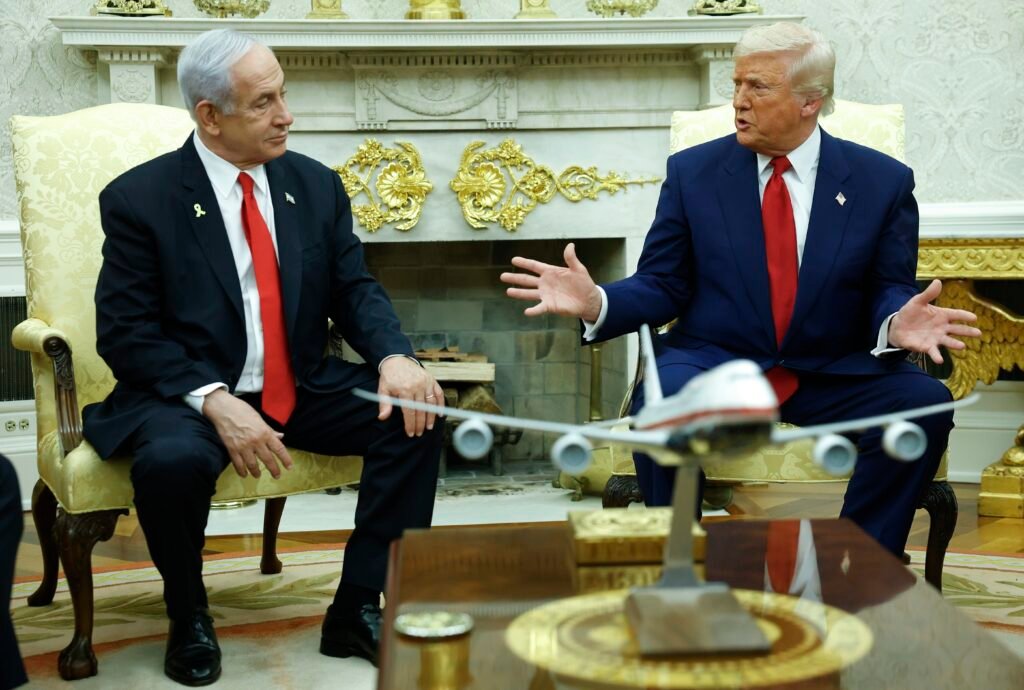
Israeli Prime Minister Benjamin Netanyahu was reportedly caught off guard by Trump’s sudden demand for a halt in bombing, with senior Israeli officials telling Channel 12 that the move surprised the Israeli leadership.
Hamas Rejects Disarmament and Foreign Control
While Hamas accepted the principle of an exchange deal, it made clear it had not agreed to Trump’s 20-point Gaza plan in full. Senior Hamas official Mousa Abu Marzouk told Al Jazeera that the group would never disarm while Israel’s occupation continues. Another representative, Osama Hamdan, stressed to Al Araby TV that Hamas refuses any foreign-imposed governorship, insisting Gaza must be run by Palestinians themselves.
Hamas’s statement also linked any broader discussion of Gaza’s future to a comprehensive national framework based on international law and UN resolutions affirming Palestinian rights, including sovereignty and self-determination.
Controversial Trump Proposal
Trump’s plan, unveiled this week with Netanyahu, was widely denounced by Palestinians as a colonial project that entrenches Israeli dominance. It calls for Gaza to become a “deradicalized, terror-free zone,” overseen by an “International Stabilization Force” and an interim technocratic government monitored by a “Board of Peace” that includes foreign actors such as Tony Blair and pro-Israel billionaires.
Though the plan promises no mass displacement, it envisions Gaza’s redevelopment through what critics describe as a recycled version of Trump’s earlier “Gaza Riviera” scheme. While it stipulates that Israel will not formally annex Gaza, it allows Israel to maintain a security perimeter and withdraw its troops only on conditions tied to demilitarization.
Trump underscored that Netanyahu remained opposed to a Palestinian state. His plan vaguely gestures toward a “future pathway” to self-determination, but only after major restructuring of Gaza and the Palestinian Authority.
Palestinian Concerns Remain
For Hamas, the crux of the disagreement lies in attempts to impose foreign control, erase resistance, and reduce Palestinian sovereignty to vague promises. The group insists Gaza must be run by Palestinians under Palestinian consensus, not an internationally imposed trusteeship.
By making hostage release conditional on field realities and a fair exchange, Hamas signals willingness to negotiate, but not at the expense of surrendering Gaza’s political future to outside powers.