
GazaHerald – Palestinians in Gaza have greeted the latest U.S. proposal to end Israel’s devastating war with anger and skepticism, saying that it strips them of their right to self-rule by placing the enclave under foreign authority.
Unveiled on Monday by U.S. President Donald Trump alongside Israeli Prime Minister Benjamin Netanyahu, the 20-point plan calls for a ceasefire, the release of captives held by Hamas, the disarmament of the Palestinian movement, and a phased Israeli military withdrawal from Gaza.
The proposal also envisions the deployment of a temporary International Stabilization Force (ISF) and the creation of a transitional authority led by Trump, with foreign figures such as former British Prime Minister Tony Blair suggested as participants.
For many Palestinians, this amounts to the dismantling of their national identity.
“This means no Palestinian sovereignty,” said Rajab Qassem, a resident of Deir al-Balah in central Gaza. “The plan turns us into an entity outside Palestine, ruled by outsiders. It denies my right as a Palestinian to be governed by Palestinians, even by the Palestinian Authority, which, for all its faults, is still Palestinian. And this idea of setting up an international committee to govern Gaza as an ‘independent’ entity is absurd.”
Under the plan, Hamas and other resistance factions would have no role in governing Gaza in any capacity. The Palestinian Authority could be given administrative control but only after “reforms” approved by outside powers.
Heavy Demands, No Guarantees
Palestinians also voiced doubts about the enforceability of the plan, noting that while it promises a ceasefire, it offers no binding guarantees to people in Gaza.
The deal would swap the release of captives held by Hamas for 250 Palestinian prisoners serving life sentences and 1,700 men, women, and children detained from Gaza since October 2023. Yet, as Qassem pointed out, it demands far more from Palestinians than from Israel.
“This plan offers no guarantees. It speaks of handing back the captives without even an Israeli withdrawal in return. People are exhausted, but we need something in exchange,” he said.
Even if the deal were implemented, Israel would not fully withdraw. The plan allows for a slow, phased, and conditional pullback, tied to negotiations between Israel, the ISF, and international guarantors. Israel would also maintain a permanent “security perimeter” along Gaza’s boundaries, effectively preserving its control.
“Eliminating the Palestinian Cause”
For many, the political implications are stark. Ghazi al-Majdalawi, a displaced Palestinian from Jabalia, said the plan seeks to erase the Palestinian struggle for statehood.
“The aim of the plan is to eliminate the Palestinian cause, the right of return and the right to self-governance,” he said. “The plan gives Israel everything it wants and denies the Palestinian people their basic rights.”
He added that given Washington’s direct role in supplying weapons to Israel and vetoing UN resolutions to stop the war, Palestinians do not trust the U.S. to act as a fair broker. “As Palestinians, we do not expect Trump to do what is just for Gaza or to meet our needs for security and stability.”
Despite widespread mistrust, some acknowledge that the desperate humanitarian crisis may leave Palestinians with no real choice.
“The plan denies Palestinians their right to defend their land. At the same time, it offers a moment of respite, a chance to rest from the killings and daily suffering,” said Youssef Ayloul, displaced from Gaza City.
Qassem noted the danger of rejecting the proposal outright. “If Hamas rejects the plan, the U.S. might propose something even worse. There are daily massacres. People in tents live in misery. Many cities in Gaza no longer exist. It’s a painful choice, but the situation is unbearable and must end.”
Majdalawi underlined that Palestinians’ immediate priorities remain the same: open the border crossings, allow humanitarian aid, and ensure freedom of movement, and begin reconstruction. “We want Gaza to be rehabilitated so it is fit for life with dignity,” he said.
Still, the desperation is palpable. “If it were up to me rather than the factions, I would approve the current plan, despite its injustice to Palestinians, because ending this war may require sacrificing essential things,” Majdalawi admitted.
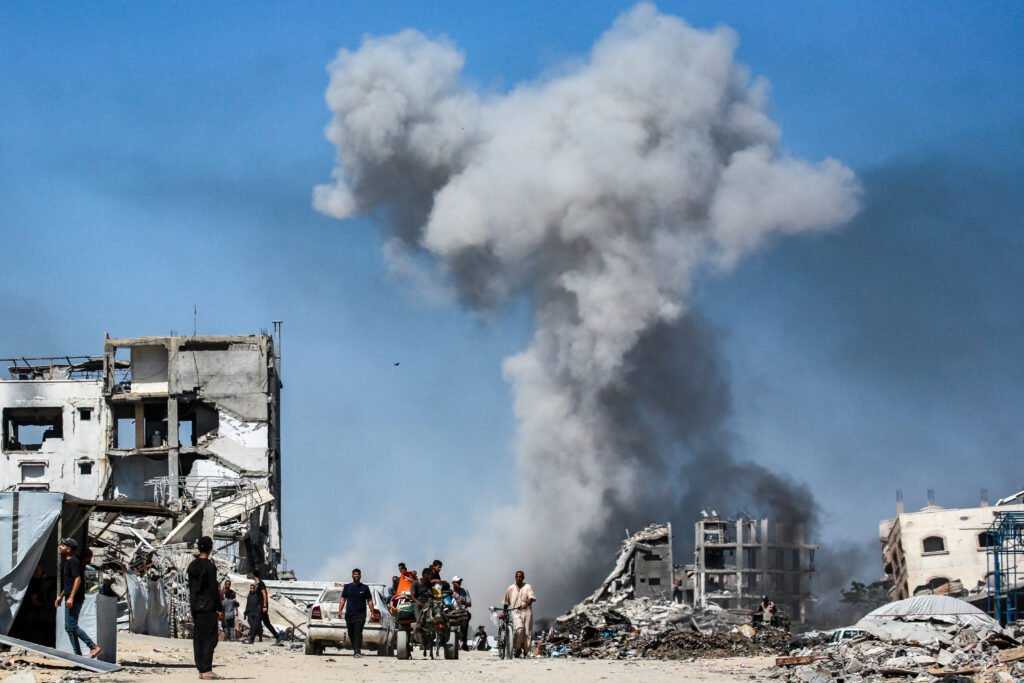
As Gaza reels from near-total destruction, Palestinians face a harrowing dilemma: accept a plan they view as unjust foreign control, or continue suffering under a war that shows no signs of abating. For many, Trump’s proposal does not represent a path to peace but another chapter in the denial of their rights and sovereignty.

