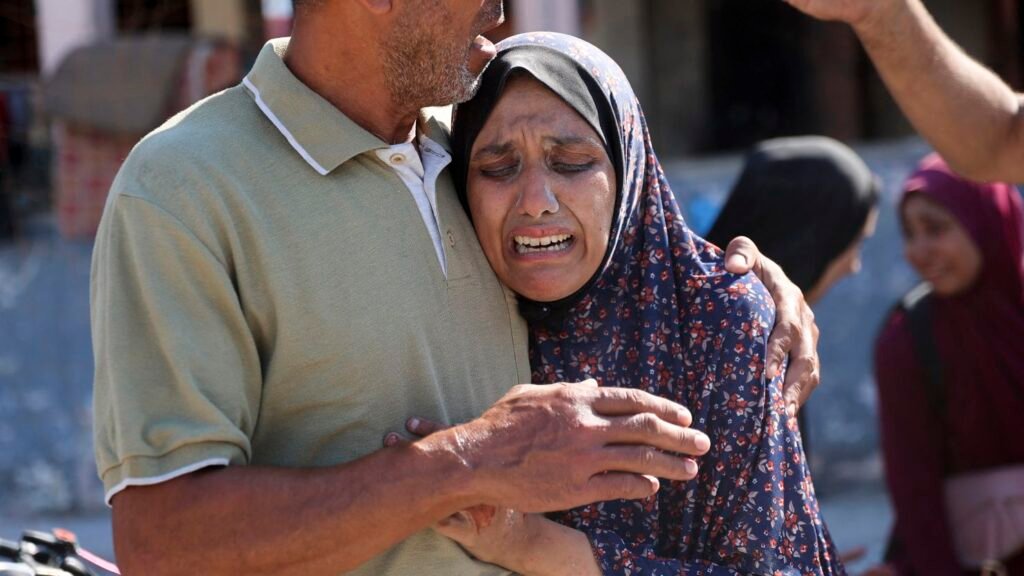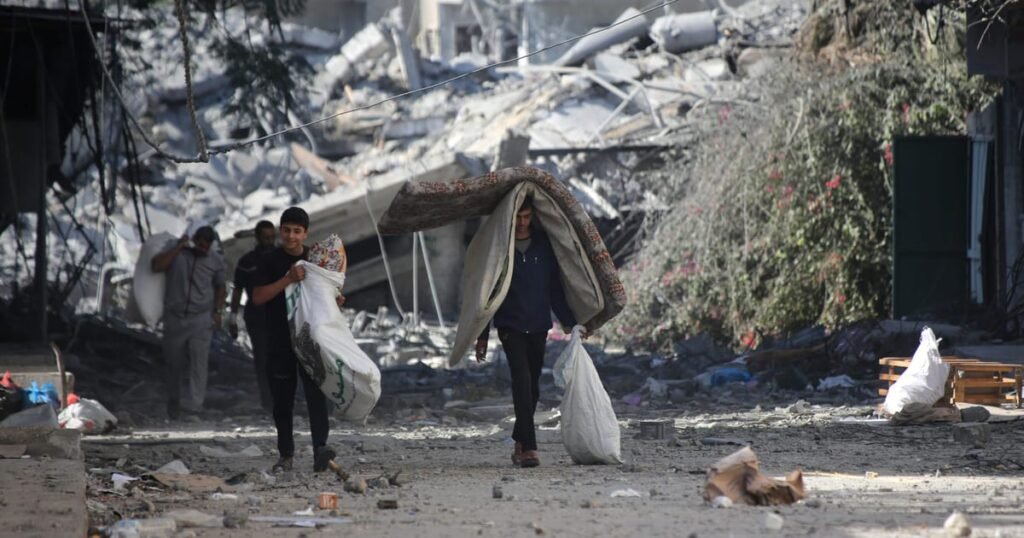
GazaHerald – Israel’s renewed invasion plans for northern Gaza have brought devastation to the neighborhood of Zeitoun, where displacement shelters and civilian homes have been systematically targeted.
The assault has forced thousands of already displaced Palestinians to pack up their tents and flee further south. The situation has deepened the cycle of mass expulsion that has marked nearly two years of war.
A Neighborhood Besieged
Since mid-August, bombardment and shelling in Zeitoun have intensified, striking not only residential blocks but also displacement shelters that house thousands of civilians. In this small pocket of Gaza City, about 11 shelters are crammed with 4,000 to 4,500 Palestinians each. Families live on just 3.2 square kilometers, barely a third of the neighborhood’s pre-war size, amid relentless air raids.
What little remains of safety has been stripped away. Satellite imagery shows camps collapsing as families abandon their tents under fire. The destruction of shelters and homes follows a broader pattern in which Israel makes no distinction between fighters and civilians.
At the start of the war, trenches were dug around Zeitoun under the pretext of creating a “buffer zone,” while the construction of the Netzarim Corridor split Gaza into two. The latest wave of bombardment now appears aimed at erasing what is left of habitable life in the neighborhood.
Forced Flight and Ethnic Cleansing
The bombardment of Zeitoun is not random. It is part of a deliberate strategy of forced displacement, one that has driven Palestinians from their shelters time and again.
Civilians fear fleeing south, even as no safe refuge exists. This constant uprooting, combined with the destruction of all livable facilities, increasingly bears the hallmarks of ethnic cleansing.
Strikes on schools and tent encampments highlight this tactic. The Israeli attacks directly targeted al-Falah School in Zeitoun, a tent camp on al-Lababidi Street, the Majida al-Wasila School in the Nassr neighborhood, and tents in Sheikh Ajilin. Footage shows missiles launched into family homes, reducing them to rubble regardless of whether people were inside.
Such attacks also violate the protections of international humanitarian law, which designates schools and civilian shelters as protected sites. Yet in Gaza, they have become battleground targets.
The mass displacement and destruction unfolding in Zeitoun further encapsulate the broader catastrophe facing Gaza. Nearly two years of war have left international jurists, human rights advocates, and UN experts warning that the campaign amounts to genocide. Israel’s allies, once quick to defend its military actions, now voice alarm over the deepening humanitarian disaster.
But for the tens of thousands trapped in Gaza City’s shelters, warnings offer little protection. With every bombardment, the enclave’s civilians are stripped of the last fragments of safety. In Zeitoun, schools and tents meant to shield families have been turned into ruins, leaving children, women, and the elderly once again on the road, carrying what little they can as they flee into an uncertain and perilous future.