Gaza Herald- As solidarity with Palestine continues to expand across Europe following Israel’s devastating war on Gaza, pressure has intensified on European governments and institutions to reassess their political, economic, and military relationship with Israel. Across major European capitals, demonstrations, university encampments, labor union initiatives, legal campaigns, and civil society movements have transformed Palestine from what was once viewed as a distant foreign policy issue into a central moral and political debate inside Europe itself.
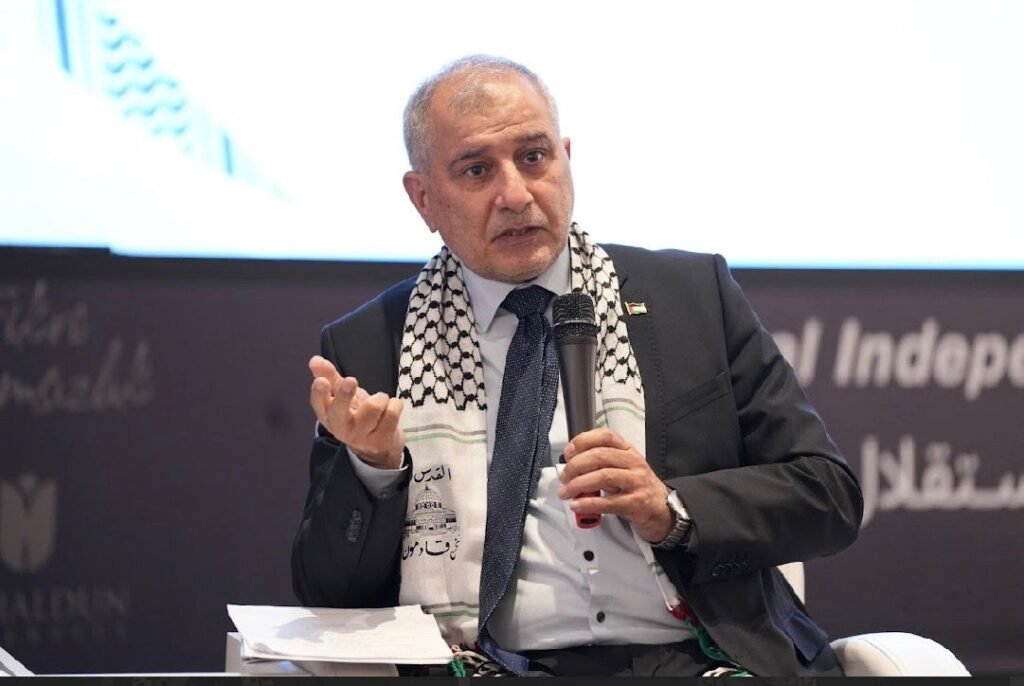
 In this exclusive interview with Gaza Herald, Majed Al-Zeer, President of the European Palestinian Council for Political Relations and one of the most prominent Palestinian political organizers in Europe, discusses the dramatic changes taking place in European public opinion, the widening gap between European governments and their populations, the growing role of younger generations in reshaping advocacy for Palestine, and the increasing legal and political pressure targeting Israel inside European institutions.
Al-Zeer also addresses the European Citizens’ Initiative demanding the suspension of the EU-Israel Association Agreement, the accumulated efforts of international flotillas attempting to break the siege on Gaza, and the broader challenge of transforming public outrage into sustainable political action capable of influencing European policy.
Gaza Herald: How do you evaluate the current role of Palestinian and Arab grassroots organizing in Europe compared to previous decades?
Majed Al-Zeer: The transformation has been profound. Since I began my work in Europe more than thirty years ago, the Palestinian presence on the continent has gone through several important stages. During the earlier years, much of our effort focused on preserving the Palestinian narrative itself. The environment in Europe was politically and culturally far more aligned with Israeli narratives, while Palestinian voices often faced exclusion, suspicion, or marginalization.
At that time, defending the right of return and ensuring that the Palestinian cause remained visible were among the central priorities of our work. Palestinian communities were active, but their ability to influence institutions or public discourse remained limited. Much of the work was defensive in nature — responding to accusations, correcting misinformation, and struggling simply to secure space for Palestinians to speak about their own reality.
Today, however, the situation is significantly different. There are now experienced Palestinian and Arab institutions operating across Europe, stronger networks of solidarity, and a far broader Palestinian presence inside universities, municipalities, labor unions, media institutions, legal organizations, and political spaces. Palestine is no longer an issue confined to Palestinian or Arab communities alone. It has increasingly become a European issue tied to questions of morality, justice, international law, and human rights.
One of the most important developments is that Palestinian advocacy in Europe is no longer limited to defending itself against Israeli narratives. Palestinians and solidarity movements have increasingly shifted toward taking political and legal initiatives themselves. We now see organized campaigns demanding accountability for Israeli policies and questioning the relationship between European governments and Israel. This includes legal initiatives, boycott campaigns, parliamentary activism, media advocacy, and humanitarian mobilization aimed at challenging the siege imposed on Gaza.
At the same time, this growing visibility creates greater responsibility. The immense sacrifices made by Palestinians, especially in Gaza, have opened unprecedented political space inside Europe for the Palestinian reality to be heard. But sympathy alone is not enough. The challenge now is to organize this solidarity and transform it into sustained political and legal pressure capable of influencing policy, legislation, and institutional decision-making.
Gaza Herald: What role is the younger generation of Palestinians, Arabs, and Europeans playing in reshaping advocacy for Palestine across Europe?
Majed Al-Zeer: The younger generation has become one of the strongest pillars of Palestinian activism in Europe today. We are witnessing the emergence of young Palestinians, Arabs, and Europeans who were raised inside European societies, understand their languages and institutions, and know how political and legal systems function. At the same time, they possess a deep awareness of Palestine and the historical injustice experienced by the Palestinian people.
What distinguishes this generation is that it no longer views Palestine solely through the lens of emotional attachment or inherited memory. Palestine is increasingly understood as part of a wider struggle involving human rights, anti-racism, anti-colonialism, and opposition to systems of oppression and discrimination.
This is why young people have become highly active inside universities, student encampments, labor campaigns, boycott movements, digital advocacy spaces, and legal initiatives. They engage directly with elected officials, municipal institutions, trade unions, and academic bodies. They are helping move Palestine from the margins of public debate into the center of political and ethical discussions taking place inside Europe.
Perhaps the most important shift is psychological and political. Earlier generations often approached European societies from the position of outsiders or guests asking to be heard. Many young Palestinians and Arabs in Europe today speak from the position of citizens demanding accountability from their governments and institutions. They are telling European states: if you claim to defend human rights, international law, and equality, then these principles must also apply to Palestinians.
This changes the nature of the conversation entirely. The Palestinian voice is no longer presented merely as the voice of refugees or victims. It is increasingly becoming an internal European voice participating directly in shaping political discourse and holding institutions accountable.
But this potential must be developed carefully. We need long-term investment in younger generations through legal education, political training, media development, and institutional organization. The future of Palestinian work in Europe depends heavily on our ability to combine the accumulated experience of older generations with the energy and skills of younger activists.
Gaza Herald: What major changes have taken place in European public discourse on Palestine since the war on Gaza?
Majed Al-Zeer: The most significant shift is that large sectors of European society have started moving beyond the traditional framework that consistently portrayed Israel as merely defending itself while Palestinians were either reduced to security concerns or erased from the narrative entirely.
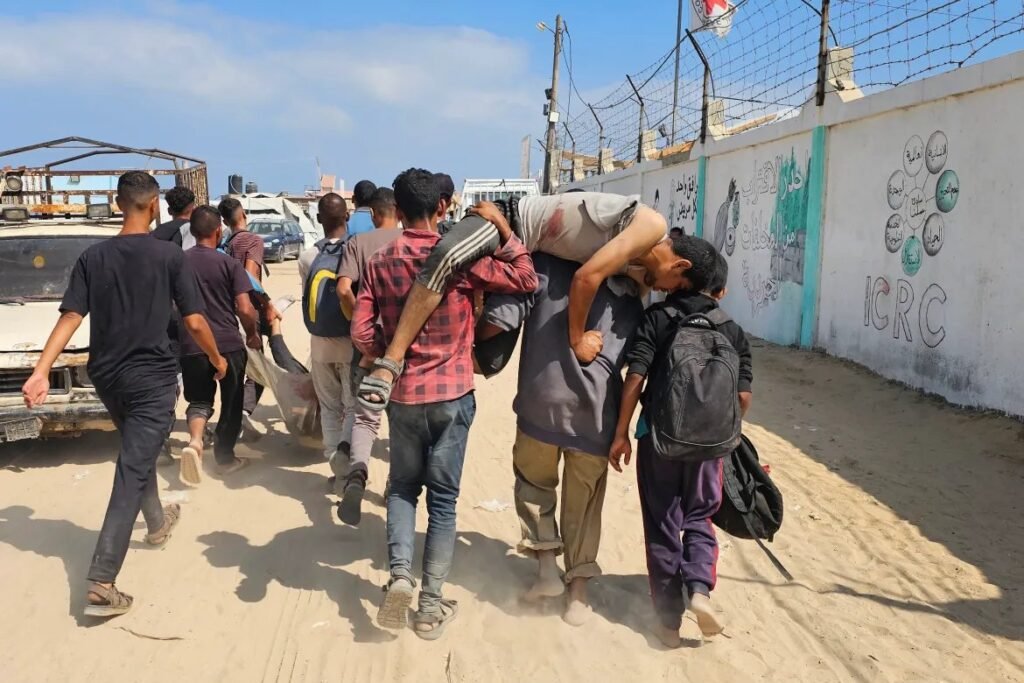
The scale of destruction in Gaza created a deep moral and political shock throughout Europe. Images of mass civilian killings, starvation, the destruction of hospitals and schools, the targeting of displacement camps, and the collapse of basic living conditions forced many Europeans to reconsider narratives that had dominated political and media discourse for decades.
The conversation today goes far beyond calls for humanitarian aid or temporary ceasefires. Increasingly, Europeans are asking deeper political questions: Why does the occupation continue? Why does Israel continue to enjoy political immunity despite widespread allegations of war crimes and violations of international law? Why are military exports and economic privileges maintained while Palestinians are subjected to bombardment, displacement, siege, and collective punishment? And why are international legal standards applied selectively depending on the identity of the state involved?
The language of solidarity itself has changed significantly. Terms such as occupation, settler colonialism, collective punishment, apartheid, sanctions, accountability, arms embargoes, and suspension of agreements are now far more visible within European public discourse. This is extremely important because it reflects a gradual shift away from temporary sympathy toward structural political criticism.
Of course, European governments have not changed at the same pace as public opinion. But there is no doubt that the political atmosphere has shifted dramatically. The Israeli narrative no longer dominates European public space without challenge, and organized opposition to Israeli policies has become much broader, more visible, and more confident.
Gaza Herald: European cities witnessed massive demonstrations during Nakba commemorations this year. Do you believe European awareness is beginning to connect Gaza to the broader history of the Nakba, displacement, and the right of return?
Majed Al-Zeer: This is one of the most important developments taking place today because Gaza cannot be understood separately from the history of the Nakba. What Palestinians are experiencing in Gaza did not emerge in isolation. It is part of a continuous historical process involving displacement, siege, denial of rights, occupation, and dispossession that began in 1948 and continues today.
For decades, Palestinian activists in Europe worked to establish this understanding. Palestine is not merely a humanitarian crisis requiring aid deliveries. It is the story of a people uprooted from their land, living under occupation or in exile, while continuing to demand freedom, return, and self-determination.
What we witnessed during the 78th anniversary of the Nakba in 2026 reflected an important political shift across Europe. Large demonstrations took place in London, Dublin, Berlin, Stockholm, Brussels, and many other European cities. These mobilizations increasingly connected current events in Gaza to the broader history of Palestinian dispossession and forced displacement.
The importance of this shift is enormous because genuine solidarity with Palestine cannot stop at sympathy for the victims of bombardment in Gaza alone. True understanding requires recognizing the roots of the Palestinian experience: the Nakba, the occupation, settlement expansion, siege, displacement, and the denial of refugees’ right of return.
Gaza today is the bleeding wound of Palestine, but it is not the entirety of Palestine. We must resist efforts to reduce the Palestinian issue to a humanitarian emergency detached from its historical and political foundations.
Gaza Herald: How large is the gap today between European public opinion and the policies of European governments regarding Palestine?
Majed Al-Zeer: The gap is increasingly visible and difficult to ignore. Across Europe we are seeing mass demonstrations, labor union mobilization, student movements, boycott campaigns, legal initiatives, and growing demands for arms embargoes and sanctions against Israel. Meanwhile, many European governments continue to act cautiously or apply clear double standards.
European citizens are increasingly asking their governments a legitimate question: how can European leaders speak about international law and human rights while continuing to grant Israel privileged political, economic, and diplomatic treatment despite the suffering imposed on Palestinians?
This gap does not mean that public pressure is ineffective. On the contrary, governments are increasingly forced to justify their positions, political parties face pressure from their own constituencies, and parliaments are witnessing far more open debate regarding European relations with Israel.
However, many governments still attempt to maintain two contradictory positions simultaneously: expressing humanitarian concern for Palestinians while continuing to shield Israel from serious accountability measures. The challenge facing solidarity movements today is to raise the political cost of this contradiction until maintaining the status quo becomes more difficult than changing policy itself.
Gaza Herald: Has public mobilization in Europe begun influencing official policies in a meaningful way?
Majed Al-Zeer: It would be a mistake to dismiss these movements as merely symbolic. While they have not yet achieved all the political changes required, they have already forced Palestine into the center of political and media debate across Europe.
The impact often begins within what I would call intermediary institutions, universities, municipalities, trade unions, professional associations, and human rights organizations. When students challenge their universities over partnerships with Israeli institutions, when labor unions demand an end to arms exports, or when municipalities adopt solidarity initiatives connected to Gaza, public pressure begins moving from the streets into decision-making structures.
Each individual action may appear limited on its own, but collectively they form an expanding network of political pressure. Over time, such movements can influence electoral programs, parliamentary positions, government policy debates, and institutional decisions.
But success is not automatic. Demonstrations matter, petitions matter, encampments matter, and legal campaigns matter. Yet all of them require organization, continuity, and strategic coordination. The real challenge is not only expressing outrage but transforming outrage into sustainable political influence.
Gaza Herald: Which tools are currently most effective in Europe, demonstrations, boycotts, legal action, or combining all of them together?
Majed Al-Zeer: The strength of Palestinian advocacy in Europe lies precisely in combining these tools rather than choosing between them.
Mass demonstrations provide political visibility and moral legitimacy. They show governments that Palestine is no longer a marginal issue discussed by a small minority but a concern shared by broad sectors of society.
Boycott campaigns, including divestment initiatives targeting corporations and institutions linked to occupation or settlement activity, help transform moral opposition into tangible political and economic pressure.
Legal and human rights work is equally essential because it connects events on the ground to the legal obligations of European states under international law. Parliamentary and political work is then necessary to translate pressure into concrete measures such as investigations, sanctions, suspensions of agreements, or restrictions on military cooperation.
The European Citizens’ Initiative demanding the suspension of the EU-Israel Association Agreement is an important example of this combination of tools. The initiative did not emerge in isolation. It grew out of years of demonstrations, legal advocacy, media work, and expanding political pressure across Europe.
The question, therefore, is not which method is most important, but how all these methods can operate together within a unified strategy capable of turning public anger into meaningful political change.