Gaza Herald_ As millions of Muslims across the world turned their hearts toward Mount Arafat on the Day of Arafah, hands were raised in prayer, and voices echoed with supplications seeking mercy and forgiveness on one of Islam’s holiest days.
But in Gaza, the scene carried a different kind of pain.
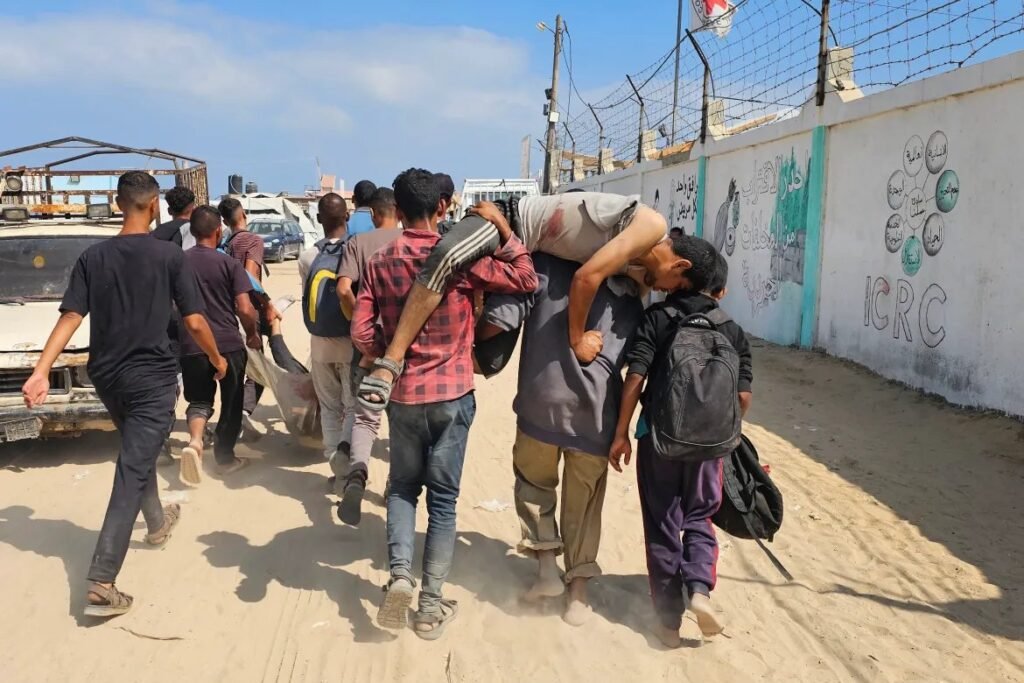
Here too, hands rose toward the sky, not from peaceful homes or crowded mosques, but from tents, shattered streets, hospital courtyards, and the ruins of destroyed neighborhoods. In Gaza, prayer has become more than a spiritual ritual; it has become a plea for survival amid a war that has left little room for rest, safety, or hope.
In Gaza’s Camps, Prayer Has Become a Language of Survival
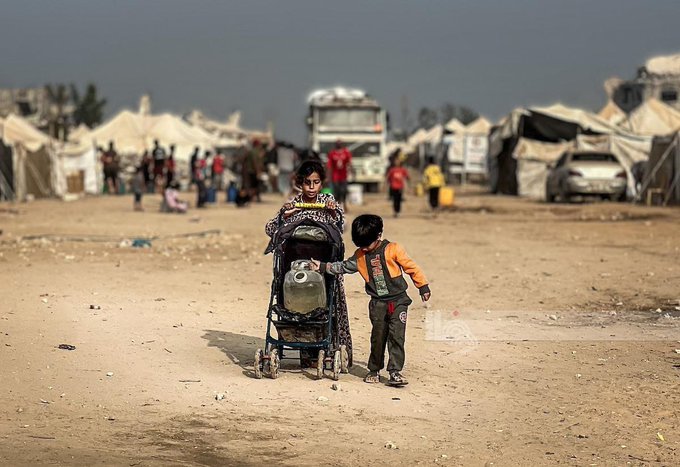
Across displacement camps and narrow pathways lined with tents, the Day of Arafah arrived stripped of the joy and anticipation that once accompanied religious seasons in Gaza.
There were no crowded markets, no preparations for Eid celebrations, and no children excitedly waiting for new clothes or sweets.
Umm Mohammed Abu Ghoneima, displaced from eastern Gaza City and now living in a tent in the Khan Younis area, said the meaning of these days has completely changed.
“In past years, we prepared for Eid, bought clothes for the children, and waited to hear the takbeerat from the mosques,” she said. “Now all we ask from God is to survive until tomorrow and wake up without losing another loved one.”
Months of war, displacement, and destruction have transformed religious occasions into moments overshadowed by fear, grief, and uncertainty.
Yet despite everything, prayer remains the one thing Palestinians in Gaza continue to hold onto.
Mothers mourning children they lost, fathers searching for bread and water for their families, and wounded patients waiting inside collapsing hospitals all share the same prayer: that Gaza survives, that the bombing stops, and that another day passes without more names added to the lists of the dead.
An Eid Overshadowed by Loss and Displacement
Inside a small tent west of Deir al-Balah, Mahmoud Abu al-Ouf, a father of five, described how the meaning of Eid has faded under the weight of war.
“Eid used to bring joy to the whole family,” he said. “Now we spend our days searching for bread and water, following the news, and wondering if we’ll survive another night. The Day of Arafah is sacred for Muslims everywhere, and we pray too, but here our prayers sound different. They are the prayers of exhausted people still trying to hold onto hope.”
The seasonal traditions that once filled Gaza’s streets before Eid have nearly disappeared.
The few remaining markets lack basic goods, while families that once gathered for celebrations and visits are now scattered between displacement shelters, tents, hospitals, and destroyed neighborhoods.
Instead of discussing holiday preparations, displaced families now ask different questions: Will the area remain safe tonight? Will water still be available tomorrow? Will the bombing return before Eid begins?
Takbeerat Beneath the Sound of Warplanes
In the few mosques still standing despite the destruction, takbeerat rose with the early morning hours while Israeli aircraft continued flying overhead.
The contrast captured the painful reality of Gaza: sacred prayers and religious devotion unfolding beneath the constant threat of bombardment.
Aya al-Najjar, displaced from northern Gaza with her family, said watching pilgrims gather on Arafah filled her with both sorrow and longing.
“When I watched the pilgrims standing on Arafah praying to God, I felt deep pain,” she said. “They pray for mercy, and we are praying too, but we are praying for the bombing to stop, to return home, and to live just one day without fear.”
For Muslims around the world, the Day of Arafah is associated with forgiveness, mercy, and hope.
In Gaza, those meanings have taken on even deeper significance, as prayer itself has become part of daily survival, repeated inside tents, hospital corridors, damaged streets, and every place where people continue waiting for relief.
From Arafah to Gaza, One Prayer Unites Millions
As pilgrims gathered in one of the world’s most powerful scenes of worship, Gaza remained present in the prayers of many across the Muslim world.
From the holy sites in Saudi Arabia to communities across different countries, countless worshippers raised prayers for Gaza alongside their own supplications on the Day of Arafah.
And while pilgrims stood on the plains of Arafah asking for mercy and forgiveness, Palestinians in Gaza stood amid rubble and loss asking for something just as essential: an end to war, a chance to return home, and the possibility of welcoming Eid without fear, mourning, or another painful goodbye.