
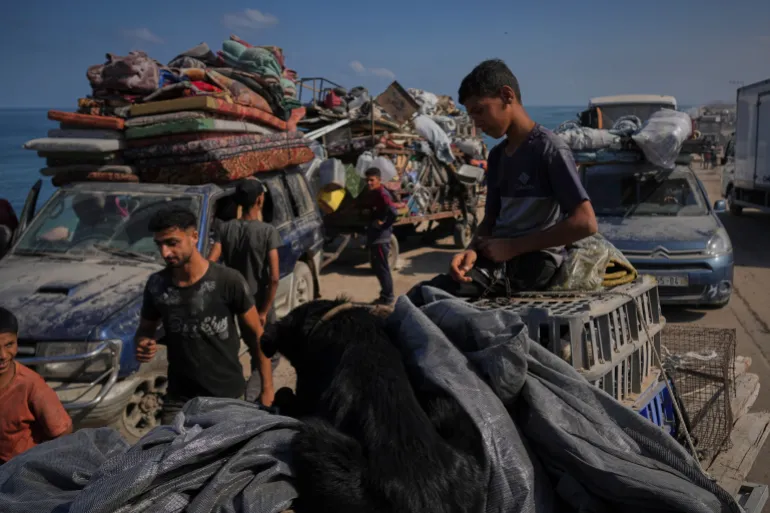
Gaza Herald – In displacement camps across the Gaza Strip, Palestinian families marked the 78th anniversary of the Nakba while enduring conditions they say mirror and intensify the original experience of mass displacement in 1948.
Elderly residents and families now living in tents describe life shaped by loss, overcrowding, and harsh living conditions after widespread destruction of homes during the recent genocidal war, which left entire neighborhoods in ruins and forced repeated waves of internal displacement.
One elderly survivor, who lived through both the early post-1948 displacement and the current war, recalled being uprooted as a child from a refugee camp under bombardment and now, decades later, finding himself again living in a tent with multiple generations of his family after losing his multi-story home.
He described the journey of displacement during the recent genocide as more complex and exhausting, saying he was responsible not only for himself but for dozens of family members, including children and elderly relatives, moving repeatedly between shelters, schools, and temporary camps under shelling and bombardment.
Many displaced families report spending months in overcrowded shelters and schools before moving again to other temporary camps as Israeli attacks increase, leaving them with no stable place to stay and no access to adequate housing or basic services.
Elderly women in the camps are also describe being displaced multiple times throughout their lives, first during the 48-Nakba and later within Gaza itself, saying that life in tents today revives memories of earlier waves of forced displacement, compounded by new losses, including homes and family members.
Palestinians in Gaza describe deteriorating living conditions in the camps, including extreme heat, lack of clean water, spread of insects and disease, and inadequate sanitation. Many say tents offer little protection from the weather, turning into unbearable shelters during both summer heat and winter rains.
Some displaced residents compared current aid distribution systems with earlier humanitarian assistance during the post-1948 refugee period, noting that aid has become increasingly limited while needs have sharply increased, deepening the sense of insecurity and dependence.
Despite decades separating the two Nakbas, many families in Gaza say the current displacement has revived unresolved memories of the Nakba, with younger generations now experiencing a second wave of forced displacement within their lifetime, reinforcing a prolonged cycle of instability and loss.

