
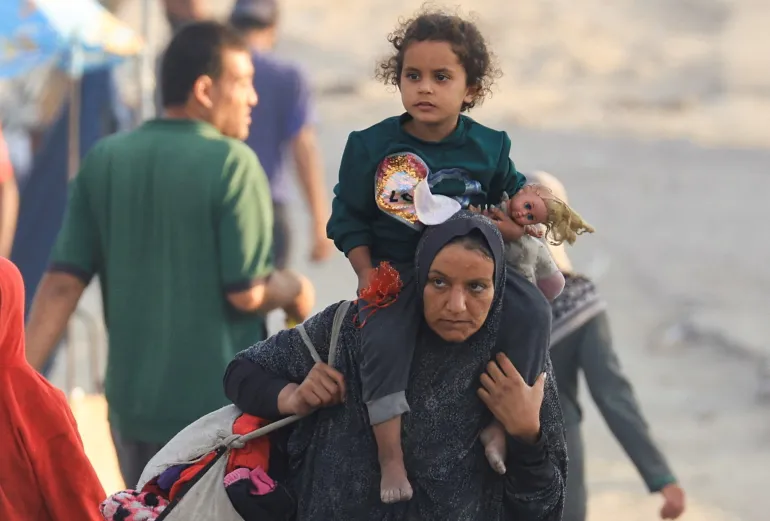
Gaza Herald- Data released Friday by UN Women shows that at least forty-seven women and girls are killed on average every day during the Israeli war on Gaza, which has lasted more than two years. The agency warned that casualties continue to occur despite months having passed since a ceasefire was declared.
According to the report, more than thirty-eight thousand women and girls were killed in Gaza between October twenty twenty-three and December twenty twenty-five. This figure represents more than half of the total number of deaths documented by the Palestinian Ministry of Health in the territory during the war.
The agency warned that fatalities, particularly among women and girls, have continued even after six months of the ceasefire, which came into effect on October tenth, twenty twenty-five. Repeated violations have led to ongoing deaths and injuries.
Sophia Kaltrop, UN Women’s humanitarian lead, told reporters from the organization’s headquarters in Geneva that over thirty-eight thousand women and girls in Gaza were killed by Israeli airstrikes and ground operations during that period. She explained that the victims included more than twenty-two thousand women and sixteen thousand girls, averaging no fewer than forty-seven deaths per day.
According to Gaza’s Ministry of Health, the death toll from the start of the war until December twenty-seventh, twenty twenty-five, reached approximately seventy-one thousand two hundred sixty-six. The latest official figure, released Thursday, rose to seventy-two thousand three hundred forty-five.
Regarding data after the ceasefire, Kaltrop said women and girls are still among the victims. However, the lack of detailed data broken down by gender and age makes it difficult to determine exact figures. She expressed concern about the continued loss of life among women and girls since the truce began.
She added that the proportion of women and girls among those killed is significantly higher compared to previous conflicts in Gaza, noting that they continue to endure severe humanitarian conditions despite the ceasefire announced in October twenty twenty-five.
Kaltrop also stated that around eleven thousand women and girls have suffered serious injuries leading to permanent disabilities, highlighting the long-term impact of the war on this group.
She called for placing women and girls, as the most vulnerable population, at the center of the humanitarian response, especially amid forced displacement and limited access to water, food, healthcare, and humanitarian aid.
According to UN Women data, around one million women and girls have been displaced multiple times during the war, while approximately seven hundred ninety thousand face severe or catastrophic levels of food insecurity.
In a related context, Kaltrop noted that the extensive damage to Gaza’s infrastructure has made it nearly impossible for women and girls to access basic needs, including healthcare.
Data from the World Health Organization also shows that more than five hundred thousand women in Gaza lack access to essential health services, including prenatal and postnatal care, as well as treatment for sexually transmitted diseases.

