Gaza Herald – The bread crisis in Gaza is worsening, as declining production, fuel shortages, and restrictions on essential supplies continue to disrupt bakeries, turning access to basic food into a daily struggle for residents.
Available data indicate that bread production has dropped by more than 30%, while demand remains high, widening the gap between supply and need. This imbalance has driven prices upward and contributed to the expansion of the black market.
Subsidized bread distributed through the World Food Programme is sold at around 3 shekels (1$) per bundle, while market prices range between 7 and 15 shekels (2.5-5$), placing significant pressure on households already facing declining incomes. At the same time, the cost of a bag of flour has risen sharply from 25 to 100 shekels (9-33$).
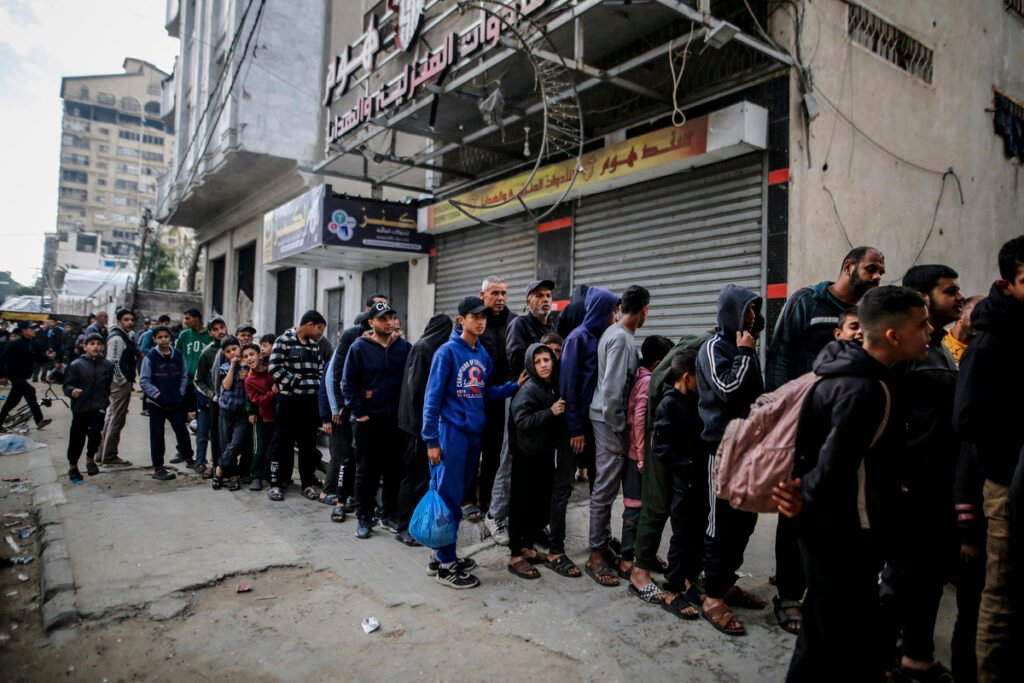
Bread, a staple directly tied to food security, has become increasingly difficult to obtain. Long queues have become routine, with many residents arriving before dawn, only to leave empty-handed due to limited supply.
The crisis is compounded by a reduction in available quantities. Distribution points report a drop in daily allocations, from about 1,000 bundles to 750, forcing sellers to limit purchases to one bundle per family regardless of size.
Structural challenges are also intensifying the crisis. More than 30 bakeries have been destroyed, and only about 30 remain operational, with additional facilities unable to function due to shortages in raw materials and spare parts. Fuel costs have skyrocketed, with industrial oil prices rising from around 15 shekels (5$)per liter to nearly 2,000 shekels (666$) on the black market, severely disrupting transportation and distribution.
Gaza requires between 400 and 450 tons of flour daily, yet supply remains far below this level due to ongoing restrictions on goods entering the territory. Before the war, aid programs supported approximately 1.2 million beneficiaries, but reductions in assistance have further strained the already fragile market.
The deepening bread crisis reflects a broader deterioration in food security conditions, as shortages, rising costs, and supply constraints continue to limit access to basic necessities across the Gaza Strip.