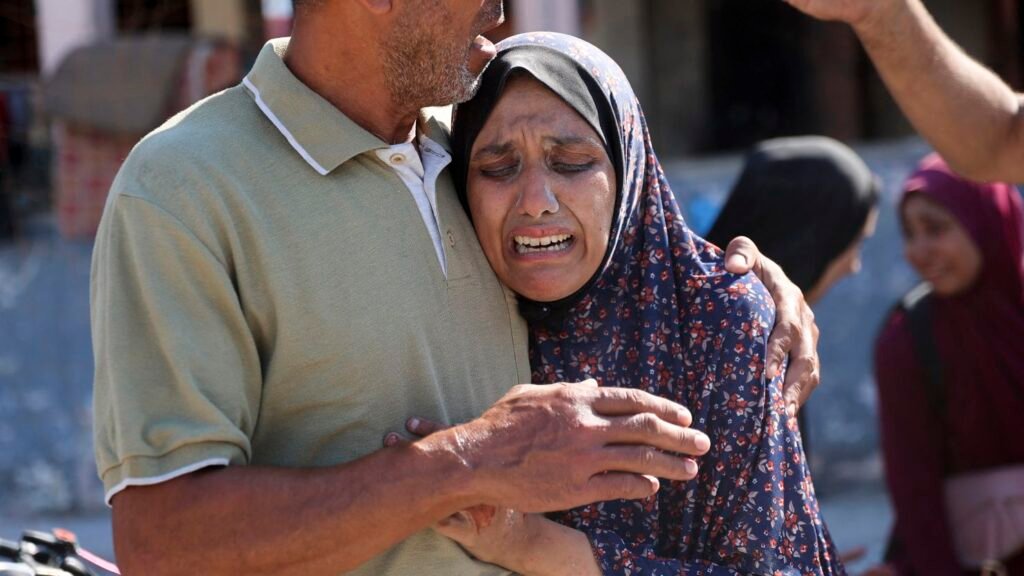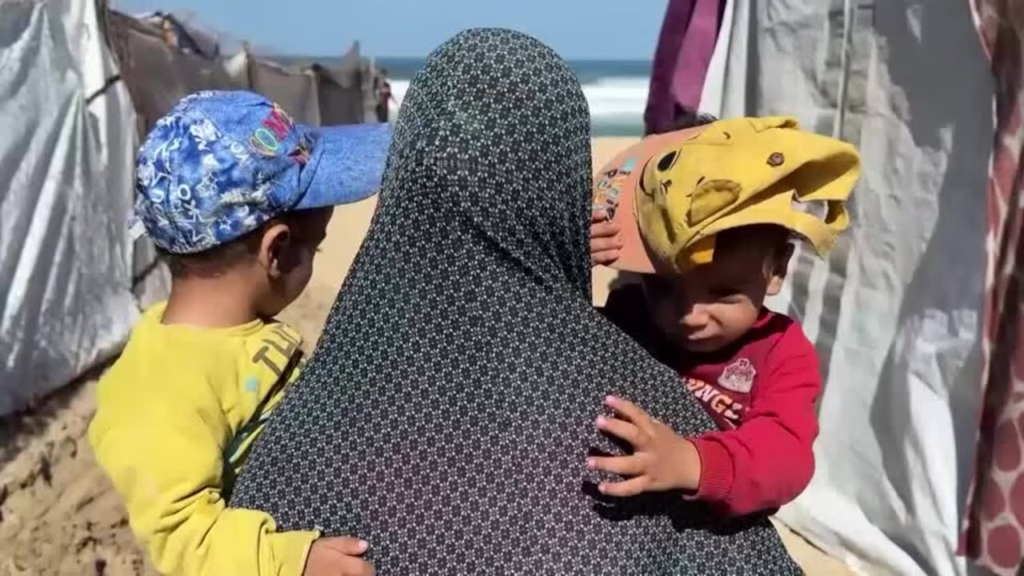
Gaza Herald – The suffering of mothers in the Gaza Strip is no longer limited to securing food and water; it now extends to baby diapers, which have become scarce and significantly more expensive in recent months. This has forced many families to ration their use or resort to unsafe alternatives, amid water shortages and rising cleaning costs.
Rising Prices
Nada Aslim (30), a mother of an infant from Al-Sabra neighborhood in southern Gaza, says she used to need four packs of diapers per month. But with prices rising to about 50 shekels (16$) per pack, she now needs around 200 shekels (64$) monthly, an unaffordable amount for a family with no income during the genocide.
She explains: “Diaper distribution from aid organizations and UNRWA has stopped. I had to start buying them myself, so I began reducing how often I change my baby. Sometimes he stays in the same diaper for a whole day. This caused severe skin infections, and he needs cream, which is not available in clinics or medical points.”
She adds that reducing diaper changes was not a choice but a necessity imposed by high prices and shortages, directly affecting children’s health.
Shortage of Larger Sizes
Samira Al-Rifati (28), a mother of four and pregnant with her fifth child, says the biggest challenge is finding diapers for her two-year-old, especially larger sizes.
“Sizes 5 and 6 are extremely rare, and if available, they’re very expensive. I now only use diapers at night and try to train him during the day, but the cold weather makes it difficult,” she says.
She adds that she has resorted to using sanitary pads as an alternative: “They cause irritation and leakage, so I have to change his clothes several times a day. That means more laundry, which requires water, soap, and detergent, all of which are expensive.”
Fetching water itself is exhausting, she explains: “We carry water in containers from far away to the tent. With frequent washing, the burden doubles. I hope diapers become available again because maintaining children’s health has become extremely difficult.”
Harsh Alternatives
In another tent, Amina Al-Kahlout (34), who lives with her three children near Al-Nafaq Street in eastern Gaza, says the diaper crisis has become a daily concern for every mother.
“Sometimes I go from one shop to another and can’t find any. If I do, I can’t afford a full pack, so I buy them individually. I sometimes use cloth, but washing is exhausting, water is scarce, and children develop rashes,” she says.
She adds: “We now count diapers the way we count bread. We fear running out before we can find more. It’s a constant daily struggle, especially with small children.”
A Growing Health Concern
Mothers across Gaza are facing compounded hardship due to high diaper prices, expensive cleaning supplies, and severe water shortages. This has made basic childcare increasingly difficult amid displacement, poverty, and lack of income.
Many fear worsening skin diseases and infections among their children due to reduced diaper changes or the use of unsafe alternatives.
Amina concludes: “We’re not asking for much, just diapers for our children to protect their health. Children are the ones paying the highest price in this genocide.”