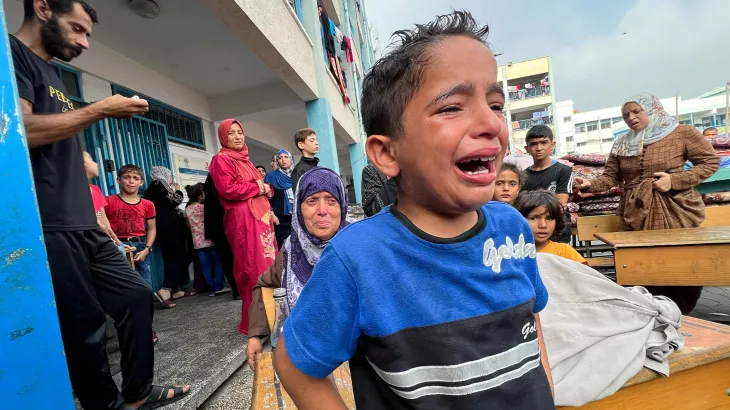
Gaza Herald – As international attention shifts toward the US-Israeli war on Iran, developments in the Gaza Strip have increasingly moved out of the global spotlight, despite the continued military operations and daily casualties on the ground. This diversion has created a window for Israel to expand its actions with limited international scrutiny or pressure.
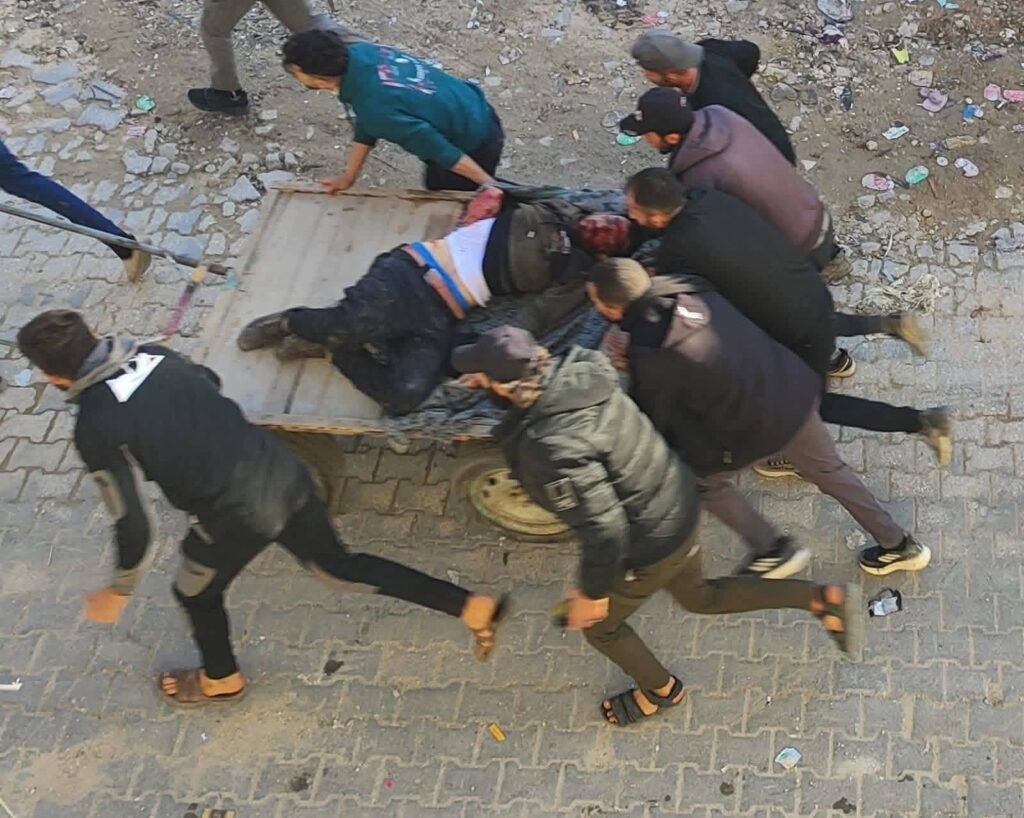
Although a ceasefire was expected to pave the way for withdrawal and reconstruction, the reality on the ground reflects ongoing violations, including airstrikes and live fire incidents that have resulted in hundreds of casualties since the agreement took effect.
At the center of these developments is the so-called “Yellow Line,” which has evolved from a temporary arrangement into a de facto boundary. Israeli occupation forces have reinforced their presence along this line by establishing dozens of military sites, constructing earth barriers, and building infrastructure that supports long-term deployment.
As a result, more than half of Gaza’s territory is now effectively under Israeli control, with the boundary continuing to expand beyond its initially declared limits. This has significantly restricted civilian movement and prevented displaced residents from returning to their homes, particularly in northern areas. Surrounding zones have also become high-risk areas, with repeated reports of civilians being shot near or within the vicinity of the line.
At the same time, restrictions on the entry of aid, construction materials, and essential supplies are seen as part of a broader pressure strategy that affects not only humanitarian conditions but also the demographic and economic landscape of the territory.
The global preoccupation with the regional conflict has also weakened political and media oversight, allowing controversial policies and field measures to advance with minimal international response.
Taken together, these developments point to more than isolated military attacks. They reflect a gradual effort to impose a long-term reality in Gaza, reshaping control, geography, and access, while the world’s attention remains focused elsewhere.