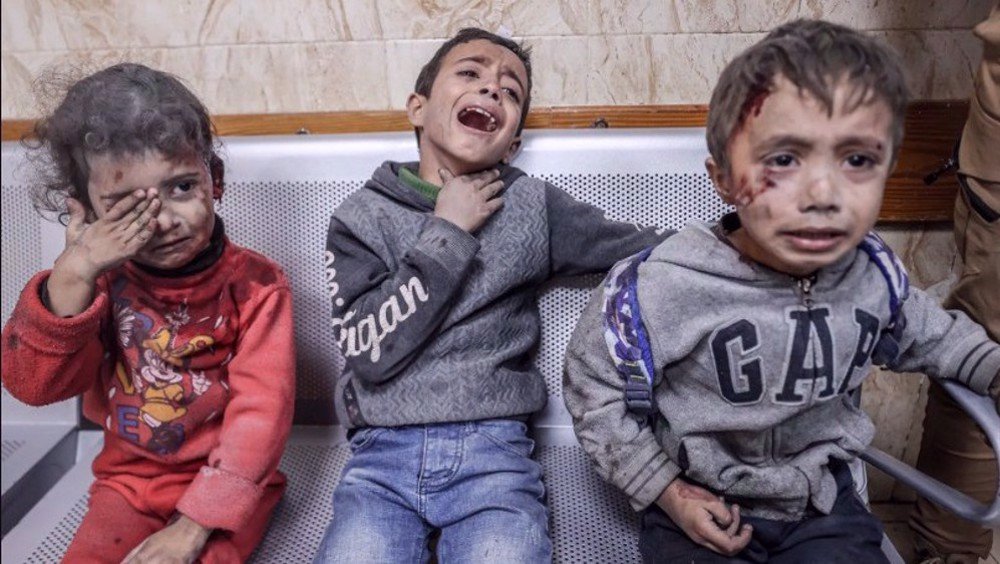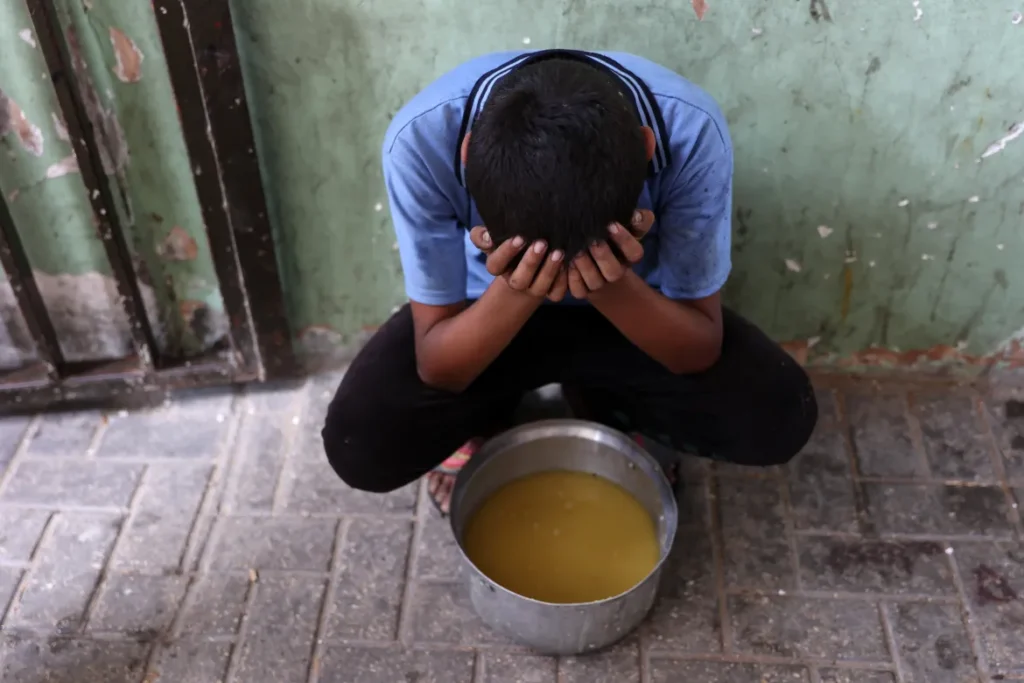
Gaza Herald – In the Gaza Strip, access to clean water has become increasingly scarce as widespread destruction of infrastructure continues to impact daily life. In many devastated neighborhoods, residents now rely almost entirely on water trucks, gathering with empty containers as their only option for drinking water.
Since the start of Israel’s genocide in October 2023, large parts of Gaza’s water system have been severely damaged by Israeli strikes. Water pipelines have been repeatedly targeted, pumping stations have stopped functioning, and essential repair equipment has been destroyed. Key facilities, including major water stations, are now operating at minimal capacity, leaving tens of thousands without stable access to clean water.
Efforts to repair the system are progressing extremely slowly, largely due to Israeli restrictions on the entry of equipment and spare parts. Despite the ceasefire announced in October 2025, these limitations remain in place, alongside continued military activity and tight controls on humanitarian aid and essential goods entering the territory.
According to the United Nations, approximately 70% of Gaza City’s water infrastructure is currently non-functional. Local officials report extensive and systematic damage, including the destruction of dozens of water wells, large sections of water networks, and multiple main reservoirs.
Israeli policies continue to hinder repair efforts in several ways. Critical infrastructure located east of the so-called “Yellow Line,” an area under Israeli occupation control, remains inaccessible for maintenance. In addition, many materials required to repair water and sanitation systems are classified as “dual-use,” allowing authorities to block their entry. As a result, engineers are forced to rely on salvaged materials from debris, limiting the effectiveness and sustainability of repairs.
The consequences of this collapse are severe. The lack of clean water is driving a growing public health crisis, with increasing cases of dehydration, kidney disease, and waterborne illnesses. Available water is often contaminated, containing high levels of salts and harmful substances, making it unsafe for consumption.
This immediate crisis is compounded by long-term environmental damage. The breakdown of sewage systems has led to significant contamination of groundwater, the primary water source for much of the population. With limited alternatives, many families are left with no choice but to use unsafe water.
In this context, the water crisis is no longer just a service disruption but a central factor in the worsening humanitarian and health conditions across Gaza, where infrastructure collapse, displacement, and ongoing restrictions continue to intersect