
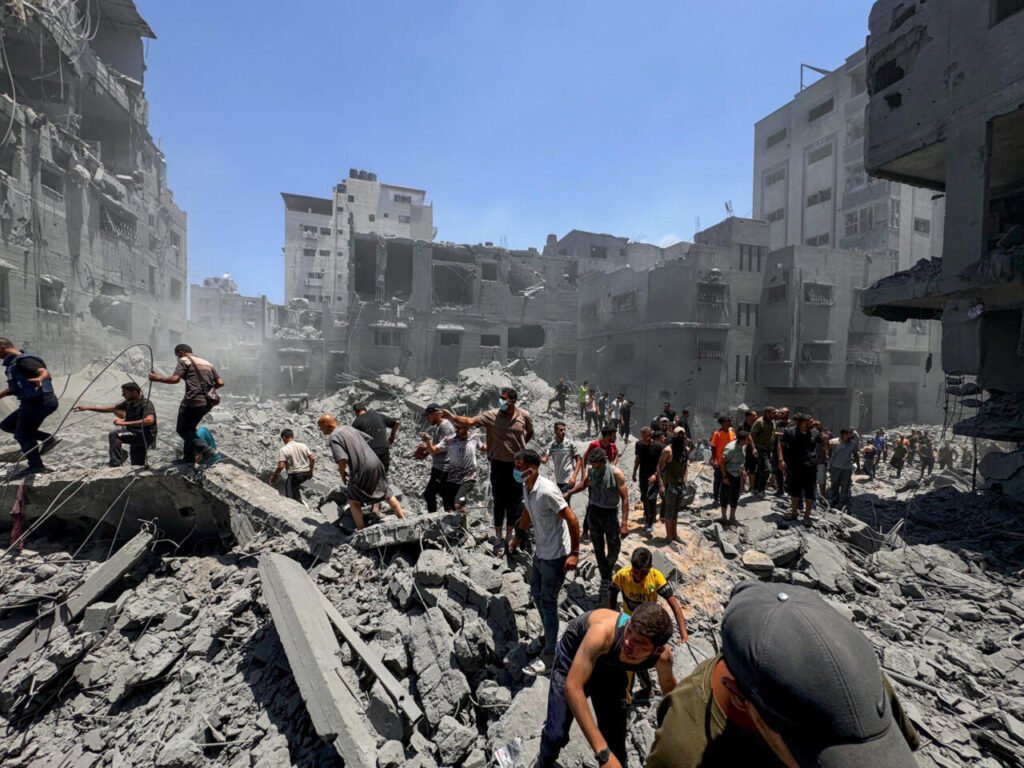
Gaza Herald – In Gaza, war is no longer defined only by explosions. It is defined by a sound. A constant, mechanical hum that lingers above rooftops and tents, day and night, embedding itself into the rhythm of civilian life.
Palestinians call it the “Zanana,” the sharp, metallic buzz of Israeli surveillance drones that circle the Strip almost without interruption. Whether during active bombardment or declared ceasefires, the drones remain. Their presence has become structural, not episodic.
What was once a military tool has evolved into a psychological landscape. The sound alone is enough to sustain a state of alertness. It cuts through silence at night, grows heavier when streets are empty, and hovers persistently over densely populated neighborhoods. Even when no strike follows, the expectation of one rarely fades.
In a territory where large-scale destruction has already reshaped daily existence, the uninterrupted drone hum reinforces a sense of exposure. Infrastructure may be shattered, displacement widespread, and services strained, but above it all, the Zanana continues its orbit, signaling surveillance and potential force.
Mental health specialists warn that prolonged exposure to unpredictable mechanical noise associated with prior attacks can entrench chronic anxiety patterns. The nervous system remains primed. Sleep cycles are fragmented. Concentration erodes. For children especially, the sound can become fused with memories of loss and fear.
The result is not just noise pollution. It is sustained psychological pressure. A society deprived of silence is deprived of recovery. So, for Gazzan, the genocidal war does not fully pause when the bombs stop. It lingers in the sky, in a sound that never quite disappears.

