
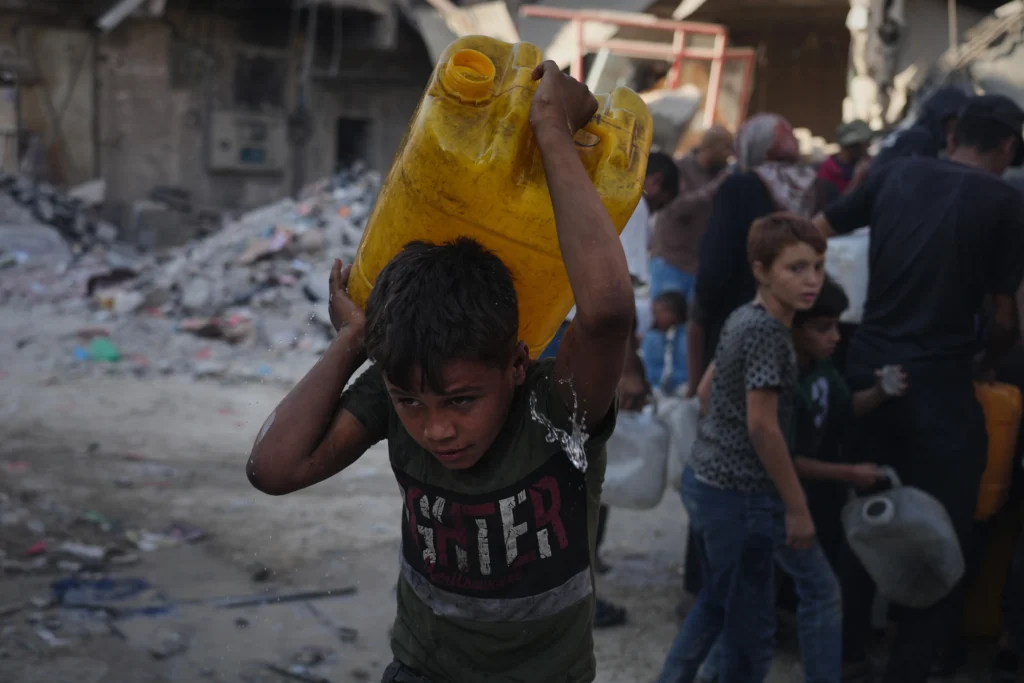
Gaza Herald – Gaza’s water crisis has reached a catastrophic level, with safe drinking water now virtually unavailable across much of the territory, according to the United Nations Special Rapporteur on the human rights to safe drinking water and sanitation, Pedro Arrojo-Agudo.
Speaking amid mounting humanitarian concerns, the UN expert said the widespread destruction of desalination plants, water treatment facilities, wells, and storage infrastructure has pushed the enclave beyond water scarcity into systemic collapse. Nearly 90% of Gaza’s water and sanitation facilities have been damaged or destroyed since the start of the Israeli genocide, he noted.
Despite the passage of four months since the ceasefire, water flows have not been restored at sustainable levels. Arrojo-Agudo warned that access to potable water remains critically limited, with residents receiving only a fraction of pre-war supplies. Current availability stands at roughly 10% of previous levels, leaving large segments of the population dependent on unsafe or contaminated sources.
The continued damage to purification systems, combined with delays in repairs and restrictions affecting humanitarian operations, has heightened the risk of waterborne diseases, particularly among children and the elderly. International agencies and aid groups are reportedly struggling to maintain even minimal service levels due to access limitations and infrastructure destruction.
Describing the situation as a grave breach of international humanitarian law, the UN rapporteur said depriving civilians of safe drinking water constitutes the use of water as a weapon of war. He stressed that the crisis is not merely about infrastructure failure but about the deliberate denial of a basic human right.
Arrojo-Agudo also underscored that reconstruction efforts must prioritize restoring water and sanitation systems under international legal frameworks. A recent assessment he contributed to found that more than 90% of Gaza’s infrastructure requires rebuilding, with water systems among the most severely affected sectors.
He called for the immediate reopening of humanitarian access points, the restoration of desalination and treatment facilities at full capacity, and guarantees to protect water infrastructure from further damage. Ensuring reliable access to safe drinking water, he said, is the foundation for stabilizing public health and restoring basic human dignity in Gaza.

