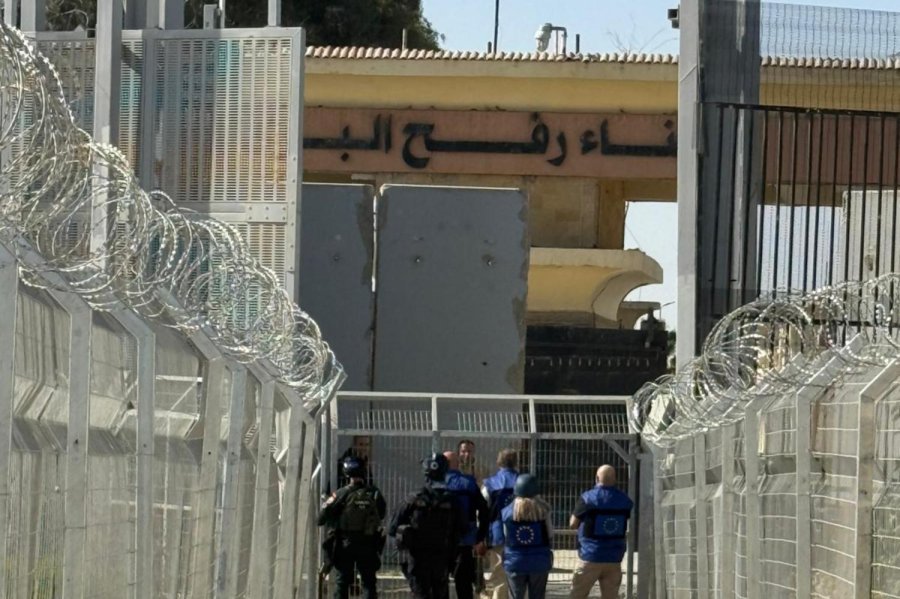
Gaza Herald _ Serious concerns are mounting over reports that Palestinians returning to Gaza through the Rafah crossing have been subjected to questioning by individuals linked to a European Union border mission, raising fears that vulnerable civilians may have been pressured to provide sensitive personal information.
Human rights advocates warn that such practices, if confirmed, would represent a troubling abuse of authority and further undermine the safety, dignity, and rights of Palestinians already enduring displacement and war.
The International Federation for Rights and Development (IFRD) expressed deep alarm and condemnation over allegations that personnel associated with the European Union Border Assistance Mission (EUBAM) at Rafah questioned Palestinians in ways that appeared to go far beyond legitimate border procedures. According to the organization, individuals were reportedly asked about their relatives, family connections, and broader social networks—questions that raised serious concerns about privacy violations and potential intelligence-gathering.
In a formal statement, the federation warned that if these allegations are proven true, they would constitute a grave violation of the mission’s mandate and fundamental human rights standards, particularly regarding data protection and personal privacy. The organization stressed that EU missions are obligated to uphold international human rights principles and must not contribute, directly or indirectly, to practices that could facilitate harm against civilian populations.
The federation also cautioned that transforming a civilian EU mission into a channel that could serve the security interests of another party, including cooperation that benefits Israeli military or intelligence structures outside clearly defined legal frameworks, would severely damage the European Union’s credibility and erode trust among affected Palestinian communities.
The IFRD called for an immediate and independent investigation into the allegations, including a full review of interview procedures, complaint mechanisms, oversight records, and monitoring protocols. It also demanded complete transparency from the European External Action Service (EEAS) and mission leadership regarding the nature of the questions asked, the legal justification for collecting such information, the type of data being stored, and whether any of that information was shared with third parties.
Furthermore, the organization urged the immediate suspension of any questioning practices that are not strictly necessary for legitimate border assistance functions until a thorough review is completed. It emphasized the need for clear safeguards, including informed consent procedures, access to legal support when necessary, and a strict prohibition on interrogation methods resembling intelligence operations.
The federation also called on the European Parliament to conduct formal oversight of the mission and ensure accountability through official reporting channels. Such oversight, it said, is essential to guarantee compliance with EU law, international human rights standards, and the fundamental principle of “do no harm.”
The organization concluded by stressing that Palestinians seeking to cross borders, access humanitarian assistance, or complete administrative procedures must never be placed in coercive situations where their safety, freedom of movement, or access to services is conditioned, explicitly or implicitly, on providing sensitive personal information. Protecting civilian dignity and maintaining neutrality, it said, must remain central to any international mission operating in conflict-affected areas.