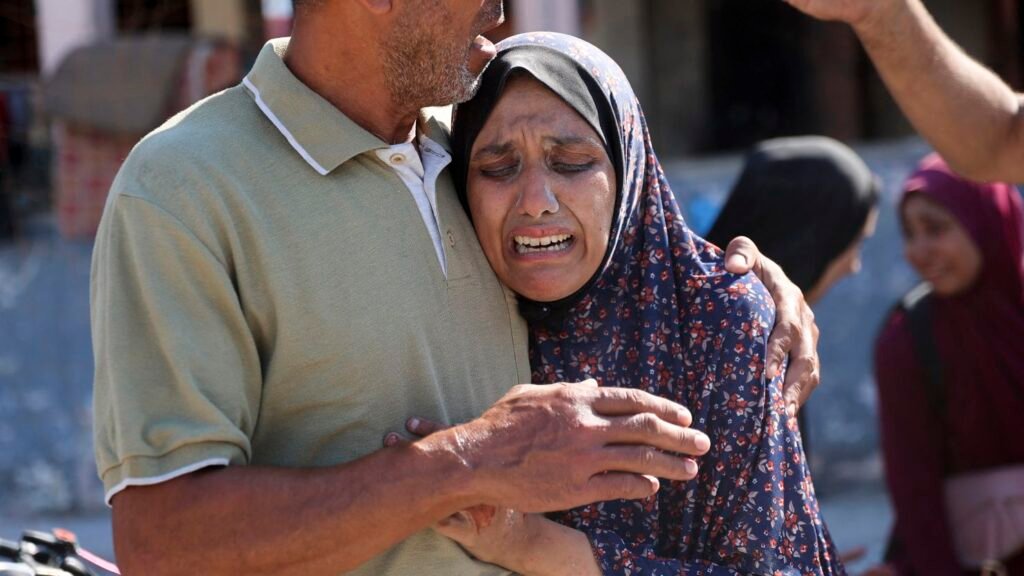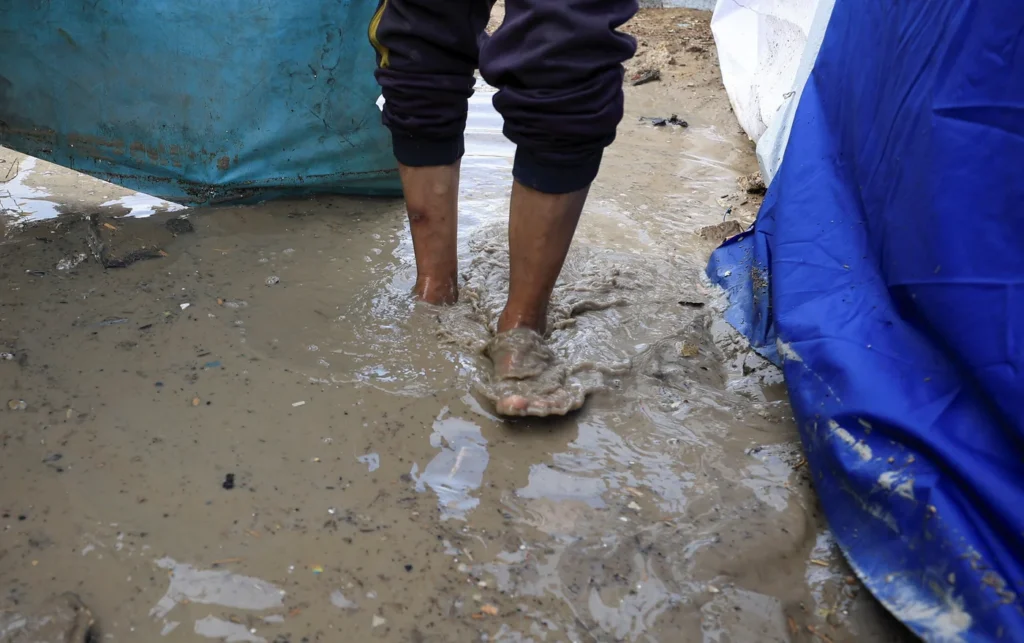
Gaza Herald — Hundreds of thousands of displaced Palestinians in the Gaza Strip face escalating threats to their lives as they shelter in fragile tents along the coastline, exposed to severe weather and entirely lacking basic humanitarian protections. Successive storms have damaged nearly 125,000 tents, leaving them uninhabitable after months of repeated displacement and constant exposure to heavy rain and powerful winds. The crisis has worsened as coastal erosion accelerates, causing large sections of sandy cliffs to collapse, turning entire areas into deadly traps for families living above or below them, with no immediate prospects for reconstruction.
Fatal Collapses and Increasing Warnings
Officials have issued urgent warnings about the dangers of continuing to live in these unstable coastal zones, which cannot safely support large populations. Several tragic incidents have already been reported. In one devastating case, 39-year-old Amal Al-Naji and her two daughters, seven-year-old Amna and four-year-old Batoul, were killed when sand suddenly collapsed and buried their tent while they slept. The husband, Saeed Al-Naji, survived along with three of their children, despite previously suffering shrapnel injuries during attacks in Gaza’s Shuja’iyya neighborhood.
Field observations confirm that coastal soil is eroding daily due to both natural forces and the intense population pressure from mass displacement. For families living in these areas, survival has become a daily gamble, with the constant fear that the ground beneath them could give way without warning.
Logistical Barriers Prevent Safe Relocation
Saeb Loughan, spokesperson for the Khan Younis municipality, stressed the urgent need to evacuate coastal areas and establish alternative shelters to prevent further humanitarian disasters. However, he explained that there is a severe shortage of safe relocation sites capable of accommodating the massive displaced population. High transportation costs, combined with Gaza’s economic collapse, have made relocation impossible for many families.
Loughan added that existing shelters, including schools and public buildings, have already exceeded their maximum capacity and cannot accept additional displaced families who have permanently lost their homes. He also revealed that the municipality has lost much of its heavy equipment and engineering machinery needed to reinforce coastal areas or create safer infrastructure.
The lack of essential construction materials such as cement and steel has further obstructed emergency engineering efforts to prevent coastal erosion. Meanwhile, reconstruction efforts remain uncertain, with no clear timelines or official plans to rebuild the more than 282,000 homes destroyed across Gaza, according to United Nations refugee agencies.
Deepening Humanitarian Crisis Without Shelter Solutions
Civil defense teams have received over 5,000 emergency calls since severe winter storms began, as floodwaters destroyed tents and ruined clothing and blankets. Children and elderly residents have suffered the most, enduring freezing temperatures without adequate protection.
Displaced individuals such as 60-year-old Sana Al-Rifi, along with others, including Basma Al-Afifi and Abu Yahya Al-Buraim, live in constant fear that collapsing sand could bury them alive at any moment. Their suffering is compounded by political obstacles that continue to delay reconstruction and block the entry of temporary housing units such as prefabricated caravans, which could provide urgently needed shelter.
As a result, thousands of Palestinian families remain trapped in life-threatening conditions, exposed not only to the elements but also to the ongoing consequences of war, displacement, and the continued blockade, while their hopes for safety and stability remain uncertain.