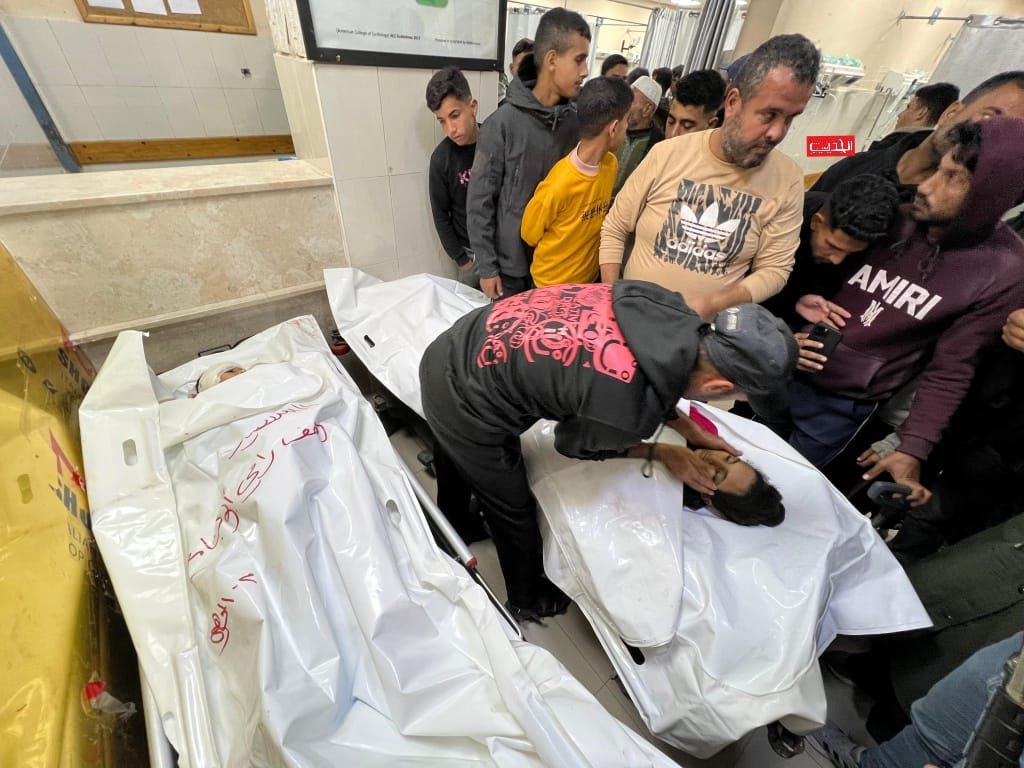
Gaza Herald_ Gaza’s health sector is experiencing an unprecedented and near-total collapse, the direct result of Israel’s systematic targeting of hospitals and the ongoing siege that continues to block the entry of medicines, medical supplies, and life-saving equipment. What remains of Gaza’s healthcare system is no longer able to meet even the most basic needs, as warnings mount of an unfolding medical catastrophe marked by preventable deaths occurring daily.
Hospitals that are still partially functioning are operating far beyond their capacity, under conditions that doctors describe as incompatible with human life. The destruction of medical infrastructure, compounded by fuel shortages, electricity blackouts, and the denial of essential supplies, has pushed the system to the edge of complete failure.
Warnings of Shutdowns in Critical Hospital Departments
Dr Ahmed Al-Farra, director of Al-Tahrir Hospital within the Nasser Medical Complex, described the situation as “catastrophic,” warning that several critical departments are at imminent risk of shutting down entirely. He stressed that many vital medical devices have been destroyed, while others have ceased functioning due to the lack of fuel, oxygen, and maintenance.
In statements to the Gaza Herald, Al-Farra said hospitals are being forced to operate under extraordinary conditions that bear no relation to the scale of injuries and the growing number of patients requiring urgent and specialised care. “We are improvising survival,” he said, “not providing healthcare.”
Waiting Lists That Have Become Death Registers
According to Al-Farra, more than 21,000 patients are currently registered on waiting lists for medical travel outside Gaza. These lists, he warned, have effectively turned into delayed death registers, particularly for cancer patients who are no longer able to access chemotherapy or complete their treatment protocols.
The absence of cancer medications has led to direct, documented deaths inside Gaza, deaths that medical professionals say could have been avoided if treatment and medical evacuations were permitted. “Every delay costs lives,” Al-Farra said, “and we are watching patients deteriorate in front of us with nothing we can offer.”
Cancer Patients and the Weight of Powerlessness
Mahmoud Abu Eita, 52, has been accompanying his wife, who has breast cancer, for more than a year. He described how their lives have unravelled since the war began. “Before the war, her treatment was regular and her condition relatively stable,” he said. “Today, there is no medicine and no appointments. Every hospital visit ends with the same words: ‘Not available.’”
He added quietly, “My wife grows weaker every day. Sometimes she can’t get out of bed on her own. The hardest part is the feeling of complete helplessness, watching her suffer and being unable to help.”
Abu Eita said their days are no longer measured by hope for recovery, but by fear of further deterioration. “Sleep has become impossible,” he said. “Every emergency siren makes me afraid that bad news is coming.”
A Child Caught Between Borders and Death
Umm Mohammed, displaced from Khan Younis, spoke about her nine-year-old son who suffers from a congenital heart condition. “The doctor told us he must travel immediately for treatment,” she said. “But the crossing has been closed for months. Each time we return disappointed.”
Her son, she said, has begun to understand the gravity of his situation. “He asks me, ‘Mama, am I going to die?’ My heart breaks every time I see him cry in fear of tomorrow.”
She described hospitals filled with children and patients in desperate need of care, while doctors do everything within their limited means. “Sometimes,” she said, “I feel like we are sentenced to waiting, and possibly to death.”
Untreated Injuries and Endless Delays
Ahmed Al-Najjar, 27, was injured by shrapnel during an earlier Israeli bombardment and requires surgery that has yet to be completed due to the lack of equipment. “My operation has been postponed three times,” he said. “The pain doesn’t stop, but worse is the feeling of being trapped.”
He added, “Every day I hear about patients dying in the hospital. Sometimes I wake up at night wondering if I will be next. These waiting lists turn patients into numbers before they are given a real chance at treatment.”
Medical Supplies Under Siege
Dr Al-Farra also confirmed that the entry of medical shipments, including medicines and consumables, continues to be blocked. At the same time, international organisations are facing increasing restrictions, forcing some to scale back their operations or withdraw entirely from Gaza.
This, he said, places unbearable pressure on the few remaining hospitals and accelerates the collapse of the healthcare system, leaving patients with no alternatives and medical staff overwhelmed and exhausted.
Closed Crossings and a Silent, Expanding Disaster
The continued closure of crossings has led to the accumulation of thousands of cases that have no viable treatment options inside Gaza, while the number of victims continues to rise quietly, without international accountability.
Health experts warn that if the current conditions persist, Gaza will witness a total collapse of its health sector and an unprecedented surge in preventable deaths.
As the crisis deepens, renewed appeals are being made to the international community and human rights organisations to intervene immediately, to ensure the entry of medicines, fuel, and medical supplies, and to open crossings for patients in urgent need of treatment. Without such action, Gaza’s health crisis risks becoming a permanent catastrophe, with no horizon for relief or recovery.