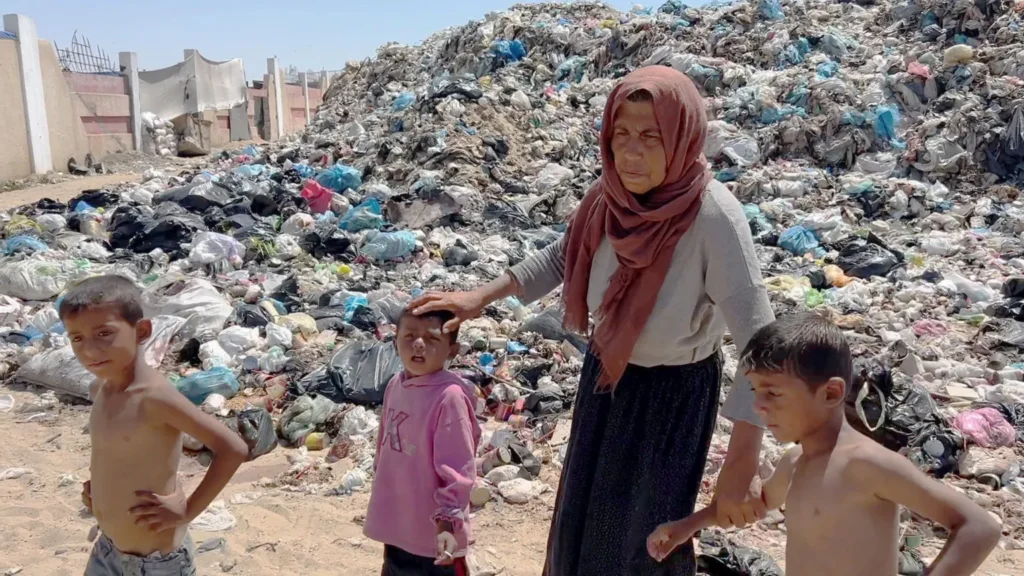
Gaza Herald_The United Nations has warned that child malnutrition in the Gaza Strip has reached critical and unprecedented levels, with nearly 95,000 cases recorded since the beginning of 2025, as harsh winter conditions and ongoing restrictions continue to undermine already fragile humanitarian efforts.
Speaking at a press briefing on Monday, UN spokesperson Stéphane Dujarric cited data from the Office for the Coordination of Humanitarian Affairs (OCHA), stressing that the overall humanitarian situation in Gaza remains extremely dire. He noted that heavy rain, strong winds, and cold temperatures are worsening living conditions for displaced families and threatening the limited progress achieved by aid agencies in recent months.
According to Dujarric, humanitarian organizations leading the nutrition response are continuing to identify large numbers of children in urgent need of treatment. He explained that in the previous month alone, aid workers screened more than 76,000 children across the Strip and detected approximately 4,900 cases of acute malnutrition. Of these, more than 820 children were suffering from severe acute malnutrition, a life-threatening condition requiring immediate medical intervention.
“These latest figures bring the total number of acute malnutrition cases identified in Gaza in 2025 to nearly 95,000,” Dujarric said, warning that the scale of the crisis reflects both prolonged food insecurity and the collapse of basic living conditions following months of destruction.
While UN partners have distributed tents, tarpaulins, and blankets to around 28,000 families, the needs remain overwhelming. Dujarric emphasized that approximately 1.1 million people are still in urgent need of shelter assistance, as repeated rainstorms continue to damage and destroy makeshift tents and already weakened structures.
Humanitarian organizations have stressed that tents are only a temporary measure and cannot substitute for proper housing. Dujarric explained that a transition from emergency relief to early recovery requires additional supplies, including toolkits, cement, and heavy machinery to remove debris, as well as sustained and predictable funding to support longer-term rebuilding efforts.
The impact of harsh winter conditions on children has been particularly severe. Since the ceasefire and through the end of the year, UN partners have managed to distribute more than 310,000 winter clothing sets for children, along with over 112,000 pairs of shoes, as part of winterization campaigns. In addition, 150 specialised tents have been installed across Gaza to serve as child-friendly and safe spaces, offering limited protection and psychosocial support.
In the education sector, Dujarric said UN education partners have opened 18 additional temporary learning spaces, providing access to education for approximately 35,000 students. This brings the total number of operational temporary learning spaces in Gaza to 440, collectively accommodating around 268,000 children. Despite these efforts, he underscored that the situation remains far from adequate.
Dujarric strongly criticized ongoing restrictions on educational supplies, noting that Israeli authorities continue to deny their entry because education is not considered a critical activity during the first phase of the ceasefire. “We do believe that it is a critical activity,” he said, stressing that education is essential not only for learning but also for children’s psychological well-being and sense of stability.
He called for rapid, sustained, and unimpeded humanitarian access, urging all parties to allow aid agencies to scale up their response before conditions deteriorate further. Without such access, he warned, the suffering of Gaza’s civilian population—especially children—will continue to deepen.
Responding to questions about ongoing Israeli destruction in the Gaza Strip, Dujarric said the UN wants to see an immediate halt to the destruction of what little infrastructure remains. He emphasized the need for all parties to move toward the second phase of the ceasefire to begin meaningful reconstruction.
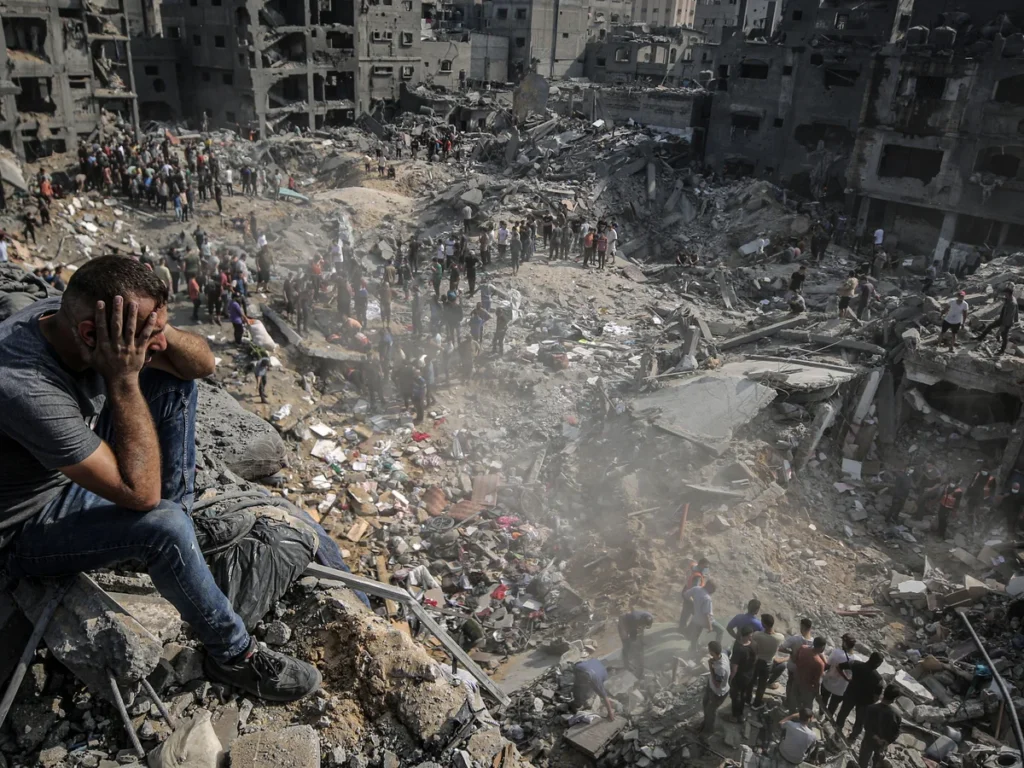
The ceasefire agreement came into effect on October 10 under a 20-point plan announced by U.S. President Donald Trump, bringing a halt to more than two years of Israeli attacks on Gaza. Since October 2023, those attacks have killed more than 71,000 Palestinians, most of them women and children, and injured over 171,000 others, leaving Gaza’s population facing a deepening humanitarian catastrophe.