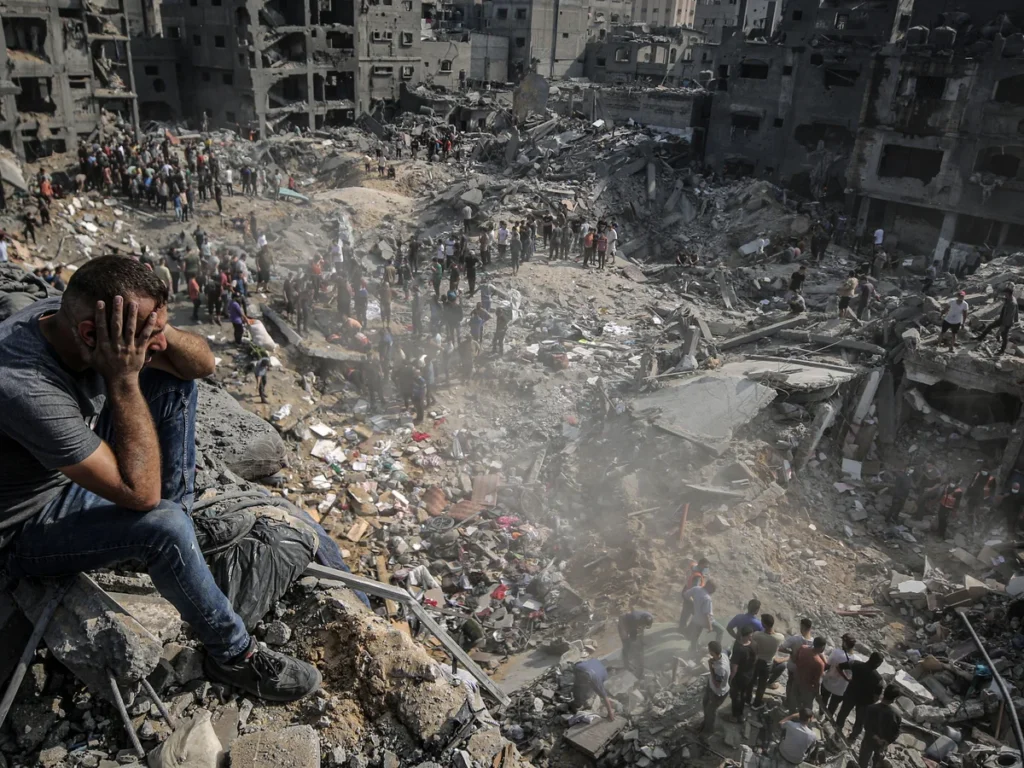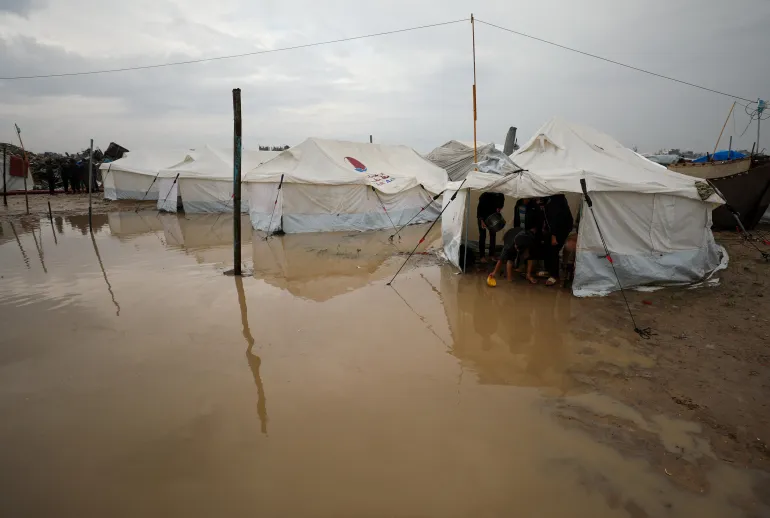
Gaza Herald_ Gaza City Mayor Yahya Al-Sarraj has warned that the Strip is facing one of its most severe humanitarian moments since the war began two years ago, as a powerful winter storm compounds the devastation caused by Israel’s siege and sustained attacks. He said Gaza’s municipalities are operating under near-total paralysis after losing more than 85 percent of their vehicles and heavy equipment, leaving emergency and rescue teams unable to respond effectively.
Al-Sarraj explained that crews have been working through the night with extremely limited means, attempting to confront flooding, overflowing sewage, and accumulating waste amid violent winds and relentless rain. Severe shortages of fuel, machinery, and basic tools have rendered their efforts largely symbolic in the face of mounting needs.
Flooding, Cold, and Tents Turn Daily Survival into a Deadly Struggle
According to the mayor, blocked drainage networks and widespread damage to infrastructure have caused rainwater to pool in low-lying neighborhoods, further obstructing emergency operations. At the same time, thousands of displaced families remain crammed into worn-out tents that offer little protection from freezing temperatures or heavy rainfall.
He said the collapse of already damaged homes during the storm led to the deaths of four people in a single night, most of them women and children. Among the victims was an infant who died from extreme cold inside a tent in Deir al-Balah, underscoring how the overlap between harsh weather and the absence of basic emergency capacity has become deadly.
Healthcare Breakdown and Unanswered Distress Calls
Al-Sarraj warned that Gaza’s health sector is nearing complete collapse, as shortages of medicines, medical staff, and fuel turn otherwise treatable conditions into life-threatening emergencies. He said even basic medical interventions are increasingly unavailable, while municipalities and civil defense teams are overwhelmed by distress calls, they simply cannot answer.
These conditions are exacerbated by ongoing Israeli restrictions on the entry of essential materials, including fuel, cement, and prefabricated housing units needed to repair shelters and infrastructure. This comes despite the implementation of the first phase of the ceasefire agreement, as approximately 2.4 million Palestinians continue to endure catastrophic living conditions.
International Appeals as Medical Evacuations Remain Urgent
In parallel, the World Health Organization has reported that more than 18,500 people in Gaza—around 4,000 of them children—still require urgent medical evacuation due to the collapse of healthcare services. The organization has appealed to additional countries to accept patients as Gaza’s medical system struggles to function.
Al-Sarraj concluded with an urgent call for international intervention, demanding an end to what he described as the systematic torment of civilians and the immediate entry of life-saving supplies before winter conditions claim more lives.
With full U.S. support, Israel has continued its genocidal war on Gaza since 7 October 2023, killing more than 71,000 Palestinians and wounding over 171,000, the majority women and children. Despite the ceasefire framework promoted by U.S. President Donald Trump, Israel continues to restrict the flow of food, medicine, medical equipment, and shelter materials, trapping Gaza’s population in an escalating humanitarian disaster.