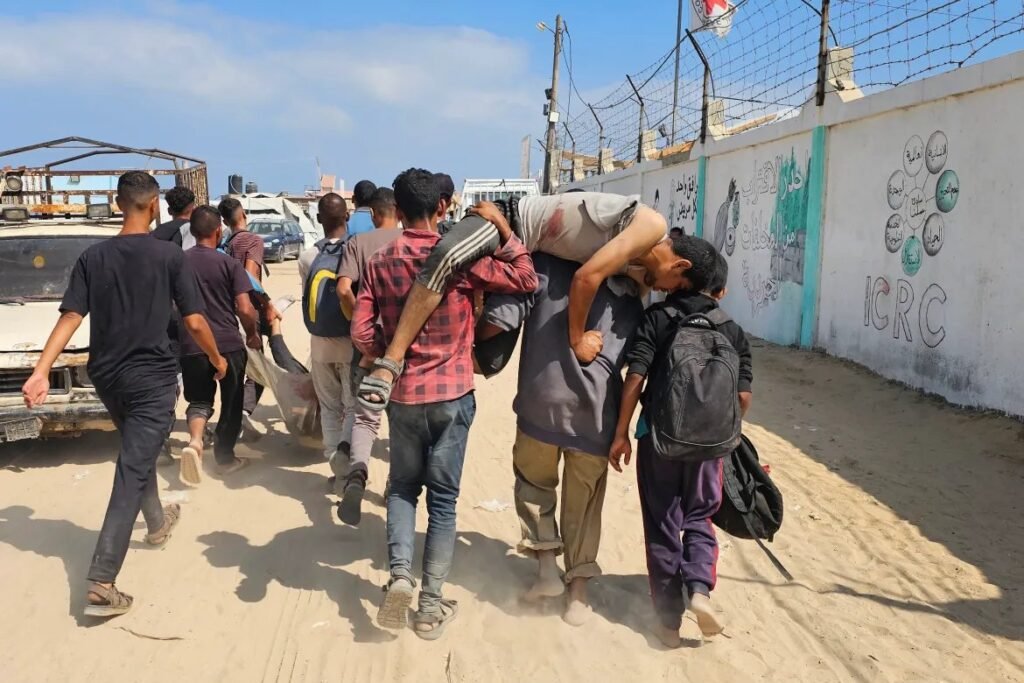
Gaza Herald_At dawn in Gaza, the new year does not begin with the sound of an alarm clock. Instead, it starts with the wind tugging at tent fabric and the echo of footsteps belonging to people who wake before daylight to search for water, medicine, or a meal that may not be enough.
In Gaza, the year does not begin with wishes. It begins with the same question repeated for nearly two years: How do we survive today?
This is how Gaza’s residents enter 2026—carrying a deep exhaustion left behind by a prolonged war that did not only destroy homes, but reshaped the meaning of life itself. Between illness, hunger, and displacement, dreams have grown quieter, yet more urgent.
Illness Without Access: When Treatment Becomes a Distant Hope
In northern Gaza, Adel Al-Kahlout, a man in his mid-forties, sits with a body now weaker than his memory. His illness was treatable before the war. Today, the lack of medication and chronic malnutrition have turned it into an unequal daily struggle.
He lost his job. His treatment was postponed indefinitely. He now waits for a medical referral with no clear timeline.
“I know exactly what I need medically,” he says. “But knowledge alone doesn’t heal. What I lack is not hope—it’s access.”
A Life Changed in Minutes: Disability in a War Zone
In Al-Amal neighborhood in Khan Younis, Nasser Badr’s life changed in a matter of minutes. A direct strike during shelling cost him one of his legs, turning a working father and provider into a man dependent on a wheelchair.
His small shop no longer exists. Supporting his family has become a postponed dream.
“I want a prosthetic limb,” he says calmly, “not just to walk again, but to reclaim my role in life.”
Hunger That Teaches You Endurance—but Not Acceptance
Beyond visible injuries, there is hunger—quiet, relentless, and destructive over time. Layla Abu Sultan, a mother of several children, measures meals by the spoon. She reduces her own portions so her children can sleep with something in their stomachs.
“The hardest part of hunger,” she says, “is that you get used to it,but you never get used to seeing your children ask for what you don’t have.”
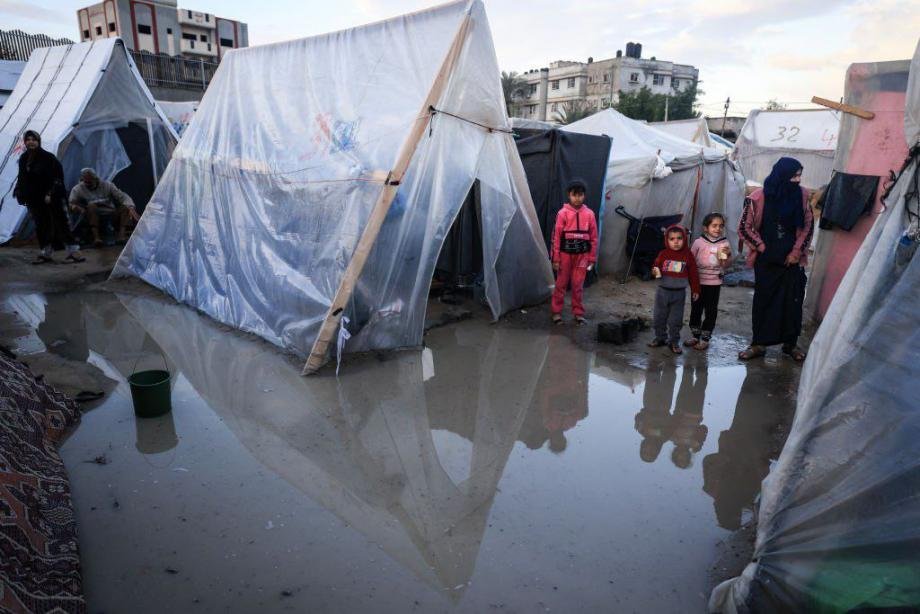
Winter shows no mercy either. In displacement areas, tents flood with every weather depression, offering little protection from cold or rain.
Surviving Bombs, Facing the Cold
Marwan Al-Khatib, who once survived being pulled from under the rubble, now lives with his family in a tent that cannot withstand the rain.
“We survive the bombing,” he says, “but every night we are tested again, by cold and fear.”
Youth Holding on to the Future
Despite everything, Gaza’s youth continue to cling to what remains of a future.
Sara Al-Jahjouh, a university student, studied for an entire year amid power cuts and weak internet. When the bombing paused and she returned to her neighborhood, she found no home—and no books.
“I lost my study tools,” she says, “but I didn’t lose my desire to continue.”
Yasser Abu Al-Atta completed high school while displaced. He dreams of traveling to study medicine—not as an escape, but as a delayed return.
“I want to come back to heal,” he says, “not just to tell the story of what happened.”
Turning Loss into Testimony
Amid the devastation, Rana Ayad chose to transform loss into testimony. She lost her husband and moved between displacement sites, but she kept writing. Her book was published outside Palestine, and she dreams of turning it into a visual work documenting what people here endured.
“I don’t want pain reduced to numbers,” she says. “Every story has a face, and every loss is a whole life.”
Modest Dreams, Profound Courage
In Gaza, the dreams of 2026 are not extravagant or distant. They are simple, essential dreams: accessible healthcare, sufficient food, a safe home, uninterrupted education.
Yet in a place exhausted by war, these basic rights become acts of courage—dreams that resemble the resilience of the people who hold on to them.