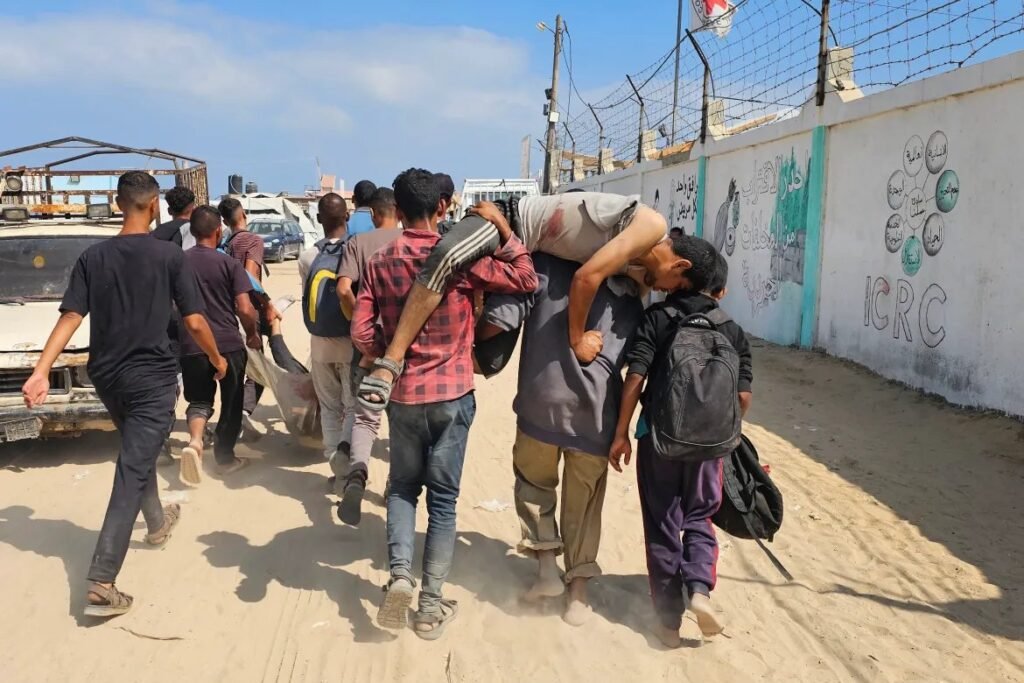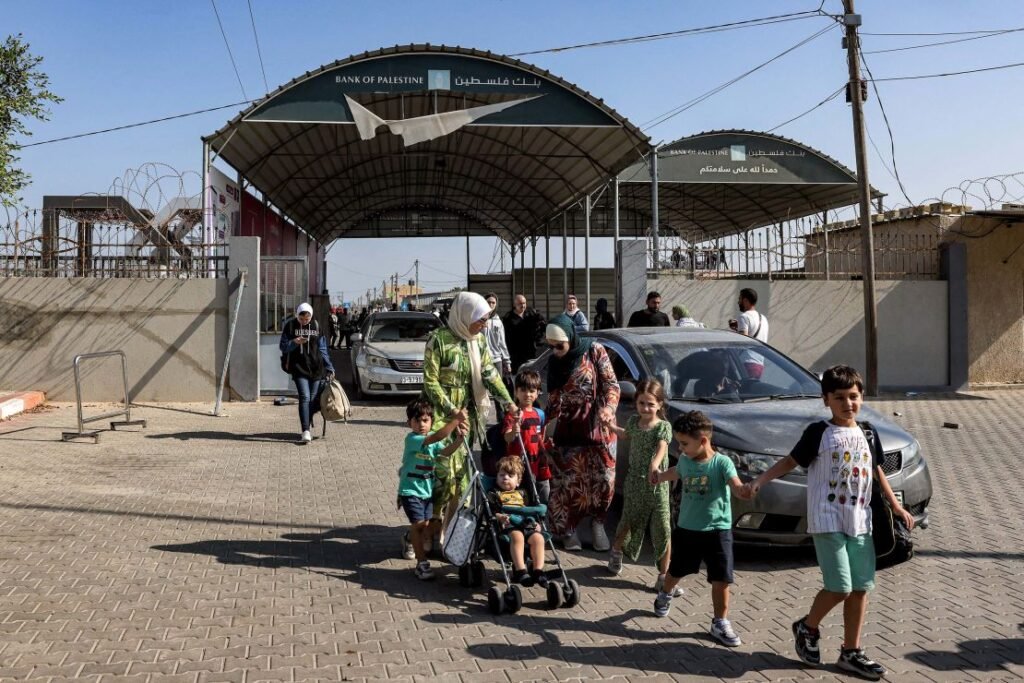
Gaza Herald — Hamas is expected in the coming days to return the body of the final Israeli captive still held in Gaza, and has indicated that it is open to discussing a potential “freeze” of its weapons as part of efforts to move into the second stage of the ceasefire agreement.
On the Israeli side, Prime Minister Benjamin Netanyahu stated on Sunday that the transition to Phase Two will be “difficult” but could begin as early as this month.
Yet throughout the entire first phase, Israel has continued to bombard the Gaza Strip, killing at least 360 Palestinians, while simultaneously maintaining severe restrictions on humanitarian aid, allowing only a fraction of the amount that was agreed upon.
How, then, has the first phase actually unfolded? And what realistic prospects exist for the process to advance into phase two?
Here is what the situation looks like.
Has Israel Respected the Ceasefire?
The simple answer: No.
Despite the ceasefire officially taking effect on October 10, Israel has violated it more than 590 times, killing over 360 Palestinians and pushing the cumulative death toll from two years of assault on Gaza to above 70,000.
Phase one, rooted in former US President Donald Trump’s 20-point ceasefire and post-war plan, obliged Israel to halt its military campaign, withdraw its forces, allow a significant increase in aid, and release hundreds of Palestinian detainees in return for the last remaining captives.
Yet only a month after Israel signed onto the ceasefire, Netanyahu publicly declared that Israel’s war “has not ended” and insisted that Hamas “will be disarmed.”
Israeli officials have repeatedly vowed to “eliminate” Hamas, even while their bombardment by Israel’s own admission has overwhelmingly killed civilians.
For Palestinians in Gaza, life remains suspended between terror and uncertainty, with daily attacks undermining any notion of a genuine truce.
Has Israel Withdrawn Its Troops?
Under the ceasefire terms, Israel initially repositioned its forces behind the so-called “yellow line,” a loosely defined boundary tracing the land perimeter of the Gaza Strip.
This line separates areas under full Israeli military control from those where Hamas still operates.
Hamas says Israel has been steadily shifting the yellow line deeper into Gaza “day by day,” forcing families to flee yet again and killing civilians, including children, who approach the unclear frontier.
Has Israel Allowed Humanitarian Aid to Enter Gaza?
Following a year-long blockade that produced a devastating, deliberately manufactured famine confirmed in August by the UN-backed Integrated Food Security Phase Classification (IPC), Israel has marginally increased the flow of aid.
But the quantity remains far below Gaza’s desperate needs and well under what the ceasefire mandated.
Aid organisations report that the population remains on the brink, with only a slight slowdown in malnutrition cases due to limited relief.
UNICEF and its partners, assessing conditions in October, identified nearly 9,300 children under the age of five suffering from acute malnutrition, a figure five times higher than during the previous temporary truce in February.
“A significant share of what’s entering is commercial, not humanitarian,” said Tamara Alrifai, spokesperson for UNRWA. “Major aid agencies, including UNRWA itself, still cannot access the supplies Gaza urgently needs.”
Is Israel Truly Committed to This Ceasefire?
Israel’s record casts deep doubt on its intentions. Having already broken a ceasefire earlier this year and with Netanyahu openly stating that the war continues, observers remain skeptical.
Critics say Netanyahu’s political survival has shaped Israel’s military conduct as much as strategic considerations.
That dynamic makes him increasingly dependent on Trump, whose administration strongly supports the ceasefire and whose backing could shield Netanyahu from the political dangers he faces at home.
Yossi Mekelberg, senior consulting fellow at Chatham House, argues that “Israel has never had a prime minister in a weaker position,” making the US’s influence unusually strong at this moment.
Netanyahu has asked President Isaac Herzog to grant him a pardon in his ongoing corruption case, an appeal Trump has reportedly encouraged.
At the same time, Netanyahu could blame Trump if members of his far-right coalition revolt against ending the war.
“Netanyahu can simply say, ‘This wasn’t my choice, it came from Trump,’” Mekelberg noted.
What Does Phase Two Envision?
The second phase focuses on Gaza’s political and security arrangements after the war.
The most developed proposal is the US-backed governance plan, which has been partially endorsed by the UN Security Council.
The plan envisions a temporary administration run by Palestinian technocrats, not political parties—overseen by a multinational “Board of Peace.”
Security and demilitarization would be handled by an International Stabilization Force, tasked with preventing renewed conflict and enabling reconstruction.
But Hamas and other Palestinian factions have rejected the concept of foreign oversight and opposed the UNSC resolution, saying it imposes structures “outside the Palestinian national will.”
Is a Final Agreement Likely?
Very little is certain other than the relentless rise in Palestinian casualties.
Netanyahu remains entangled in political, legal, and coalition crises, each pulling him in a different direction.
Meanwhile, Trump and his team, many of whom come from outside traditional diplomacy, are attempting to negotiate an end to both Israel’s genocide in Gaza and the war in Ukraine.
Even if a deal is reached, Israel’s long-standing pattern of launching attacks at will—in Gaza, the West Bank, Lebanon, Syria, and beyond makes uninterrupted calm unlikely.
Prospects for a sovereign Palestinian state remain distant.
With so many variables in motion, Mekelberg says, predicting the outcome is nearly impossible.
“It’s Netanyahu,” he said. “The corruption, the far-right alliances, the battles over conscripting the ultra-Orthodox, everything is entangled. Nothing is straightforward.
“Add to this an unpredictable US president, and the whole process becomes nearly impossible to chart.”