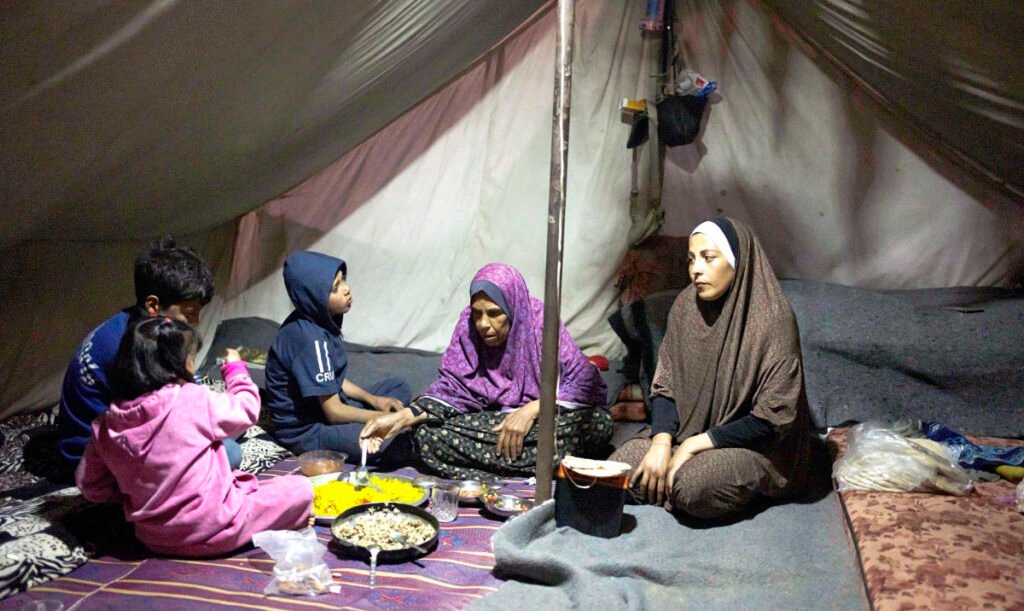
Gaza Herald — Displaced Palestinians are facing yet another wave of suffering after severe rainfall inundated their makeshift tents across Gaza City, as the United Nations warns that Israeli restrictions on humanitarian access have left hundreds of thousands without proper shelter as winter begins.
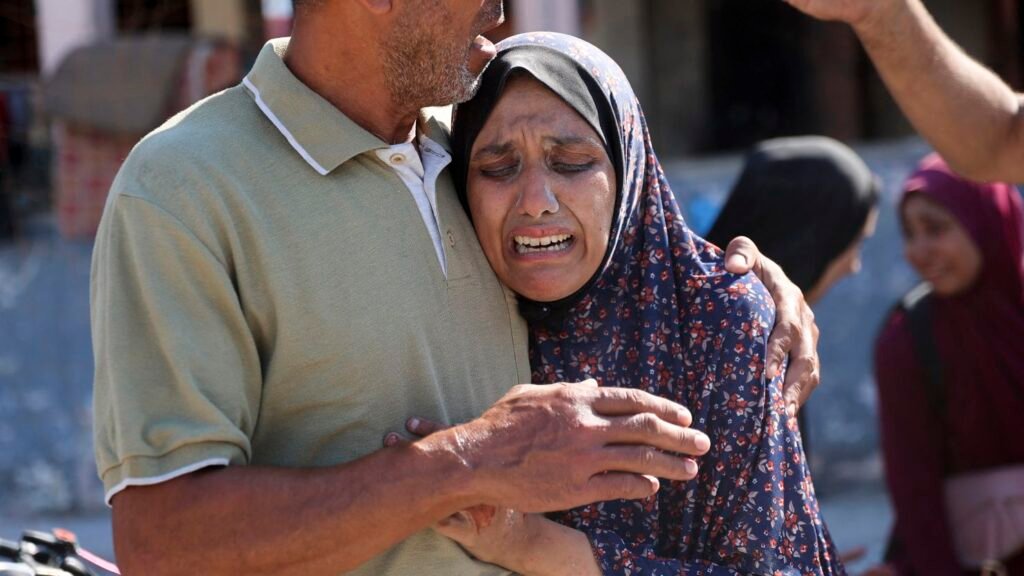
Abdulrahman Asaliyah, a displaced resident, described how families woke up to find mattresses, clothes, and all their personal belongings soaked in muddy floodwater.
He said nearly two dozen people had been working continuously for hours trying to drain the water from the area, calling urgently for new tents that could provide even minimal protection from the cold.
“This winter rain is a blessing in itself,” he said, “but some families now dread its arrival, fearing for the lives of their children and their own survival.”
Gaza’s civil defense force reported that the flooding hit hardest in the northern parts of the Strip, where hundreds of thousands of Palestinians have returned following last month’s ceasefire between Israel and Hamas. Floodwaters were also recorded in Deir al-Balah in central Gaza, with rescue teams urging the international community to step up efforts to relieve the “intolerable suffering” of people who have lost their homes in Israel’s two-year assault.
“We urgently call for the rapid provision of housing units, caravans, and durable tents for these displaced families, especially now as winter begins,” the agency said in a statement.
Despite the October 10 ceasefire bringing a partial increase in aid entering the Strip, the UN and humanitarian organizations say Palestinians remain without sufficient food, medicine, and essential supplies, including shelter materials.
Shelter relief groups working in the occupied Palestinian territory warned in early November that close to 260,000 Palestinian families, around 1.5 million people, were at extreme risk as temperatures continue to drop.
The UN Relief and Works Agency (UNRWA) said it currently holds enough shelter supplies to support up to 1.3 million Palestinians, but stressed that Israel is still obstructing the delivery of these materials despite the ceasefire agreement requiring the unhindered entry of humanitarian aid.
“We have a very limited window to protect families from the winter rains and cold,” warned Angelita Caredda, the Middle East and North Africa director for the Norwegian Refugee Council, on November 5.
In Deir al-Balah on Friday, residents spoke of growing fear that this winter will be exceptionally harsh due to the lack of safe, stable housing.
Even brief rainfall had devastating consequences. Palestinians recounted that just 30 minutes of rain was enough to drown entire tent clusters, many of them fragile and worn after two years of constant use.
Most families have no alternative but to remain in tents or severely overcrowded shelters, despite the dangerous conditions.
Children are seen walking barefoot through muddy water, with no winter clothing, no blankets, and no protection from the cold, while the limited aid that does arrive continues to face restrictions.
In Gaza City, another displaced man, Abu Ghassan, described how his family has been stripped of anything resembling a normal life.
“I’m lifting the mattresses so the children won’t get soaked,” he said. “But the little ones were already drenched. We don’t even have proper tents.”