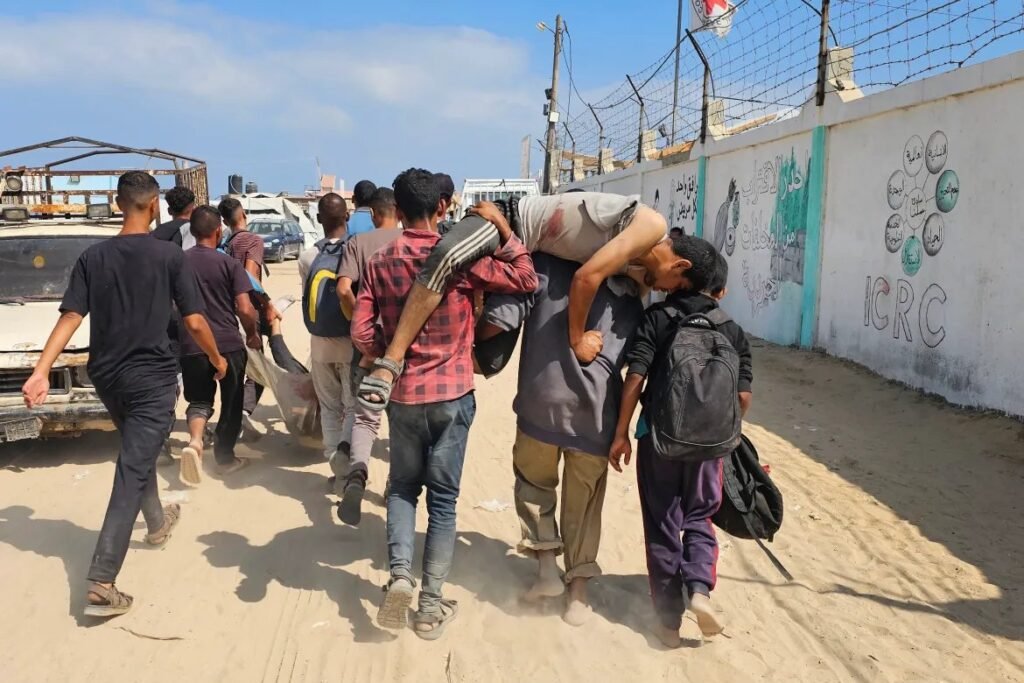
Gaza Herald_In the midst of Gaza’s deepening humanitarian catastrophe, U.S. President Donald Trump has announced that an international “stabilization force” coordinated by Washington could be deployed to the war-torn enclave “very soon.” The statement, made Thursday, comes even as Israeli airstrikes continue across Gaza, flattening neighborhoods, obstructing aid delivery, and deepening civilian suffering despite a fragile ceasefire agreement.
Trump, who has presented himself as the chief architect of Gaza’s post-war plan, claimed that “very powerful countries” have volunteered to contribute to the force, which would oversee security, reconstruction, and border management once it takes shape. “It’s going to be very soon. And Gaza is working out very well,” Trump said, without clarifying which countries would participate or under what legal mandate they would operate.
The move comes as the United Nations Security Council (UNSC) prepares to begin negotiations on a U.S.-drafted resolution authorizing a two-year mandate for a transitional governance body and a stabilisation mission. According to the draft, the 20,000-strong force would be permitted to “use all necessary measures” to carry out its duties — a phrase understood to include the use of military force.
UN Secretary-General António Guterres said on Tuesday that any such mission must have “full international legitimacy” and prioritize the protection of Palestinian civilians. “It cannot be another occupation by proxy,” he reportedly told Al Jazeera, stressing that the stabilisation effort must support, not replace, Palestinian governance.
A senior U.S. official told Reuters that Washington circulated the draft resolution to all ten elected UNSC members as well as key regional partners, including Egypt, Qatar, the United Arab Emirates, Saudi Arabia, and Türkiye. These nations have been at the forefront of diplomatic efforts to mediate ceasefires, secure humanitarian access, and push for a longer-term political settlement.
Trump’s broader 20-point plan for Gaza hinges on the demilitarization of Hamas and the reconstruction of the Strip under international supervision. While the plan led to a limited captive release deal and a temporary ceasefire in early October, Israeli forces have since been accused of repeatedly violating the truce through renewed bombardments and restrictions on aid convoys.
Hamas has not yet indicated whether it would agree to disarm, one of the key conditions embedded in Trump’s framework. The proposed stabilisation force would, according to the draft text, be responsible for dismantling Hamas’s “offensive infrastructure” and preventing its rearmament, a task that experts warn could draw the mission into direct conflict with armed Palestinian factions.
Türkiye has taken a prominent role in supporting the initiative, using its diplomatic leverage to encourage Hamas to engage with the peace framework. Turkish Foreign Minister Hakan Fidan hosted his counterparts from Qatar, Saudi Arabia, the UAE, Jordan, Pakistan, and Indonesia in Istanbul this week to rally support for the proposed mission and push for an end to Israel’s siege of Gaza.
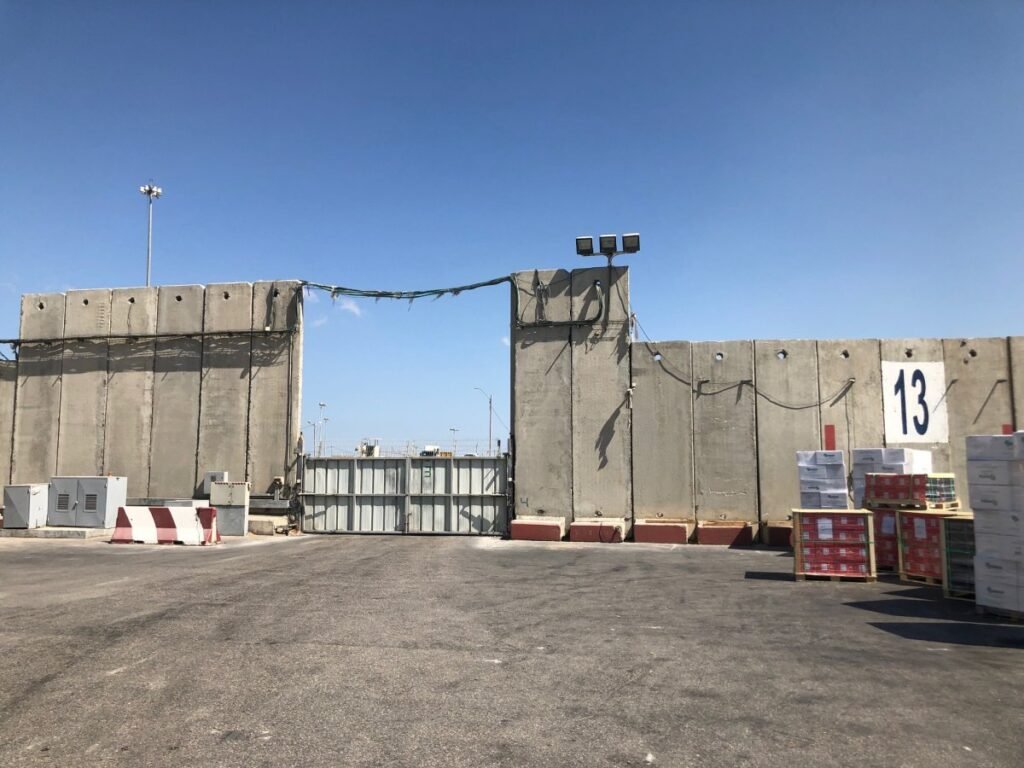
At the same time, Türkiye has condemned Israel’s ongoing “genocidal war” and demanded that Tel Aviv respect the ceasefire and open border crossings for desperately needed humanitarian aid. Ankara has also rejected Israeli attempts to exclude Turkish participation in the stabilisation mission, after Israeli Prime Minister Benjamin Netanyahu and Foreign Minister Gideon Saar declared they would “not accept any Turkish presence in Gaza.”
Israel, for its part, appears to be pursuing a parallel agenda. During a joint news conference with Trump in September, Netanyahu asserted that “Israel will retain security responsibility, including a security perimeter, for the foreseeable future” in Gaza, a statement that directly contradicts the idea of an independent international stabilization mission.
Meanwhile, U.S. Central Command (CENTCOM) chief General Michael Kurilla has clarified that no American troops will take part in the deployment. Instead, the United States would focus on coordination, training, and logistical support, an approach that critics say could create ambiguity about accountability should the mission encounter armed resistance or humanitarian violations.
While Trump’s announcement signals renewed diplomatic momentum, it also raises major questions about sovereignty, legitimacy, and the will of the Palestinian people, none of whom have been directly consulted on the framework being shaped around them. Many Gazans, still reeling from months of bombardment, starvation, and displacement, fear that the “stabilization” plan could amount to yet another foreign-controlled arrangement that sidelines Palestinian agency.
As Gaza’s ruins continue to smolder and the humanitarian crisis worsens, analysts warn that no international mission can succeed without first addressing the root causes of the conflict: the occupation, the blockade, and the denial of Palestinian self-determination. Until those realities are confronted, any stabilization force, however powerful, may end up managing chaos rather than restoring peace.