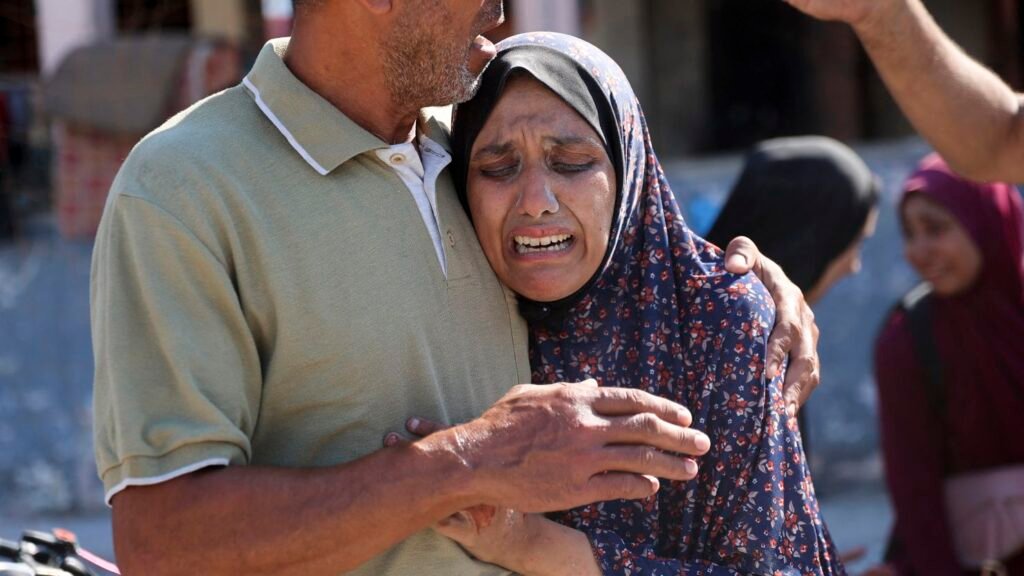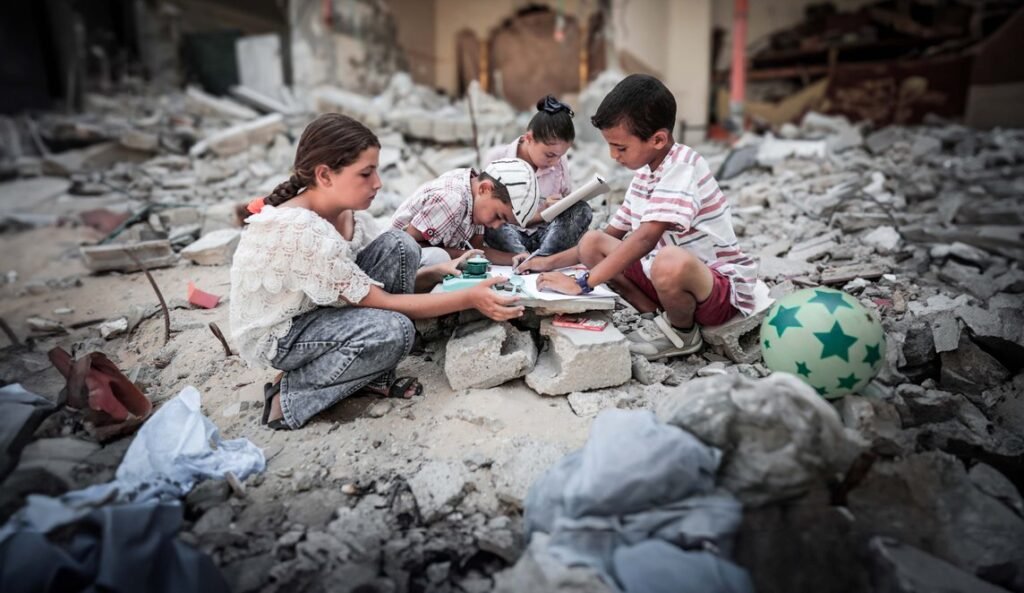
Gaza Herald_ Two years into Israel’s genocidal war on the Gaza Strip, the tent has become Gaza’s new skyline a canvas city stretching across the ruins. Once symbols of temporary refuge, these fragile shelters have become the only homes left for hundreds of thousands of Palestinians. They now stand as both a last defense against annihilation and a living testament to steadfastness and belonging on a land that refuses to forget its people.
From October 7, 2023, until the signing of the ceasefire on October 9, 2025, Gaza endured one of the most devastating humanitarian catastrophes of modern history. In those two years, entire neighborhoods were erased. Tens of thousands of homes crumbled under relentless bombardment. Families fled with little more than the clothes on their backs, seeking any piece of ground on which to survive. Today, most live in makeshift tents erected over the rubble, a fragile existence surrounded by memories of a life buried beneath the stones.
Abu Saud: A Symbol of Resilience
Amid the shattered remains of Khan Yunis, in the once vibrant Al-Amal neighborhood, Mahmoud Abu Saud stands before what used to be his home. The sound of his children’s laughter mingles with the whistling wind that cuts through the tattered fabric of their tent. “The tent doesn’t really protect us,” he says softly, eyes fixed on the horizon. “The cold hurts… but the hardest thing is watching your home turn into dust before your eyes, remembering every laugh, every corner inside it.”
Yet, there is no trace of surrender in his voice. “The kids are what give us strength,” he adds. “Every day I tell myself: we must endure, we must stay… because life doesn’t stop.”
He runs his hand along a broken stone salvaged from the ruins, as if trying to draw strength from it. “The stone broke,” he says, “but the heart didn’t. Whoever built once can build again and again. We don’t learn defeat; we learn how to stand back up.”
Tragic Numbers Amid the Ruins
By every measure, life in Gaza during this period has been catastrophic. Around 92 percent of homes, roughly 436,000 housing units, were damaged or destroyed, according to Gaza’s Government Media Office. That devastation forced more than 2.1 million people to become internally displaced, surviving day to day in tattered tents pitched over piles of concrete and dust.
The human toll is beyond comprehension. Government figures report some 69,000 Palestinians martyred, including over 20,000 children, and more than 170,000 injured. The destruction spread across every sector. 78 percent of infrastructure and buildings were damaged or obliterated, while farmlands, factories, schools, and hospitals were left in ruins. Agriculture, once a lifeline, was decimated, deepening hunger and despair across the Strip.
“The Tent Is Small, but Hope Is Great”
In a densely packed area of worn tents, Fatima Hamdan sits with her three children inside what now passes for home a few square meters of cloth and rope stretched where her house once stood.
Her voice is calm but unwavering. “Every day I wake up and count the remnants I managed to save… a photo here, a dish there,” she says. “That’s all that’s left of our life, and I won’t let it go.”
Despite the biting cold and the endless wind, Fatima insists on maintaining some semblance of normalcy for her children. “I keep giving them a sense of safety,” she explains. “The tent is small, but hope is great… and we will not give up.”
Around her, the chill of winter deepens. There is no electricity, no steady water supply, and no warmth except what people create through sheer willpower. Yet, in every corner of Gaza’s tent cities, small gestures of resilience a pot of tea over a wood fire, a flag drawn by a child keep life flickering amid the devastation.
A Homeland in Fabric and Ash
Life atop the rubble is nearly impossible, yet unavoidable. The tents may be frail, but they have become symbols of survival and belonging. Each one carries stories of loss and resistance of families who refuse to be erased from their own land.
In Gaza, the tents are more than temporary shelters; they are the last frontier of identity. Beneath their thin canvas, people continue to dream, to rebuild, and to wait not for aid or mercy, but for justice and return.