Gaza Herald- Although Israeli violations of the ceasefire agreement in the Gaza Strip have not stopped since the very first moments of its signing, the recent wave of airstrikes indicates that these are not isolated incidents. Rather, they are part of a deeply rooted policy aimed at keeping the Strip in a constant state of tension and establishing new rules of engagement that allow Israel to resume bombing whenever it wishes , under whatever pretext it chooses.
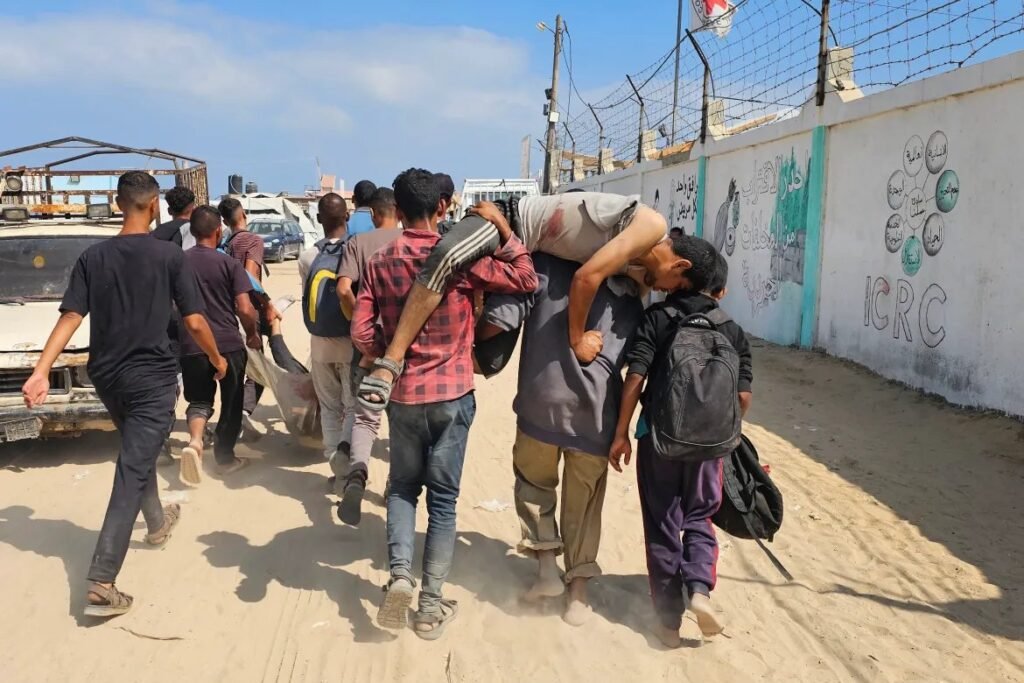
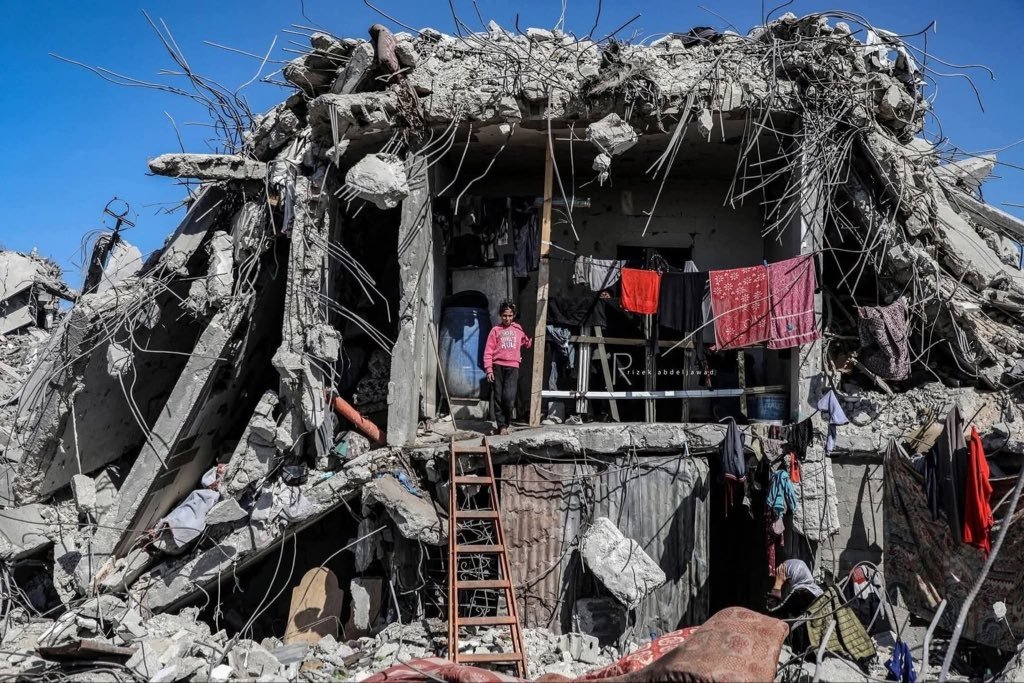
From Tuesday evening until Wednesday morning, the Israeli army carried out dozens of air raids across the Gaza Strip, killing about 70 Palestinians and wounding dozens more. The attacks were justified by the killing of an Israeli soldier by a sniper’s bullet in Rafah , an area under full Israeli control. Hamas, however, categorically denied any involvement in the incident. Despite that, Tel Aviv quickly used it as a pretext to resume its bombardment, in a clear continuation of its policy of violating the ceasefire agreement, which it has not truly abided by since the moment it was announced.
Sustaining a State of Instability
According to analysts, this escalation is not merely a reaction to a single security incident. It reflects a premeditated Israeli intent to sustain a state of instability and to turn Gaza into a permanent testing ground for its weapons , a means of accumulating a new “bank of targets” under various pretexts, similar to its approach on the Lebanese front.
Researcher on Israeli affairs Ihab Jabarin explains that what is happening is “a systematic attempt to establish new rules of engagement that enable Israel to carry out military operations from time to time, without the need to declare an all-out war or a formal collapse of the truce.”
He adds that “Netanyahu seeks to keep the flames burning at a minimal level , enough to maintain constant pressure on Gaza and to keep the resistance forces under ongoing field and psychological exhaustion.”
Before this latest round of airstrikes, the Government Media Office had documented more than 125 Israeli violations since the ceasefire on October 10, which resulted in 94 martyrs and 344 wounded.
Justifications and Pretexts
Ahmad Al-‘Ataouna, Director of the Roya Center for Political Development, says these attacks “fall within a clear Israeli policy of collecting justifications and pretexts to legitimize the continuation of aggression , whether through the issue of the bodies of the deceased or through claims of alleged breaches by the resistance,” according to his statement to Al Jazeera, followed by the Palestinian Information Center.
He adds that “Israel is using this humanitarian issue as a political weapon to cover up its failure to achieve a genuine prisoner exchange. It tries to shift international attention away from the war crimes and acts of genocide it committed, toward technical details concerning prisoners and remains.”
Al-‘Ataouna stresses that “the problem lies not in the latest incident, but in the overall policy.” He explains that Israel is attempting to redefine the very concept of a ceasefire in a way that serves its interests, granting itself the right to strike and assassinate whenever it wishes, while holding the resistance responsible for any subsequent escalation.
Managing the Conflict
Meanwhile, James Robbins, a researcher at the American Council for Foreign Policy, believes that “the issue is more about managing the conflict than ending it.” He notes that “the United States views the truce in Gaza as a temporary organizing phase rather than a stage of permanent peace.”
He points out that “Israel is exploiting this American flexibility to expand its military freedom of movement without being officially accused of violating the agreement.”
According to observers, the Israeli objective seems to be the entrenchment of a new equation that leaves Gaza in a “gray zone” , neither war nor peace , enabling Israel to carry out limited strikes, gather intelligence, and target leaders or infrastructure whenever it deems fit, while benefiting from international silence that justifies its actions under the pretext of security and self-defense.
Hamas’ Position
For its part, the Hamas movement, which denied any involvement in the Rafah shooting incident, affirmed its commitment to the ceasefire agreement. It stressed that the “criminal bombardment” carried out by the “fascist occupation army” on various areas of the Gaza Strip constitutes a flagrant violation of the ceasefire agreement signed in Sharm el-Sheikh under the sponsorship of U.S. President Donald Trump.
In its statement, Hamas said that “this terrorist attack is an extension of a series of violations committed in recent days , including assaults that resulted in the killing and wounding of civilians, and the continued closure of the Rafah crossing , confirming Israel’s determination to violate and undermine the agreement.”
The movement called on the mediators guaranteeing the agreement to “act immediately to pressure the occupation, curb its brutal escalation against civilians in the Gaza Strip, stop its grave violations of the ceasefire, and compel it to fully adhere to the agreement’s terms.”
Analysts conclude that through such behavior, Israel continues to exploit the pretext of “security” to undermine any real chance for a genuine truce, while Washington remains preoccupied with managing , rather than resolving , the conflict. This effectively grants Tel Aviv wider space to perpetuate a gradual policy of annihilation and to turn Gaza into an open arena for continuous testing and pressure.