
GazaHerald – When Palestinian mother Iman Abu Odah gave birth to her twin sons, Uday and Hamza, on November 2, 2023, Gaza was already burning. Less than a month into the war, Israel had cut off all supplies: no food, no fuel, no medicine, and no baby formula.
The maternity ward was overcrowded with injured civilians and displaced mothers. “I was running between beds,” Iman recalled. “I asked every woman if she had any extra milk powder to feed my sons.”
With no beds available, she was forced to leave the hospital the same day, walking nearly a kilometer back to a crowded school shelter while explosions echoed around her. That was the beginning of the twins’ lives, born under siege, carried through rubble, and raised in war.
Life in the Shadow of War
From that day, Uday and Hamza have known nothing but destruction. Their home was soon hit by Israeli bombardment, forcing the family to live in a tent, then on the street. When their father, Ayman, went out to find food for them, he was killed by shrapnel. “He went outside to get food for his children,” Iman said. “A piece of bread, that’s all. What was his fault?”
The war had already taken thousands of lives. By the time the twins were born, more than 9,000 people in Gaza had been killed. During their first winter, Israeli military operations intensified around the Nasser Medical Complex, near the school where the family was sheltering. The area was besieged. They fled under heavy bombardment to Al-Mawasi, a coastal zone Israel had declared “safe.”
But nothing was safe. The tent where they lived offered no protection from the freezing winds. Temperatures dropped close to zero at night. Without diapers, Iman cut strips of cloth and tied them with plastic bags. Soon, the twins developed rashes and sores.
They suffered diarrhea from the dirty water. Iman’s breast milk dried up from hunger, and she could not find baby formula anywhere. She made a weak herbal drink and soaked bread in it to feed them.
“They would cry in their sleep,” she said. “They were hungry and frightened; they would wake up screaming.”
As the months passed, food became harder to find. On July 27, 2024, Ayman was killed by Israeli forces while trying to buy vegetables. His death left Iman alone with five children, including the twins and two older sons who were injured in earlier attacks.
When a temporary truce was declared in January 2024, Iman and her children returned to the ruins of their home. The respite was short. By March, Israel had imposed a total blockade and resumed its military operations.
Once again, the family fled, this time with no tent. They lived for weeks on the street near the Nasser Medical Complex before returning to Al-Mawasi, only to find their shelter destroyed.
The Endless Present
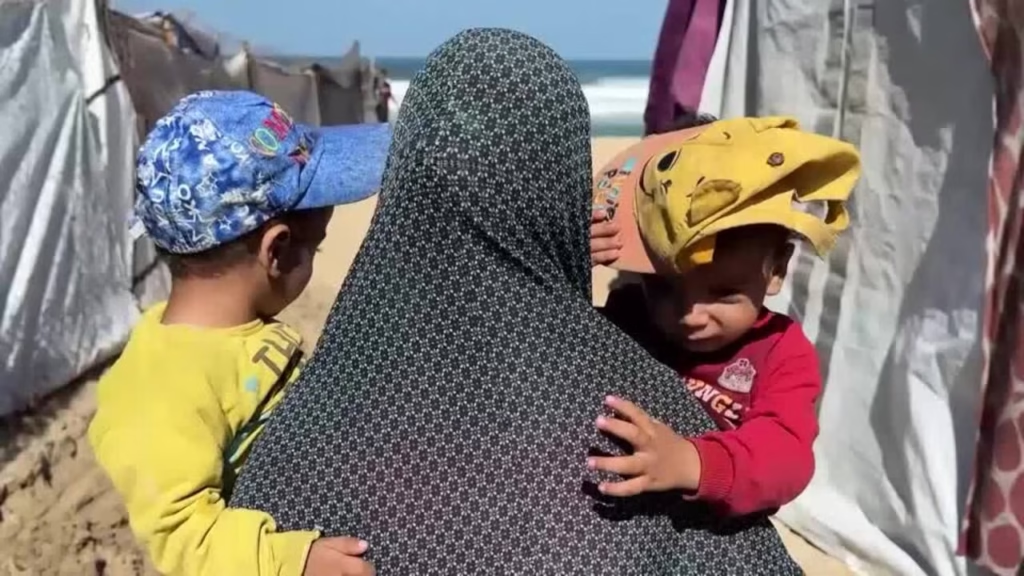
Now, almost two years later, Uday and Hamza live in an overcrowded camp on the beach. Around them, life is a struggle. The air smells of sewage and smoke from the clay stoves women use to bake small loaves of bread. Each family has dug a sewage pit beside their tent. Flies swarm everywhere. The children cough constantly. Their meals are limited to bread and sometimes rice, pasta, or lentils, if available.
Uday and Hamza are small for their age. Uday has begun to walk unsteadily, but Hamza still crawls. A doctor informed Iman that their malnutrition and calcium deficiency are the reasons behind their delayed growth. Both boys are pale and thin, their bodies weakened by illness and fear.
“They jump whenever they hear a plane,” Iman said. “They have lived their whole lives under bombing.”
Their 20-year-old sister, Hala, helps care for them. The tent they share is overcrowded and hot by day and cold by night. Outside, the constant hum of drones mixes with the sound of people shouting, vendors calling out, and the distant crackle of gunfire. Sleep is often interrupted by explosions or the cries of other children.
“I want them to have what every child deserves,” Iman said. “A home, food, school, and peace.” Her voice faltered. “But I am afraid this war will never stop. It had a beginning… and no end.”
For Uday and Hamza, born into siege and raised in fear, war is not a passing memory; it is all they have ever known. Their story reflects the silent tragedy of Gaza’s children, growing up under bombardment, facing hunger, disease, and loss before they can even walk. Their survival is an act of resistance in a place where childhood itself has been erased.

