GazaHerald – Gaza City is collapsing under relentless Israeli bombardment and the unceasing hum of warplanes overhead. Day and night, the roar of explosions and the dread of death press down on its people, forcing tens of thousands to abandon their homes and risk the long, punishing journey south. What awaits them, however, is not safety, but another form of torment.
The once-busy Salah al-Din Street now stands empty, blocked with cement by the Israeli army. Families are forced to take the coastal Al-Rashid Street on foot, dragging their children through miles of dust and rubble, under skies that never stop burning.
“We Slept on the Street Tonight”
Abdallah Natat, who fled Gaza City with his family at dawn, said the Israeli army had blocked Salah al-Din Street with cement, forcing displaced families to take the dangerous coastal al-Rashid Street on foot.
“I’m still on the street … We slept on the street tonight. The rockets and shelling have become a daily routine,” he said, describing a journey stripped of dignity, shelter, or hope.
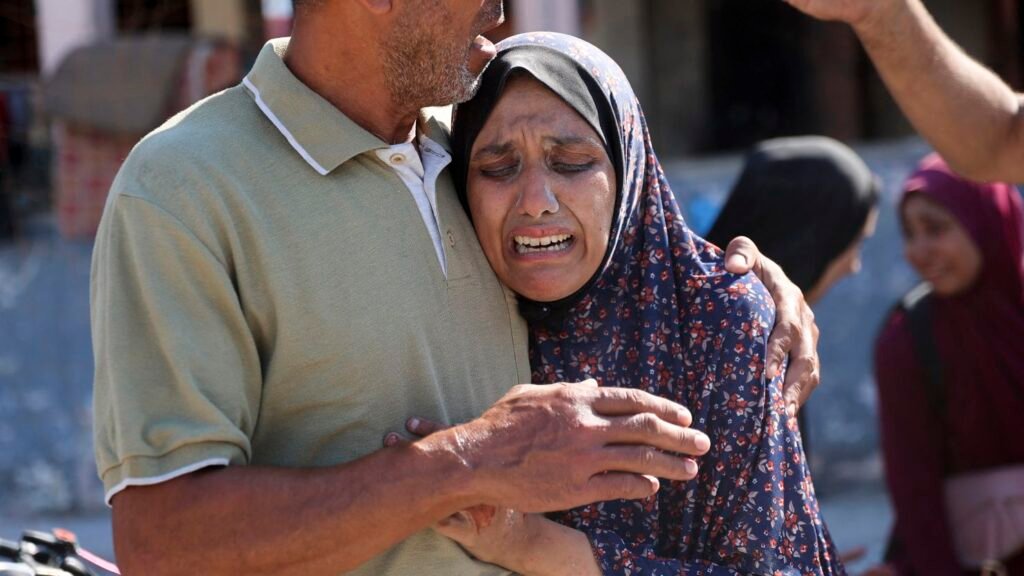
His relative, Ahmed Natat, stood carrying his young child after walking for nine hours. “Cars don’t pass, we have to walk. This child started crying a lot because I couldn’t feed him or put him to sleep,” he said. “The occupation army wants you to hate life. It doesn’t want you to live.”
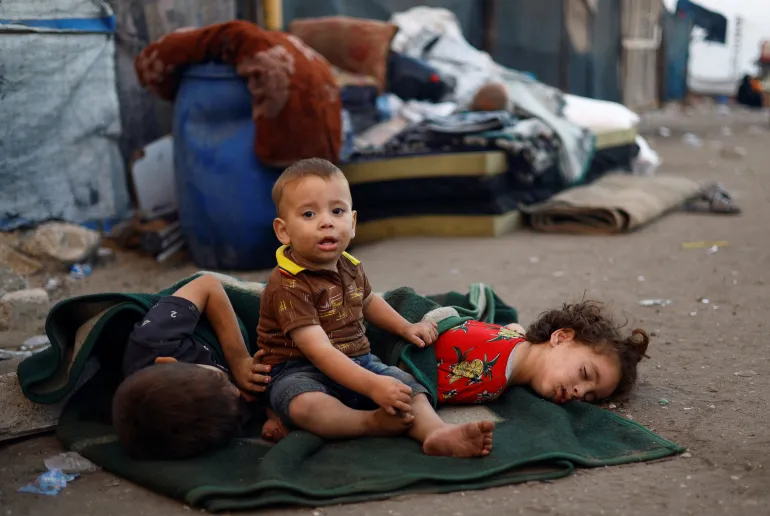
For many like them, survival has become a cruel test of endurance. The testimonies speak of families trapped for days, even weeks, without food, water, or shelter. Aid trucks are nowhere to be seen, tents are blocked from entering, and Gaza is slowly being hollowed into a “ghost town.”
The Road South: A Journey Without Relief
The Israeli army has now declared Gaza City’s Salah al-Din Street permanently closed. From this moment, it says, the only path south will be Rashid Street, exposed, overcrowded, and perilous. The same army warns it will continue to strike Gaza with “extreme and unprecedented force.”
The destruction of thousands of civilian vehicles has left many with no option but to walk. Mothers cradle hungry children; elderly men collapse along the roadside; families abandon what little belongings they had managed to save. Moving through Gaza today, residents say, feels less like traveling across their own land and more like crossing hostile borders between worlds.
Behind the forced march of civilians lies the larger machinery of war. Israel has launched a massive ground assault on Gaza City, deploying two divisions, with a third to follow. Defense Minister Yisrael Katz declared on social media, “Gaza is burning.”
But it is not only burning; it is starving. Since March 2, Israel has sealed off all crossings, preventing the entry of food, fuel, medicine, or relief. Though a trickle of trucks was allowed in weeks ago, residents say the aid was too little to even scratch the surface of famine. Worse, much of it never reached the hungry; it was seized by gangs, which the Gaza authorities accuse Israel of protecting.
“We Are All Like This”
Those fleeing Gaza City and the north are not searching for safety; they know there is none. They are merely clinging to survival, step by painful step, as bombs follow them and hunger haunts them.
“The situation is very difficult … We are all like this,” said Ahmed Natat, his child weeping in his arms.
His words capture the collective despair of an entire population forced to move under fire, stripped of aid, dignity, and the simplest human needs. For Gaza’s displaced, the road south is not an escape. It is the cruel theater of their suffering, stretching endlessly between death behind them and uncertainty ahead.