Gaza Herald- In 1948, the Palestinian people endured what came to be known as the Nakba, the Catastrophe. More than 750,000 Palestinians were uprooted from their homes and villages, forced into exile as a new state was declared upon their land.
Families were driven out through violence, intimidation, and massacres; entire towns and villages were depopulated, and many of them were either destroyed or resettled and given new names to erase their identity. What had been a vibrant and deeply rooted society was shattered in a matter of months, leaving a wound that has never healed.
The world at the time did not see the images of families being forced from their homes, the cries of children torn from their villages, or the devastation of communities reduced to rubble. Cameras were absent, and the international community, either indifferent or complicit, allowed the dispossession to unfold largely in silence. What endured were oral testimonies, stories carried by the displaced, passed down from generation to generation. Keys to locked homes, yellowing deeds, and fading photographs bec ame treasured symbols of memory and resistance, as families clung to the hope of return.
The Nakba was not only the physical expulsion of hundreds of thousands of people; it was also the systematic erasure of Palestinian culture, history, and identity. Schools, mosques, churches, and marketplaces were destroyed, and entire communities were stripped of their political rights and denied recognition. For Palestinians, the Nakba is not merely a historical event, but a continuing trauma that shapes their national identity and collective memory. It is a story of dispossession and exile, but also of the resilience of a people determined never to forget, and never to relinquish their right to return.
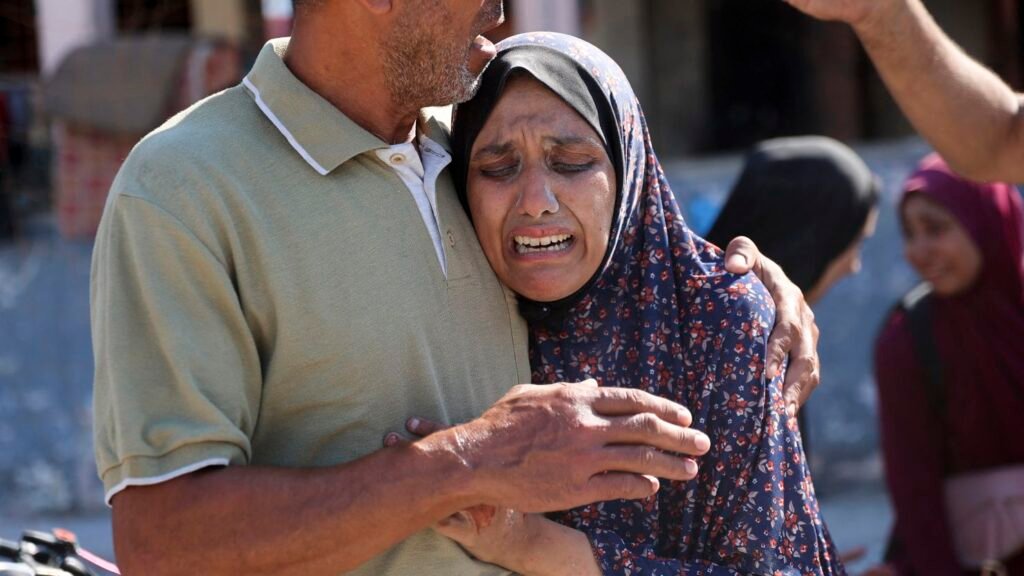
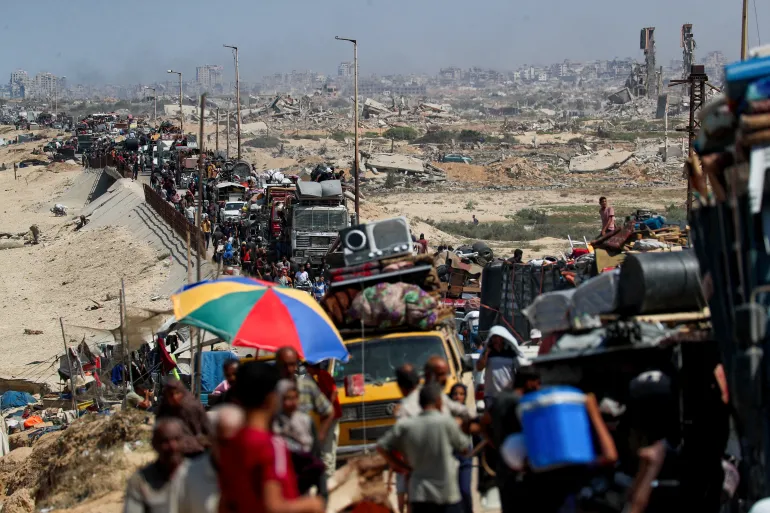
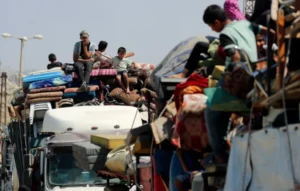
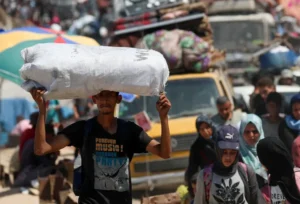
Today, more than seven decades later, Palestinians are enduring a new Nakba in Gaza. But unlike 1948, this one is unfolding live, in full view of the world. The mass displacement, the hunger, the rubble, it is all broadcast in real time, with no room for denial. Convoys of civilians fleeing under fire, hospitals turned to rubble, entire neighborhoods reduced to dust: these are not hidden crimes, but atrocities committed on camera.
Displacement or Mass Killing Disguised as Ethnic Cleansing
If Israel truly intended to relocate Palestinians from Gaza, it would open the borders and allow people to leave freely. Instead, every crossing remains sealed, trapping civilians under fire. To compound the cruelty, the so-called “humanitarian zone” represents only twenty-three percent of the Strip, far too little for nearly two million people. This reality exposes the truth: there is no plan for safe evacuation, only mass slaughter, followed by the forced expulsion of whoever survives.
A Family’s Story Across Generations
On a warm September night in 2023, the Abu Samra family gathered outside their home in northern Gaza, the air filled with the scent of mint. The patriarch, Abdullah Abu Samra, recalled his childhood in 1948, when he was forced to flee his village, today part of Israel, becoming one of the hundreds of thousands uprooted in the Nakba.
He retold that story countless times, adding small details in each telling, making sure his children and grandchildren would never forget. He always clung to hope that one day he might return. But after Hamas’s October 7, 2023, attack on Israel and the devastating Israeli war on Gaza that followed, his hope was shaken once again. Tens of thousands were killed, and generations of Palestinians found themselves once again facing displacement, hunger, and fear.
 “We are living through an even greater Nakba now,” Abdullah said, his voice carrying the weight of decades.
Like millions of Palestinians, the Abu Samra family has long felt the Nakba never ended. With relentless Israeli bombardment and sweeping evacuation orders, fears of a second Nakba grew. Nearly two million people, about 90% of Gaza’s population, have been displaced, many of them repeatedly. Israel’s Ministry of Defense even circulated a plan to push much of Gaza’s population toward Egypt, a move legal experts warn is a clear violation of international law and constitutes forced displacement.
The Echo of 1948
The parallels are haunting. In 1948, Palestinians were told their absence would last only days or weeks, so they left with little more than food, blankets, and the keys to their homes. Most were never allowed to return. The “Key of Return” became a symbol of loss and hope, passed down through generations.
Today, many Gazans again leave their homes carrying only a few possessions and those same keys this time, unsure if their neighborhoods will even exist upon their return. Some Israeli officials have even admitted their intentions. Agriculture Minister Avi Dichter bluntly declared: “We are now launching the Nakba of Gaza Nakba 2023.”
For Abdullah’s daughter Abir, the connection is painfully clear:
“We always used to ask why our parents left their homes in 1948. But when the bombs fell and we were ordered to leave, we lived the same experience.”
The Human Toll
From the first day of the war, bombs fell near the Abu Samra home. The family of twenty scattered, some fleeing to shelters, others crossing into Egypt. Relatives were killed. Abdullah, now 87, weak, remains in a makeshift tent in southern Gaza, hungry and separated from most of his family.
“I always think, talk, and dream about returning home,” he said.
During a short truce, some Palestinians returned to their neighborhoods, only to find nothing but rubble. Nearly 80% of Gaza’s buildings have been destroyed or damaged, according to the World Bank, which estimates reconstruction could take 80 years.
Abdullah’s granddaughter Ghada, who managed to escape to Egypt, still clutches the key to her family’s home. She wonders if these keys will, like the 1948 keys, become relics of a lost past.
 A Crime in Plain Sight
International law is clear: the mass displacement of civilians under conditions of war and coercion is a war crime, and when pursued systematically, amounts to ethnic cleansing. Yet Israel justifies its actions as “temporary evacuations” to protect civilians, while continuing the destruction of Gaza’s neighborhoods and infrastructure.
Volker Türk, the UN High Commissioner for Human Rights, warned that Israel’s actions “appear to be an effort to permanently alter the demographics of Gaza, in defiance of international law, amounting to ethnic cleansing.” Human rights organizations, including Human Rights Watch and even Israeli NGOs, have accused Israel of deliberate displacement, crimes against humanity, and genocide.
Israel rejects these charges, insisting its military warnings and evacuation orders prove otherwise. But for Palestinians enduring hunger, destruction, and exile, the lived reality is undeniable.
Nakba Documented
The difference between 1948 and today is not the nature of the crime, but the world’s inability to deny it. In 1948, leaders might have claimed ignorance, relying on scattered refugee testimonies. Today, the evidence is live-streamed: the bombings, the convoys of displaced families, the skeletal remains of cities.
If the world failed Palestinians in 1948 because it “did not know,” what is the excuse now? The tragedy is recorded in real time, and yet international inaction persists.
This is not just another chapter in Palestinian suffering. It is the continuation of a catastrophe that began in 1948, now unfolding before billions of witnesses. It is a Nakba documented in sound and image, a permanent indictment of a world that looked away twice.