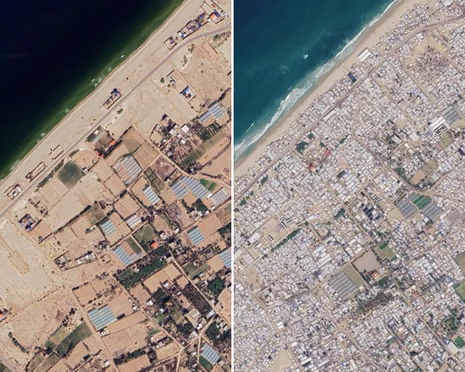
Gaza Herald _Newly updated satellite imagery available on Google Maps exposes the stark, terrifying scale of Israel’s nearly three-year military campaign against the Gaza Strip. Where vibrant, densely populated Palestinian neighborhoods once stood, high-resolution digital maps now show vast stretches of pulverized concrete, churned sand, and erased communities. For millions of Palestinians, these digital maps no longer serve for navigation, but instead represent a agonizing digital archive of lost homes, bulldozed streets, and vanished landmarks destroyed under Israeli bombardment.
The visual evidence documented across the enclave, from Gaza City in the north to Khan Younis and Rafah in the south, corroborates the catastrophic findings of the UN Satellite Centre. As of mid-June 2026, an estimated 82 percent of all structures in Gaza have been damaged or completely destroyed.
This includes over 134,000 completely leveled buildings, marking a relentless increase in physical destruction compared to previous months. In northern Gaza, where Israeli occupation forces have heavily restricted access, entire urban centers remain obscured or radically altered beyond recognition.
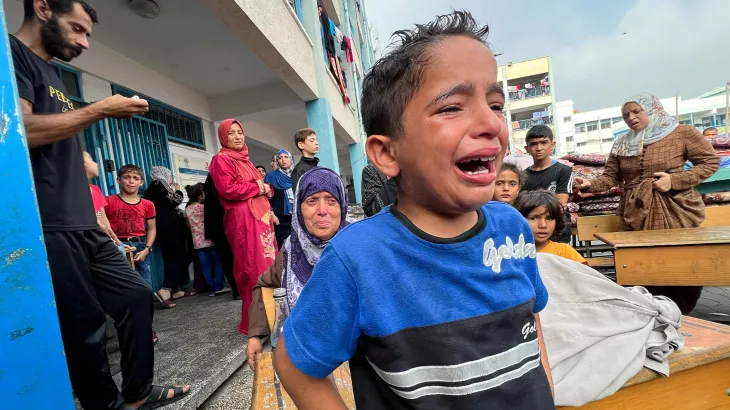
In southern Gaza, the visual transformation of the landscape tells a horrific story of forced displacement and urban erasure. Rafah’s neighborhood of Tal al-Sultan, which previously served as a desperate sanctuary for hundreds of thousands of displaced families, has been reduced to flat rubble and bare sand.
Further west in al-Mawasi, what was once open agricultural land has been transformed into a sprawling, overcrowded sea of makeshift tents as millions of Palestinians are repeatedly driven from one area to another under threat of heavy bombardment, with nowhere left to seek safety.
The devastation extends well beyond private residential housing, targeting the foundational pillars of Palestinian societal life. Khan Younis lies in ruin, its major thoroughfares and civic hubs unrecognizable, while crucial infrastructure like Gaza’s historic port has been rendered completely non-functional.
A comprehensive assessment published by the United Nations, European Union, and World Bank estimates direct infrastructure damage at over $35.2 billion, with long-term reconstruction needs topping $71.4 billion.
Over 60 percent of Gaza’s entire housing stock has been destroyed, displacing upwards of 1.9 million people, nearly 90 percent of the total population, many forced to move dozens of times.
This systematic destruction has triggered a catastrophic humanitarian and environmental crisis that grips every facet of daily life. More than half of Gaza’s hospitals and the vast majority of its schools lie in ruins, while all six wastewater treatment plants and 70 percent of sewage pumping stations have been destroyed, forcing 77 percent of families to rely on trucked water supplies.
Over 68 million tonnes of dangerous rubble, heavily contaminated with unexploded Israeli ordnance, raw sewage, hazardous asbestos, and medical waste, now blanket the Strip, creating an immediate public health emergency and leaving over 460,000 displaced people in makeshift shelters severely exposed to upcoming seasonal flooding.
Beyond the physical wreckage, the sheer human cost of the campaign remains staggering. Since October 2023, Israeli forces have killed at least 74,032 Palestinians and injured more than 175,142, while destroying roughly 90 percent of the civilian infrastructure. Satellite maps now serve as a grave permanent record of a deliberate attempt to render Palestinian land completely uninhabitable, proving that any future recovery will require not just rebuilding thousands of homes, but entire systems of basic human survival.