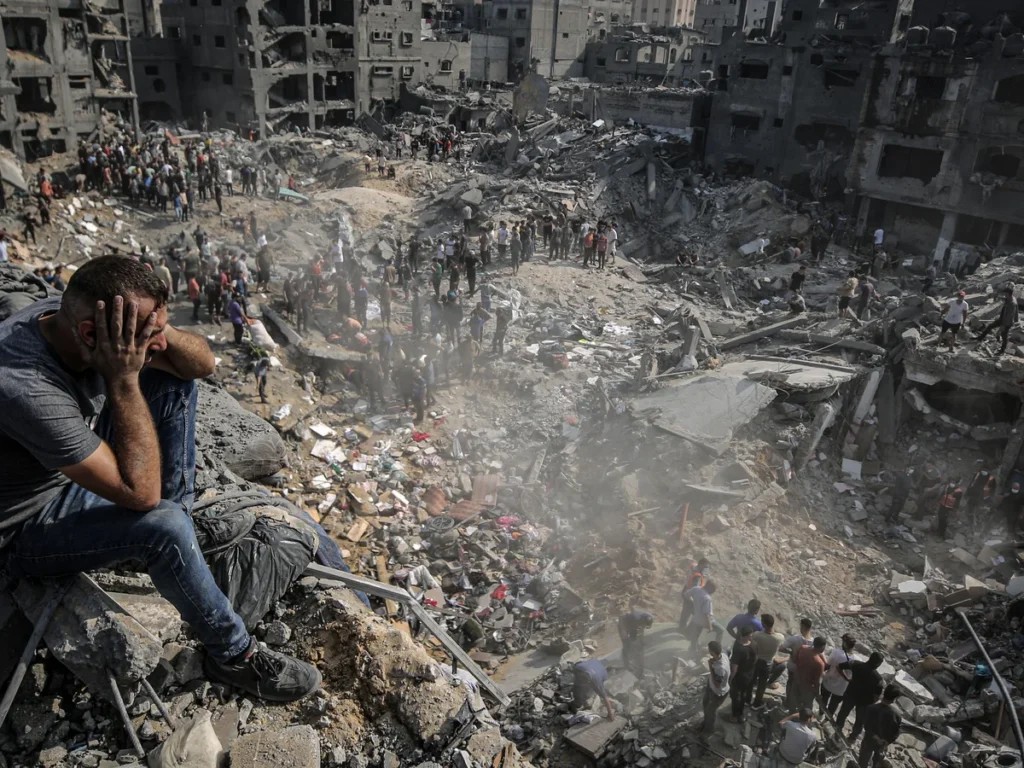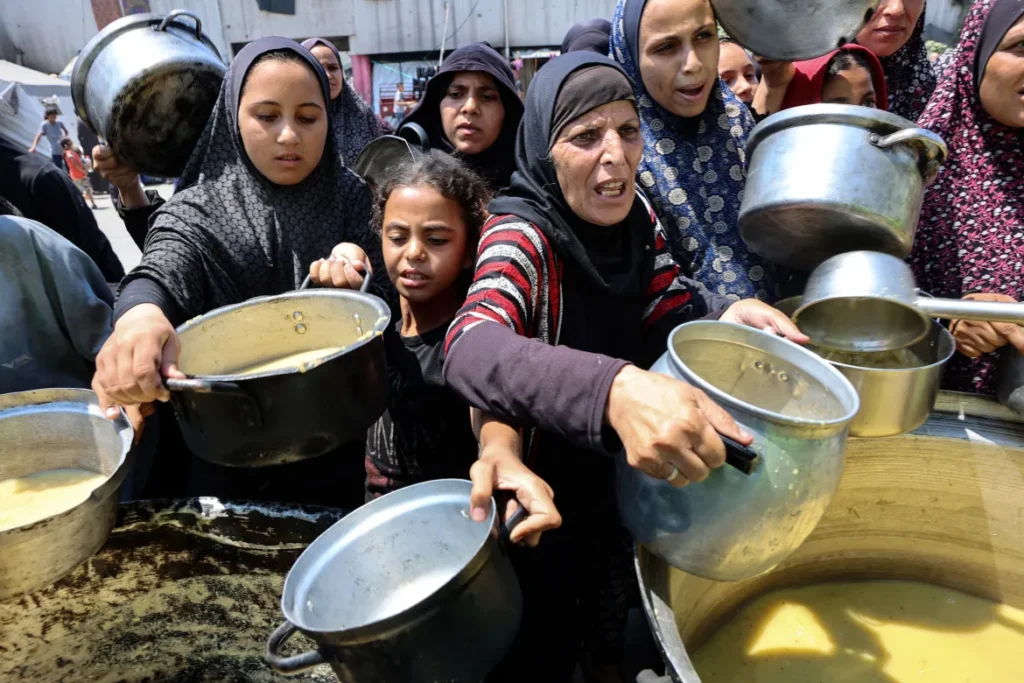
Gaza Herald — Israeli military aid-entry figures and Palestinian records reveal a significant gap between Israel’s claims of humanitarian assistance to Gaza and the volume of supplies reported to have entered the territory, as displaced families face devastating winter conditions and continued Israeli military attacks.
Records attributed to Israel’s Coordinator of Government Activities in the Territories (COGAT) indicate that truck entries have repeatedly fallen below the daily target associated with the Gaza ceasefire arrangements. Meanwhile, Gaza’s Government Media Office (GMO) reported Monday, November 16, that only 33% of the agreed number of aid trucks had entered the territory since the ceasefire took effect in October 2025.
The figures come amid mounting concerns over how aid deliveries are counted, restrictions on essential shelter materials, and the continuing inability of many Palestinians to obtain medical treatment outside Gaza.
While Israel maintains that it is facilitating substantial humanitarian deliveries, aid organizations and Palestinian officials argue that the supplies reaching civilians remain far below what is needed.
Israeli Military Records Raise Questions About Aid Commitments
Data attributed to COGAT and submitted to the U.S.-led Civil-Military Coordination Center raises questions about Israel’s compliance with humanitarian supply commitments.
Under the ceasefire arrangements cited in the records, approximately 4,200 trucks carrying humanitarian aid and commercial goods were expected to enter Gaza each week, equivalent to an average of 600 trucks per day.
Yet the reported figures show approximately 4,700 trucks entering in March, 5,300 in April, and more than 9,600 in May. Entries reportedly exceeded 13,000 in September before falling to slightly more than 6,500 in October.
Even the higher monthly totals remained below the approximately 18,000 trucks that would be expected over a 30-day period at the stated daily rate.
COGAT has disputed the accuracy of the reported figures and maintained that Israel has met or exceeded its humanitarian obligations.
The agency has also highlighted deliveries of winter supplies, medical equipment, and other essential goods as evidence of its efforts to address humanitarian needs.
However, discrepancies between reported truck movements, shipment categories, and the amount of aid actually reaching civilians have complicated independent assessments of humanitarian access.
Truck-Counting Methods Come Under Scrutiny
Questions have also emerged about how Israeli authorities calculate and report truck deliveries.
In reporting published November 11, the Israeli human rights organization Gisha raised concerns about a counting method under which 12 pallets of goods can be recorded as one truckload, compared with a typical capacity of approximately 20 pallets.
The difference matters because truck counts alone do not necessarily establish the actual quantity of supplies entering Gaza.
A reported truckload carrying fewer pallets may represent significantly less cargo than a fully loaded vehicle.
Without consistent reporting of cargo weight, shipment volume, and delivery categories, comparisons between different aid-entry statistics can create a misleading impression of the amount of assistance available to civilians.
The issue has intensified calls for transparent, independently verifiable data showing not only how many trucks cross into Gaza, but also what they carry and whether the supplies reach the people who need them.
Gaza Authorities Report a 161,015-Truck Shortfall
Figures released Monday by Gaza’s Government Media Office describe a substantial cumulative deficit in humanitarian deliveries.
According to the office, Israeli authorities permitted 79,585 aid trucks to enter Gaza out of 240,600 trucks expected under the ceasefire arrangements.
That represents approximately 33% of the stated target, leaving a reported shortfall of 161,015 trucks.
The office accused Israel of maintaining restrictions that have prevented sufficient food, medical supplies, fuel, and shelter materials from reaching Gaza’s population.
It described the restrictions as part of a policy of systematic starvation and called on international mediators to ensure implementation of the humanitarian provisions of the ceasefire.
The GMO’s cumulative figures and COGAT’s reported monthly totals are not directly interchangeable: they cover different reporting periods and may include different categories of humanitarian and commercial shipments.
Nevertheless, both sets of figures raise questions about whether the volume of supplies entering Gaza has consistently met the levels anticipated under the ceasefire arrangements.
Winter Flooding Exposes the Cost of Delayed Shelter Supplies
The consequences of inadequate humanitarian access have become particularly visible in Gaza’s displacement camps, where heavy rainfall has flooded tents and left families exposed to cold, contaminated water, and deteriorating living conditions.
Humanitarian organizations have warned that large quantities of urgently needed shelter materials remain outside Gaza or face delays in entering the territory.
Reports indicate that approximately 150,000 emergency shelters have been awaiting entry or approval, even as displaced Palestinians struggle to protect their families from winter storms.
Families living in damaged tents have attempted to reinforce their shelters with sandbags and improvised materials, while flooded camps have exposed children and other vulnerable residents to additional health risks.
In a November 13 statement, the Humanitarian Country Team in the occupied Palestinian territory warned that much of the suffering caused by the storms was preventable.
The humanitarian agencies linked the severity of the crisis not only to extreme weather, but also to restrictions and operational obstacles that have hindered preparations and the delivery of essential supplies.
Israel, meanwhile, has maintained that it is implementing winter preparedness measures.
COGAT has reported the entry of tens of thousands of tents and thousands of trucks carrying winter supplies, alongside efforts involving sewage removal equipment and repairs to water infrastructure.
The competing accounts underscore the importance of distinguishing between supplies approved for entry, shipments crossing the border, and assistance actually delivered to displaced families.
More Than 6,200 Ceasefire Violations Reported
The humanitarian crisis has unfolded alongside continuing Israeli military operations despite the ceasefire that took effect in October 2025.
In its November 16 statement, Gaza’s Government Media Office said it had documented 6,233 Israeli violations of the ceasefire.
According to the office, the reported incidents resulted in the deaths of 1,649 Palestinians, injuries to 5,969 others, and the detention of 223 people.
The figures have not been independently verified.
The office said the violations included shootings, bombardments, demolitions, and other military activities that continued to threaten Palestinian civilians.
Israeli authorities have maintained that their military actions are intended to address security threats, while Palestinian officials accuse Israel of repeatedly breaching the ceasefire and undermining its humanitarian provisions.
For displaced Palestinians, the continuing violence has compounded the consequences of inadequate shelter, restricted aid access, and the destruction of essential infrastructure.
Rafah Restrictions Leave Patients Waiting for Treatment
Restrictions on movement through the Rafah border crossing have added another dimension to Gaza’s humanitarian emergency.
According to the Government Media Office, only 15,456 passenger movements were recorded in both directions out of 41,800 expected under the ceasefire arrangements, approximately 37% of the stated target.
The office also reported that 91 travelers had been turned back.
Palestinian authorities accused Israel of obstructing the movement of patients and wounded civilians who require medical treatment unavailable in Gaza.
The restrictions have particularly serious consequences for people whose conditions require specialized surgery, cancer treatment, or other medical services that Gaza’s damaged healthcare system cannot adequately provide.
The office urged ceasefire mediators and international guarantors to intervene to facilitate medical evacuations and ensure access to essential humanitarian assistance.
Aid Commitments Must Be Measured Against Conditions on the Ground
The dispute over Gaza’s humanitarian deliveries is not simply a disagreement about truck statistics.
It concerns whether families have enough food, whether hospitals receive essential medicines, whether patients can travel for treatment, and whether displaced children have adequate shelter during winter storms.
Israeli authorities point to approved shipments and supplies entering Gaza as evidence of humanitarian cooperation. Palestinian officials and humanitarian organizations, however, continue to report serious shortages, delays, and restrictions.
The available figures require careful comparison because they do not always measure the same shipments or reporting periods. But the humanitarian consequences of inadequate access remain visible across Gaza’s overcrowded displacement camps and damaged healthcare facilities.
For civilians facing hunger, illness, and exposure to winter weather, the central measure of humanitarian progress is not the number of deliveries announced, but whether essential assistance reaches them in sufficient quantities and without delay.