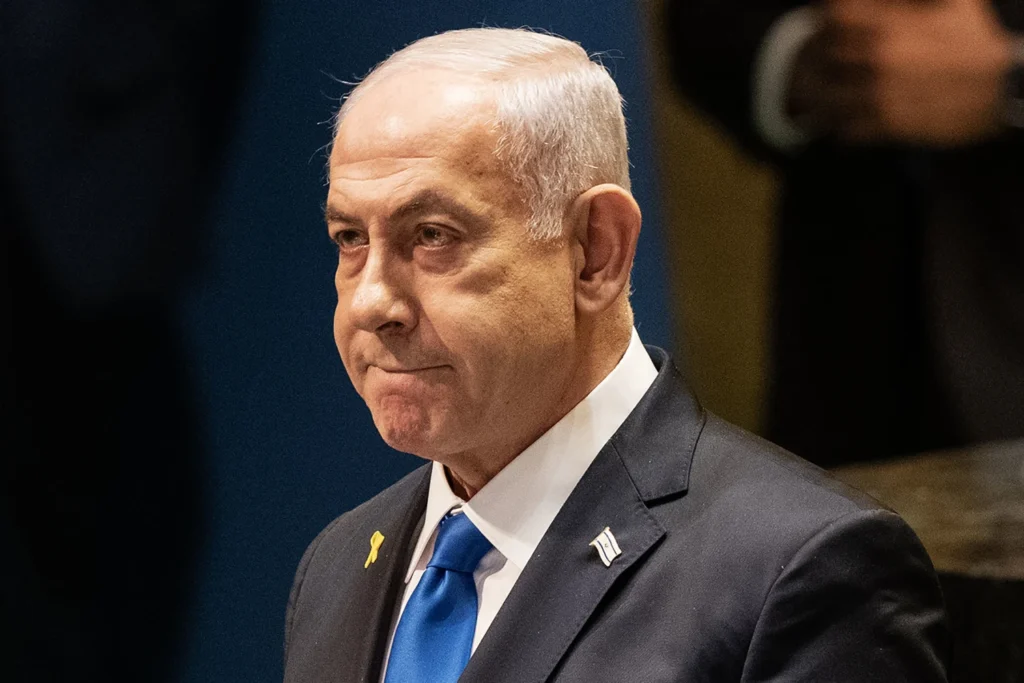
Gaza Herald — Addressing a largely emptied United Nations General Assembly chamber after dozens of delegates walked out in protest, Israeli Prime Minister Benjamin Netanyahu delivered a nearly 40-minute speech defending Israel’s conduct in Gaza and rejecting mounting international criticism, roughly a month before Israel’s October 27 parliamentary election.
Across his UN addresses and other public statements between 2024 and 2026, Netanyahu has rejected accusations of genocide, defended Israel’s civilian casualty record, accused Hamas of diverting humanitarian aid and minimised the scale of Israeli settler violence in the occupied West Bank.
A review of five central claims, however, shows significant discrepancies between Netanyahu’s presentation and findings by UN bodies, humanitarian organisations, US government officials and investigations drawing on Israeli military data.
Rejection of the Genocide Finding
In his 2026 UN address, Netanyahu called the accusation that Israel was committing genocide in Gaza “the greatest lie of the century”. He pointed to civilian warnings, vaccination campaigns and food deliveries as evidence that Israel could not be pursuing genocidal policies.
A UN-mandated Independent International Commission of Inquiry reached the opposite conclusion in September 2025. After reviewing Israeli military operations, official statements and patterns of conduct, the Commission concluded that Israeli authorities and forces had committed four of the five genocidal acts defined by the Genocide Convention.
The Commission also found that statements by senior Israeli civilian and military officials, together with the pattern of Israeli conduct in Gaza, demonstrated genocidal intent. It specifically concluded that Netanyahu, President Isaac Herzog and former War Minister Yoav Gallant had incited the commission of genocide.
The International Court of Justice has not yet issued a final ruling on whether Israel committed genocide in the case brought by South Africa. It has, however, issued binding provisional measures ordering Israel to prevent acts falling within the Genocide Convention and to enable the provision of urgently needed humanitarian assistance.
The Civilian Casualty Ratio
Netanyahu has repeatedly argued that Israel has taken extraordinary measures to minimise civilian casualties and has portrayed the civilian-to-combatant death ratio in Gaza as exceptionally low.
An investigation by The Guardian, +972 Magazine and Local Call, based on a classified Israeli military intelligence database, raised serious questions about those claims.
As of May 2025, the database reportedly listed approximately 8,900 named Hamas and Palestinian Islamic Jihad fighters as dead or probably dead. At the time, Gaza health authorities reported an overall death toll of roughly 53,000 Palestinians.
The investigation calculated that the fighters identified in the Israeli database represented about 17% of those killed, implying that civilians accounted for roughly 83% of the reported deaths if the database accurately reflected the military’s identified combatant fatalities. The Israeli military disputed the figures published in the investigation but did not specify which data it considered incorrect.
Claims of Systematic Hamas Aid Theft
Netanyahu has repeatedly accused Hamas of stealing humanitarian aid entering Gaza. In his 2026 UN address, he again argued that Hamas had taken food intended for Palestinian civilians.
But an internal USAID analysis found no evidence that Hamas systematically diverted US-funded humanitarian supplies.
The review examined 156 reported incidents involving the loss or theft of US-funded aid between October 2023 and May 2025 and found no reports indicating that Hamas benefited from those supplies.
The analysis did not conclude that diversion was impossible, and the US State Department disputed its findings. Nevertheless, the review undermined claims that systematic Hamas theft had been established as the principal explanation for Gaza’s aid crisis.
Food Deliveries and the Starvation Crisis
Netanyahu has also cited the overall volume of food entering Gaza as evidence against accusations that Israel deliberately deprived Palestinians of food.
But humanitarian organisations have repeatedly stressed that aid reaching Gaza’s crossings is not the same as food reaching families.
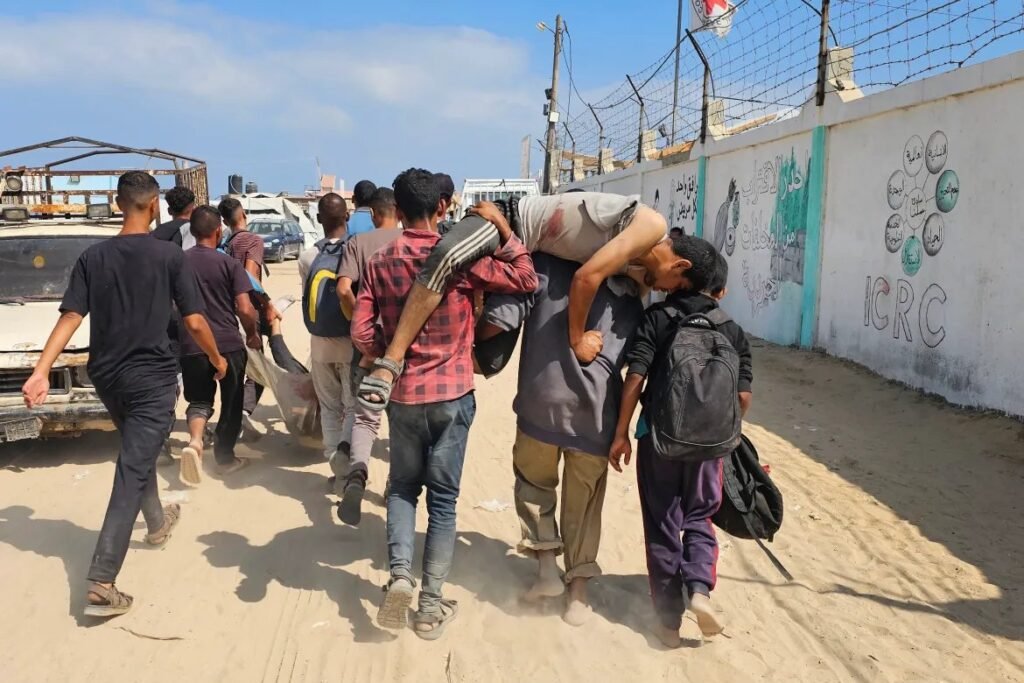
Distribution has been disrupted by restrictions on humanitarian operations, damaged roads, insecurity, military activity and the destruction of civilian infrastructure. Israel also completely halted the entry of goods and humanitarian supplies between March 2 and May 18, 2025.
In August 2025, the UN-backed Integrated Food Security Phase Classification confirmed famine in Gaza Governorate and warned of catastrophic conditions elsewhere.
Conditions subsequently improved following the October 2025 ceasefire and increased humanitarian access, but the crisis remains severe. The IPC currently projects that more than 1.4 million Palestinians—around 67% of Gaza’s population—will face Crisis-level acute food insecurity or worse between July and December 2026.
The distinction is important: counting the tonnage entering Gaza does not establish whether civilians consistently received sufficient food or whether humanitarian access met the population’s needs.
Minimising Israeli Settler Violence
Netanyahu has also sought to portray Israeli settler violence in the occupied West Bank as the work of a tiny extremist minority. In a July 2026 interview, he described those responsible as roughly 150 “juvenile delinquents”, separating them from the wider settler population.
UN data presents a substantially broader picture of the violence and its consequences.
By July 20, OCHA had documented more than 1,330 Israeli settler attacks resulting in casualties or property damage across approximately 250 Palestinian communities since the beginning of 2026—an average of more than six incidents every day.
By that point, 18 Palestinians had been killed in settler-related incidents during 2026, including Palestinians killed by settlers, Israeli forces during settler attacks, and cases where responsibility remained disputed.
The scale continued to rise. By August 10, the UN had documented more than 1,430 settler incidents affecting approximately 260 Palestinian communities during 2026.
The consequences extend beyond individual attacks. The UN reported that 127 Palestinian communities had experienced full or partial displacement since January 2023, with more than 6,390 Palestinians affected.
These figures do not establish that every Israeli settler participates in violence. They do, however, challenge attempts to portray settler violence and its consequences as an insignificant phenomenon involving only a handful of offenders.
A Wider Gap Between Rhetoric and Record
Netanyahu’s UN speech presented an image of an Israeli military taking exceptional measures to protect civilians, allowing abundant humanitarian assistance into Gaza and confronting violence committed only by Hamas and a marginal group of Israeli extremists.
The documentary record is considerably more complicated.
A UN Commission of Inquiry has concluded that Israel committed genocide in Gaza; an investigation based on Israeli military intelligence data raised profound questions about the proportion of civilians among those killed; a US government analysis found no evidence of systematic Hamas diversion of US-funded aid; the IPC documented famine in part of Gaza in 2025 and continues to warn of severe food insecurity; and UN monitoring shows Israeli settler violence affecting hundreds of Palestinian communities across the occupied West Bank.
These findings do not all carry the same legal or evidentiary weight, and several remain disputed by Israel. But taken together, they demonstrate why Netanyahu’s claims cannot be assessed solely through the narrative presented from the UN podium.
The gap between that rhetoric and the documented record remains substantial.