Gaza Herald — In Gaza, a dialysis appointment is no longer a routine medical procedure. For patients with kidney failure, simply reaching treatment has become an exhausting struggle shaped by fuel shortages, disrupted transportation and dwindling medical supplies.
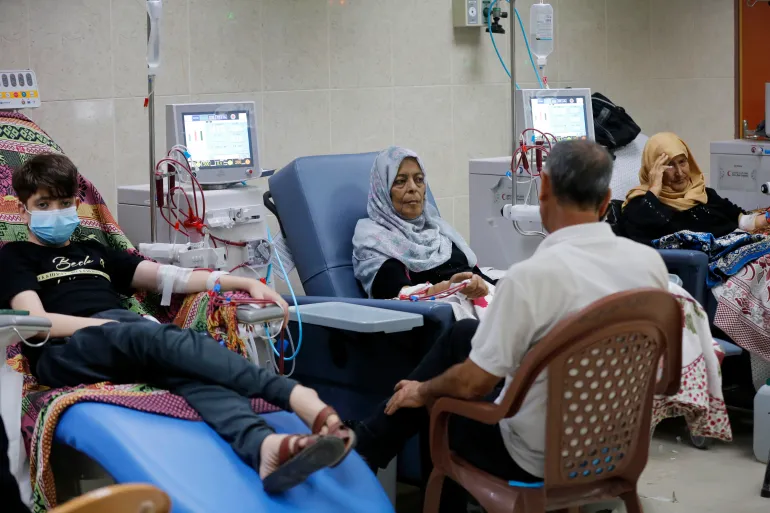
At Nasser Medical Complex in Khan Younis, one of Gaza’s remaining functioning hospitals, kidney patients depend on regular dialysis sessions that cannot simply be postponed. Yet shortages of essential supplies and medicines are placing even this life-sustaining treatment increasingly at risk.
Two Decades of Treatment, Now a Struggle to Reach Hospital
For 60-year-old Khairiya Shaqfa, who has undergone dialysis since 2004, treatment was once a predictable part of life. Today, reaching the hospital can itself become an ordeal.
Transportation shortages have forced Shaqfa and other patients to change vehicles several times to reach dialysis sessions. She described having to use as many as three different means of transportation while already exhausted by kidney failure and other health problems.
The difficulty does not end when she reaches the hospital. Shaqfa said some dialysis sessions that previously lasted three hours have been reduced to just an hour and a half.
For patients whose survival depends on regular treatment, losing half of a dialysis session is not merely an inconvenience. It reflects the growing pressure on a healthcare system struggling to provide even essential chronic care.
Another patient, Khamis Muhammad, described similar conditions, saying the time available for dialysis is often insufficient and that some patients return home while still needing further treatment.
Essential Supplies Running Out
The crisis has become particularly acute because of shortages of Bibag, a sodium bicarbonate product essential to some haemodialysis systems.
Nasser Medical Complex warned on September 23 that continued shortages of Bibag could disrupt dialysis machines and interrupt treatment for patients who depend on them regularly.
Dr. Raed Musleh, a nephrologist at Nasser Medical Complex, said kidney patients require regular treatment alongside essential medicines and medical supplies. When those materials are unavailable, doctors are left with increasingly limited options.
The problem illustrates the fragility of healthcare in Gaza: functioning dialysis machines and trained medical staff cannot provide treatment if essential consumables, medicines and fuel are unavailable.
A Health System Under Extreme Strain
The dialysis crisis is unfolding within a healthcare system that remains severely damaged. The World Health Organization said on September 24 that only 19 of Gaza’s 36 hospitals were functioning even partially, while none was fully operational. Essential medicines, diagnostic equipment, medical supplies and fuel remain critically scarce.
WHO specifically warned that people with kidney disease are unable to access regular dialysis, highlighting how shortages and damaged healthcare infrastructure continue to threaten patients whose conditions require uninterrupted care.
For Shaqfa, Muhammad and hundreds of other kidney patients, survival now depends on whether they can find transportation, reach the hospital, secure a place on a dialysis machine and receive enough treatment before supplies run short again.
In Gaza, dialysis has become more than a medical procedure. Every session is another fight to stay alive.