Gaza Herald — Gaza’s Water Authority is working to restart the Sheikh Ajlin wastewater treatment plant as thousands of cubic metres of untreated sewage continue to flow into the sea and surrounding environment, threatening public health amid widespread destruction of the enclave’s sanitation infrastructure.
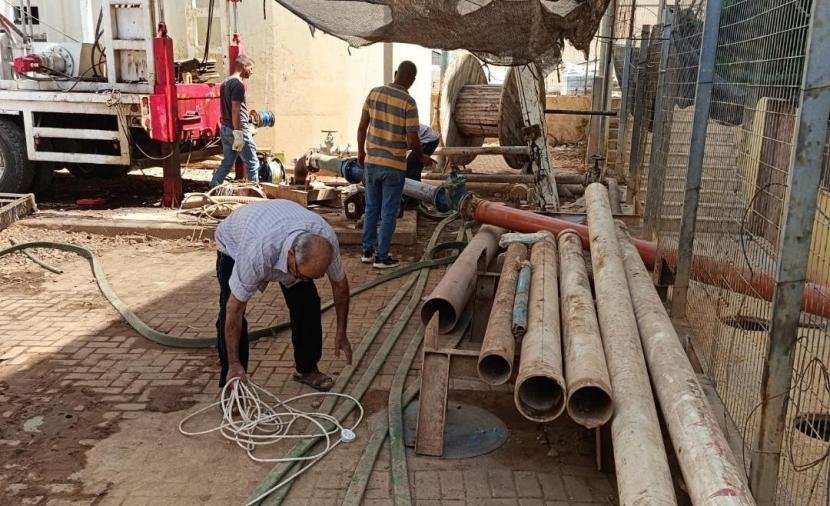
The Water Authority said Thursday that rehabilitation work is underway in coordination with international partners as part of emergency efforts to restore Gaza’s severely damaged wastewater system.
The shutdown of major treatment facilities and damage to pumping stations and sewage networks have sharply reduced Gaza’s treatment capacity, allowing large quantities of untreated wastewater to contaminate the environment.
Sheikh Ajlin, south of Gaza City, has a design capacity of approximately 75,000 cubic metres per day. Before the war, the plant received wastewater from Gaza City and treated most of it, while between 20,000 and 25,000 cubic metres per day were diverted to the main treatment plant east of Bureij.
After extensive damage to the sanitation system, Gaza City now generates about 12,000 cubic metres of wastewater per day, all of which is discharged untreated, according to the authority. The contamination poses serious health and environmental risks, particularly amid overcrowding and the concentration of displaced Palestinians in densely populated areas.
The first phase of Sheikh Ajlin’s partial rehabilitation is being funded with approximately $2 million from the International Committee of the Red Cross (ICRC). The work is intended to restore essential components and bring around 22,000 cubic metres of daily treatment capacity back online.
The Water Authority is also coordinating with UNICEF to secure €15 million from Germany’s KfW Development Bank for a second phase aimed at gradually restoring the plant to its full design capacity.
The project forms part of wider efforts to rehabilitate Gaza’s devastated sanitation infrastructure in coordination with the Coastal Municipalities Water Utility and international partners.
Restoring Sheikh Ajlin is considered particularly important as untreated sewage continues to threaten Gaza’s coastline, groundwater, environment and public health. The United Nations said in July that the plant served around 700,000 people before it was damaged during the war.
With much of Gaza’s water and sanitation infrastructure damaged or destroyed, bringing the plant back into operation could provide urgently needed treatment capacity and reduce the amount of raw sewage entering an already severely contaminated environment.
This report was produced in the Gaza Herald newsroom.