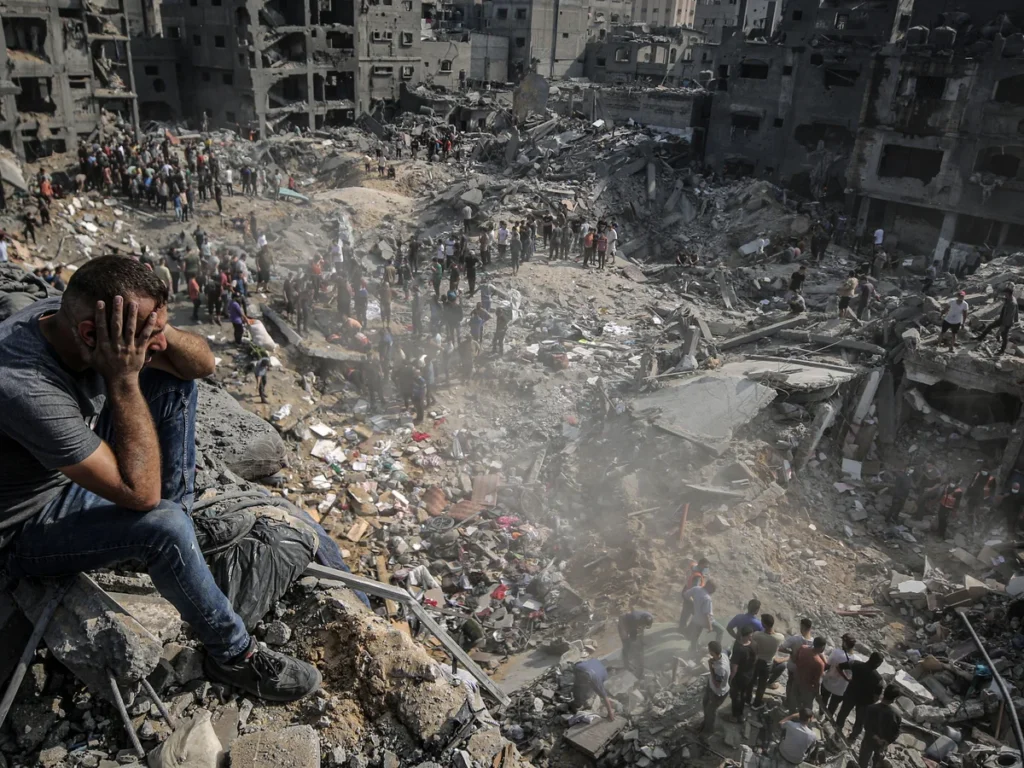
Gaza Herald- In Gaza, every closing of a border checkpoint is an act of economic strangulation. Families surviving under an ongoing genocide do not merely face natural market shortages; they face a calculated policy of engineered starvation. Today, parents purchase single tomatoes or half-kilograms of basic vegetables, constrained by non-existent incomes, while local agriculture lies completely devastated. Now, with occupation authorities arbitrarily shuttering Gaza’s primary commercial gateways under the pretext of Israeli holiday periods, Palestinians are being subjected to yet another wave of artificially manufactured hyperinflation.
The closure of the Kerem Shalom and Rafah crossings exposes a system designed to keep an entire population on the brink of collapse. This crisis goes far beyond standard supply-and-demand mechanics. It is the direct consequence of a deliberate siege that systematically destroys local food production, blocks vital imports, and deprives families of their fundamental right to nourish their children.
Dependency by Design: The Single Lifeline Mechanism
The arbitrary closure of Kerem Shalom illustrates how the occupation forces Gaza’s civilian population into total dependency on a heavily controlled bottleneck.
By completely shutting down passenger and commercial traffic for holiday observations, occupation authorities demonstrate how casually access to food is manipulated. When shipments pause, Gaza’s crushed commercial sector cannot fall back on domestic reserves. The systemic destruction of power plants, the blockade on fuel, and the total lack of industrial refrigeration make long-term storage impossible for local merchants.
This artificial scarcity directly converts into extortionate price hikes. In a devastated society where employment has been virtually erased, a brief halt in truck arrivals does not just mean empty stalls—it means immediate, widespread hunger.
Living Hand-to-Mouth: The Collapse of Family Purchasing Power
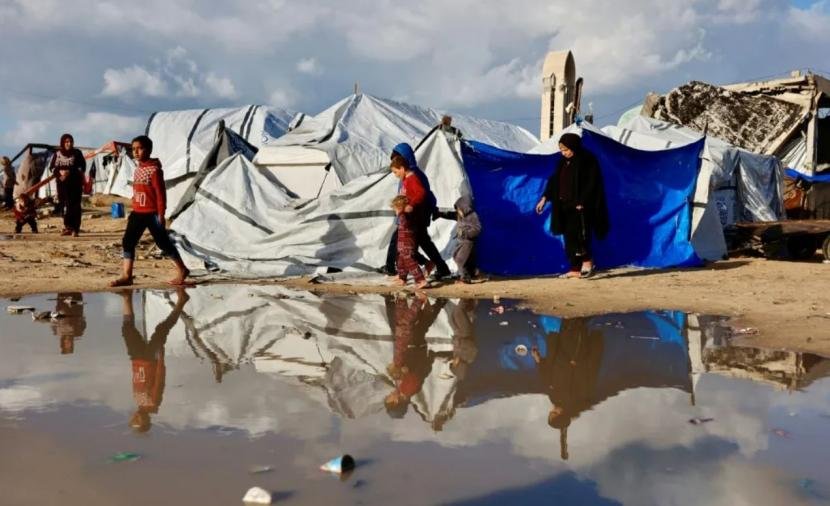
For Gaza’s displaced population, traditional grocery shopping has vanished, replaced by daily calculations of basic survival. Parents can no longer buy food for the week. Instead, they buy single pieces of produce based on whatever few coins they possess. For hundreds of thousands living in makeshift plastic tents, buying in bulk is an impossibility anyway: the sweltering heat destroys perishable items within hours, turning precious food into financial loss.
Crucial nutrition like fruit has become an unobtainable luxury for the vast majority of households. Demand has not dropped because people require less nourishment; it has collapsed because a brutalized population has been systematically impoverished to the point where even basic sustenance is out of reach.
Traders Trapped in an Economic Siege
Local Palestinian merchants are caught in the same destructive web imposed by the blockade.
Small vendors cannot afford to stockpile goods prior to announced border closures. High wholesale costs combined with crushed consumer buying power mean that purchasing larger quantities carries a ruinous risk. Without fuel or electricity to run cold-storage facilities, any unsold produce spoils rapidly, threatening traders with total bankruptcy.
This dynamic creates a vicious cycle: traders are forced to bring in micro-quantities, which instantly triggers local shortages, drives up prices, and further starves the community. The physical blockade at the borders directly mirrors the financial blockade within the local market.
Eradicating Autonomy: The Systematic Destruction of Gaza’s Farmland
Gaza’s agricultural sector, once a proud pillar of local self-reliance, has been intentionally targeted to ensure permanent dependence on external food shipments.
The Israeli forces have destroyed or rendered inaccessible roughly 87.6 percent of Gaza’s agricultural land. Irrigation networks, water wells, greenhouses, livestock, and soil have been methodically demolished. Assessments reveal that a staggering 97 percent of Gaza’s farmland is either damaged or completely unreachable due to military restrictions.
Farmers who attempt to return to their fields face snipers, air strikes, and a severe ban on essential agricultural inputs like seeds, fertilizers, and equipment. This environmental and agricultural destruction ensures that when commercial crossings are sealed, there is zero domestic yield to cushion the blow.
The “Yellow Line”: Weaponizing Geography Against Food Security
The creation of military buffer zones and “Yellow Lines” has transformed vast swaths of fertile Palestinian land into lethal firing zones.
Over 70 percent of Gaza’s agricultural territory is now inaccessible to the farmers who have cultivated it for generations. By cutting off access to these breadbaskets, occupation policies directly force Palestinian markets into complete submission to external commercial flows.
When domestic farming is crushed and imports are halted at will, food becomes a direct weapon of war.
Hyperinflation as a Tool of Collective Punishment
The current economic reality in Gaza is not an accident of market forces—it is collective punishment.
Even when small numbers of commercial trucks enter, inflation remains scaled at over 200 percent above pre-attack levels.
Many trucks allowed entry carry non-essential items, while crucial staples remain heavily restricted or cost-prohibitive due to exorbitant transport and logistical tariffs imposed under siege conditions.
The visual of produce sitting on a market stall is deceptively peaceful; for a displaced family living in a tent with no income, food that costs ten times its value is just as unreachable as food that does not exist at all.
The Mandate: Lift the Illegal Blockade Immediately
The ongoing price shocks and impending famine in Gaza cannot be resolved through temporary humanitarian pauses or minor adjustments to truck counts.
Preventing catastrophe requires the complete and immediate lifting of the illegal blockade, the full opening of all land crossings, the unconditional entry of fuel, seeds, and building materials, and an immediate end to the destruction of Palestinian land and infrastructure. Until the siege is dismantled, every closed gate remains a deliberate sentence of hunger imposed on two million people.