Gaza Herald — Israeli War Minister Israel Katz said Wednesday that Palestinians will leave Gaza, openly presenting the displacement of the territory’s population as central to what he described as Israel’s long-term solution for the enclave.
“There is no real solution for Gaza in the end without migration,” Katz told journalist Moran Azoulay during a conference hosted by Israeli outlet Ynet in cooperation with the Israel Democracy Institute.
Katz said Israel would move ahead with efforts to relocate Palestinians from Gaza if it determines that Hamas is not fulfilling its commitments, suggesting that military and territorial measures could accompany the push.
“The moment will come. When will it come? When it becomes clear that Hamas is not meeting its commitment. Then we will get a green light to move forward militarily, territorially, and in other areas, and this thing will gain momentum,” he said.
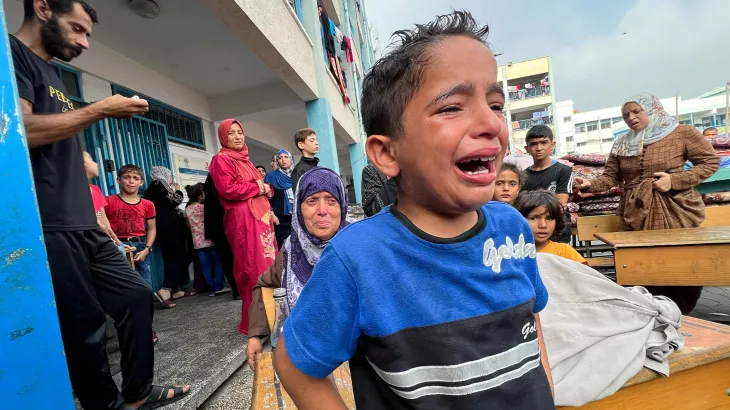
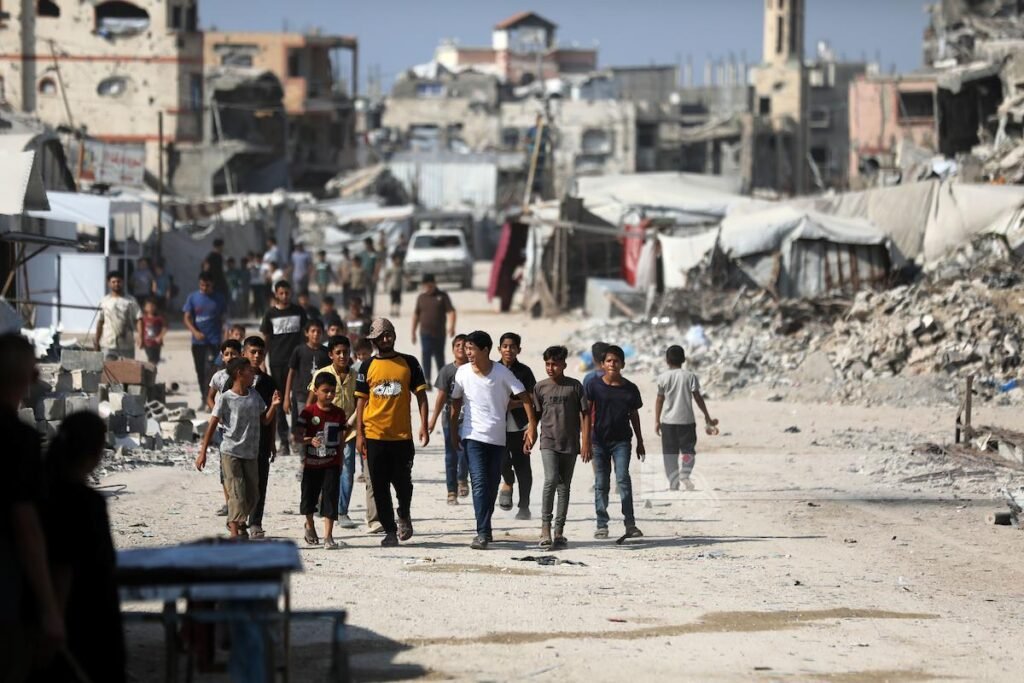
His remarks highlight the continued Israeli focus on removing Palestinians from Gaza, despite widespread international concern over proposals that could leave the territory’s civilian population displaced from their homes.
Katz also asserted that 80 percent of Palestinians in Gaza want to leave, saying the figure is repeatedly reflected in surveys.
“By the way, 80 percent want to migrate, it’s checked constantly in surveys,” he said.
In May, Israeli media reported on a survey conducted by the Coordinator of Government Activities in the Territories (COGAT), a unit within Katz’s own Defense Ministry. The survey found that nearly 80 percent of Gazans who participated said they were interested in receiving information about mechanisms for relocating to a third country through the Rafah and Kerem Shalom crossings.
The survey, however, concerned respondents’ interest in receiving information about relocation mechanisms rather than establishing that 80 percent of Gaza’s population wanted to permanently leave the territory.
Katz attributed the continued presence of Palestinians in Gaza to what he described as restrictions imposed by Hamas and the lack of countries prepared to receive them.
“Hamas doesn’t allow them, and there are no countries in the world that will take them,” he said.
“We are fully prepared to move them out if it becomes possible, by sea, by air, by every way possible. Egypt is not willing, so it won’t be through them,” Katz added.
The Israeli minister said that the main obstacle to the plan was the absence of countries willing to receive Palestinians without U.S. backing.
“What’s delaying it is that the accepting countries want US support. Every country that is willing wants American backing. Currently, President Trump didn’t cancel this; he froze it. All the Arab countries came to him due to their pressure on this matter,” Katz said.
The comments come as Israel continues to face international scrutiny over proposals for the future of Gaza and the fate of its Palestinian population. Palestinian officials and rights advocates have repeatedly warned that efforts to encourage or facilitate the departure of Palestinians could amount to permanent displacement, particularly after the destruction and mass displacement caused by the war.
At the end of June, Israel reportedly renamed its plan to encourage Palestinians to leave Gaza, dropping the term “voluntary migration” in favor of the “Freedom of Movement Plan.”
Israel’s Channel 13 reported that Israeli security officials and Mossad personnel had been instructed to stop using the term “voluntary migration,” which had drawn international criticism.
Haaretz reported at the time that Shmuel Ben Ezra, head of Israel’s National Security Council, had convened an urgent meeting on encouraging Palestinians to leave Gaza. The newspaper also reported that Mossad officials acknowledged that they had so far failed to identify a country willing to receive displaced Palestinians.
Katz’s latest remarks nevertheless indicate that the idea of moving Palestinians out of Gaza remains part of the Israeli government’s thinking, with the defense minister describing it not as a temporary measure but as a necessary component of what he called a “real solution” for the territory.
During the same conference interview, Katz said Israel was also preparing for the possibility of an Iranian attack during the Jewish holiday period. Rosh Hashanah is scheduled to take place from September 11 to September 13 this year.
He said Israel was prepared to respond with significant force if targeted.