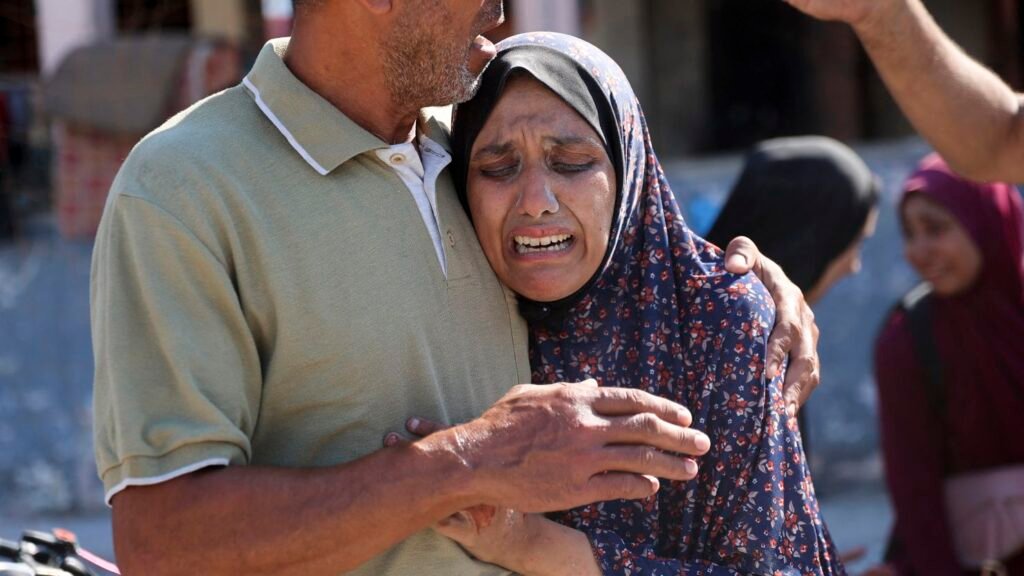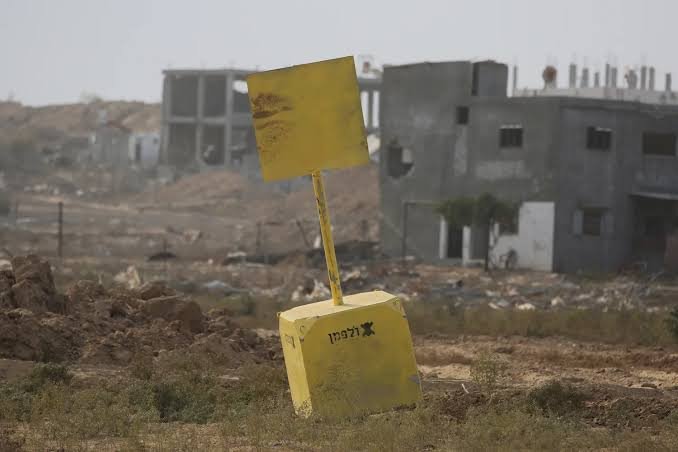
Gaza Herald – Displaced Palestinians living in makeshift camps near the so-called “Yellow Line” south of Gaza City are enduring a “slow death,” with Israeli gunfire and shelling restricting humanitarian access and leaving families struggling for drinking water, food and basic medical care.
The camps, including Dar al-Salam and al-Manasra, receive far less humanitarian assistance than displacement sites farther west in Gaza City. Aid groups are reportedly reluctant to operate in the area because of the ongoing threat of Israeli fire, leaving residents increasingly isolated and dependent on sporadic water deliveries and limited food assistance.
In Dar al-Salam camp, located roughly 200 meters from the Yellow Line, residents say drinking-water trucks arrive only twice a week, and often with supplies far below what the camp needs. The shortages have forced displaced families to ration water, while limited storage tanks and containers make it difficult to preserve what little reaches them.
For some families, even basic food assistance has become extraordinarily rare. Iyad Arhim said the aid package he recently received was the first one anyone in the camp had received in seven months, stressing that the situation is a constant struggle to secure food and clean water.
The humanitarian crisis is compounded by the harsh conditions surrounding the camps. With little shade or vegetation, extreme heat turns the tents into stifling shelters, while flies, mosquitoes, rodents and snakes have become a persistent threat. Residents say snakes regularly enter tents, terrifying children and adding another layer of insecurity to already precarious living conditions.
In al-Manasra camp, Iyad Marish, 48, lives with around 20 members of his extended family in a cluster of tightly packed tents. He suffers from diabetes and high blood pressure, while several members of his family are also wounded and require medical care.
A 5,000-litre water truck that arrives twice a week is not enough for the nearly 100 families in the camp, residents say. Families are therefore forced to ration every drop, including limiting how often clothes can be washed. Some residents must carry water for tens or hundreds of metres back to their tents because they lack adequate storage tanks.
Food is equally scarce. Marish said his family often relies on a single meal collected from a distant community kitchen, which may serve as breakfast, lunch and dinner because there is no other food available. Young people in the camp are also struggling to find work, leaving families without a reliable source of income.
The lack of basic infrastructure further deepens the crisis. A water line serving the camp has reportedly stopped functioning and, when fuel donations are available, may operate for only about an hour. Residents must walk long distances to reach the nearest community kitchen, while transportation to hospitals is difficult and costly.
For elderly residents, the conditions are especially punishing. Nahid Marish, who once had a private room and basic comfort before the genocide, now sleeps on a makeshift bed raised from stones and wood inside a crowded tent. The sandy ground, heat, noise and lack of food have made daily life increasingly difficult, particularly for someone with health problems.
These camps reveal another layer of Gaza’s humanitarian crisis: displaced families living closest to areas of continued Israeli military activity are becoming some of the hardest to reach with lifesaving assistance. With water, food, healthcare, fuel and employment all in desperately short supply, residents say they are being left to endure the consequences of genocidal war in conditions that threaten their basic survival.