Gaza Herald _A year after Israeli forces killed Palestinian journalist Anas Al-Sharif in Gaza, the silence left by one of the territory’s most determined voices remains impossible to ignore.
For nearly two years, as Israel’s war devastated the besieged Palestinian territory, Al-Sharif brought Gaza’s reality to audiences around the world. Through bombardment, displacement, hunger and mass death, he continued reporting from the ground, often standing before the camera while explosions erupted around him.
On August 10, 2025, that voice was silenced.
Al-Sharif, 28, and four other journalists were killed in an Israeli strike that targeted a media tent outside Al-Shifa Hospital in Gaza City. The attack also killed Al Jazeera journalist Mohammed Qreiqeh and photojournalists Ibrahim Zaher and Mohammed Noufal.
A year later, Al-Sharif’s absence has become part of the story he spent his final years documenting.
A journalist at the heart of Gaza’s war
In the early hours of August 10, Israeli forces struck the media tent where journalists were working outside Al-Shifa Hospital. Seven people were killed in the attack, while continuing strikes hindered rescue efforts.
The journalists were identifiable as members of the press and were working from an area designated for media personnel.
For nearly two years, Al-Sharif had become one of the most recognizable Palestinian journalists covering the war. His reports frequently came from northern Gaza, with destroyed neighborhoods and battered buildings forming the backdrop to his broadcasts.
Only hours before his death, he posted on X about the intense Israeli bombardment hitting eastern and southern Gaza City.
It was a final update in a long record of frontline reporting.
There was no studio separating Al-Sharif from the violence and no safe distance from the war. He reported from within Gaza as the destruction unfolded around him.
His final broadcast captured the chaos of the night, with explosions lighting up the sky and the sound of bombardment echoing through the darkness.
He had spent 672 days documenting the war.
By the time he was killed, he had also become part of the historical record he was creating.
A deadly year for journalists
Al-Sharif’s killing came amid one of the deadliest periods ever recorded for journalists in Gaza.
By the time of his death, Israeli forces had killed nearly 300 journalists since the beginning of the war, according to Palestinian journalist organizations.
The Palestinian Journalists Syndicate condemned what it described as the deliberate targeting of journalists and warned that such attacks sought to suppress documentation of war crimes.
For millions who had watched Al-Sharif’s reports, however, his death transformed an already staggering statistic into a deeply personal loss.
Viewers knew him as the journalist who remained on camera while bombs fell, who reported from overwhelmed hospitals and who continued describing the humanitarian crisis when much of Gaza had been reduced to rubble.
His death became another story that Gaza was forced to tell.
Accusations after his death
Following the strike, the Israeli military launched a campaign against Al-Sharif even after his death, accusing him of being a member of Hamas and claiming that he had been involved in activities related to rocket attacks.
Israeli officials said they possessed what they called conclusive evidence of his alleged military role.
However, the evidence was not publicly presented in a form that could independently verify those accusations.
The allegations immediately drew condemnation and scrutiny from press freedom advocates and rights groups, who said they reflected a wider pattern in which Palestinian journalists are portrayed as combatants in order to justify attacks against them.
The campaign came after months of similar accusations against journalists working for Al Jazeera in Gaza.
Independent observers, including Muhammed Shehada of Euro-Med Human Rights Monitor, said they had found no evidence supporting the allegations that had circulated against Al-Sharif.
Press freedom organizations have repeatedly warned against the practice of labeling journalists as members of armed groups without verifiable evidence.
The United Nations and the Committee to Protect Journalists have also challenged previous Israeli accusations against Palestinian journalists, warning that such claims can create a pretext for attacks.
Throughout his career, Al-Sharif rejected allegations that he had political affiliations.
For those who followed his work, the accusations made after his death were inseparable from the circumstances surrounding his killing. He had spent months documenting the dangers faced by journalists, watching colleagues die and reporting from areas where the press had repeatedly come under attack.
A journalist shaped by Gaza
Al-Sharif’s journalism was deeply connected to the place where he was born and raised.
Born in 1996 in Jabalia refugee camp in northern Gaza, he grew up under Israeli occupation and witnessed the Second Intifada and its aftermath between 2000 and 2005.
The experience of growing up amid occupation, blockade and repeated military assaults shaped his decision to become a journalist, according to people familiar with his life.
For him, journalism was more than a profession.
The streets he reported from were the same streets where he had grown up. The people appearing in his reports were often neighbors, friends, relatives or Palestinians whose experiences closely resembled his own.
Al-Sharif studied mass communication at Al-Aqsa University, specializing in radio and television.
He began working with Palestinian media outlets, covering daily life in Gaza and reporting for local radio stations and newspapers.
In 2015, he joined Al Jazeera Arabic as a junior reporter and fixer as the network expanded its reporting presence in Gaza.
His early work focused on local developments and Palestinian affairs, gradually establishing him as a familiar figure in Gaza’s media community.
Then the events of October 2023 transformed his career.
From local reporter to global voice
After the beginning of Israel’s war on Gaza in October 2023, Al-Sharif became internationally known for his continuous frontline coverage.
Reporting primarily from northern Gaza, he provided audiences with firsthand accounts of bombardment, displacement and the collapse of essential services.
His reports came from destroyed streets, damaged hospitals and neighborhoods repeatedly targeted by Israeli forces.
He documented the humanitarian consequences of the war while repeatedly warning about hunger, displacement and the deterioration of living conditions.
By mid-2025, his reporting included warnings that 96 percent of children in Gaza were suffering from malnutrition.
But his prominence had begun well before the latest war.
Al-Sharif had covered repeated Israeli assaults on Gaza and humanitarian crises, including the 2018 Great March of Return protests, when more than 200 Palestinians were killed.
His live reporting during successive periods of escalation helped establish him as a trusted correspondent.
Following 2019, he appeared regularly on Al Jazeera broadcasts and became a senior correspondent during the 2021 Israeli assault on Gaza, documenting civilian casualties and widespread destruction.
Yet the scale of the war that began in October 2023 eclipsed everything he had previously covered.
He became one of the most prominent journalists documenting Israel’s assault on Gaza after Operation Al-Aqsa Flood.
His reporting brought viewers into the middle of bombardments and ground operations, while his coverage of Gaza’s humanitarian crisis reached millions.
The helmet, the vest and the burden of survival
On January 15, following the announcement of a temporary ceasefire, Al-Sharif removed his press helmet and protective vest.
He described the helmet as something that had been “drowning” him, while the vest had become so familiar that he considered it part of his body.
The moment carried a powerful symbolism.
For months, the helmet and vest had been inseparable from his image. They represented his identity as a journalist, offered a measure of protection and simultaneously reflected the enormous danger faced by reporters in Gaza.
Journalists were supposed to be protected by their professional status.
Instead, many became targets.
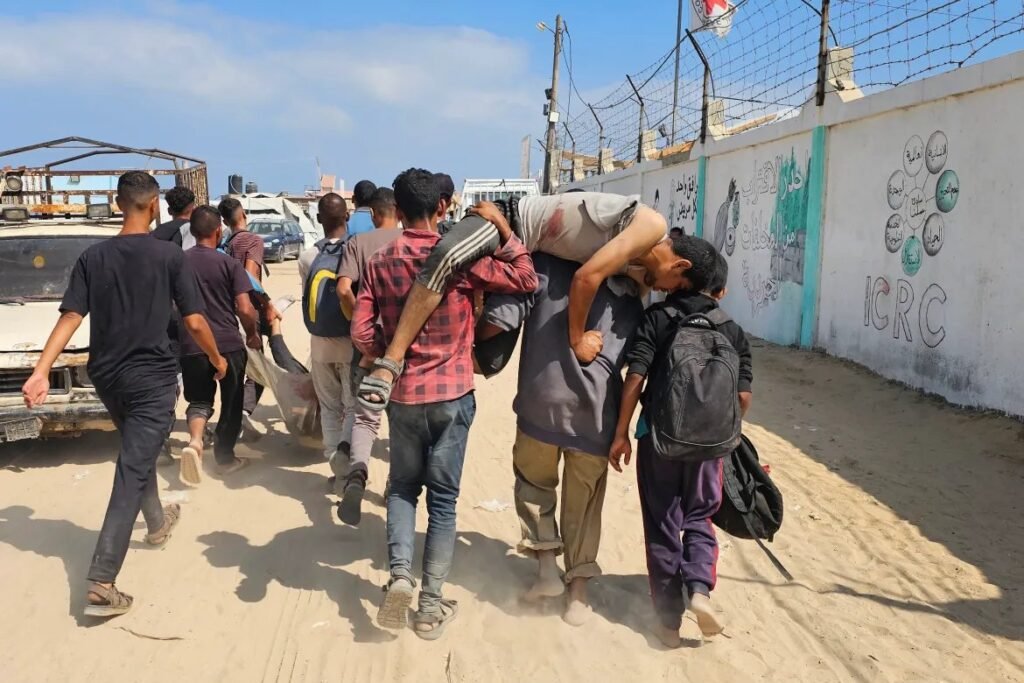
Al-Sharif also mourned his colleague Ismail Al-Ghoul, whose body was carried on the shoulders of friends after he was killed.
The images captured a painful contradiction: moments of collective pride and grief existing side by side as Gaza continued to lose its journalists.
In March, Al-Sharif lost another close friend and colleague, Hossam Shabat, who was killed in an Israeli strike in Gaza City.
Both journalists had repeatedly reported under threat and had faced what they described as continued pursuit by Israeli forces.
In April, Al-Sharif recorded a deeply personal message in which he acknowledged the danger he faced and vowed to continue reporting.
He understood that being visible offered no guarantee of protection.
If anything, his prominence appeared to make the danger more immediate.
Palestinian groups mourned his killing
The killing of Al-Sharif and his fellow journalists triggered widespread condemnation among Palestinian political and resistance groups.
Hamas condemned the strike as a grave crime and said the journalists had exposed Israel’s policies of starvation and the worsening famine in Gaza.
The Palestinian Islamic Jihad described the killings as a serious war crime and accused Arab and Western governments of failing to stop Israel’s actions in Gaza.
The Popular Front for the Liberation of Palestine said the attack demonstrated that “truth is the occupation’s enemy,” arguing that killing journalists could enable further abuses to take place without witnesses.
The Popular Resistance Committees honored Al-Sharif as an iconic journalist who had exposed the destruction and humanitarian catastrophe in Gaza.
The Palestinian Journalists Protection Center also said his killing came after months of Israeli incitement against him and other journalists working in Gaza.
Across these statements was a common message: Al-Sharif’s work had made him a powerful witness to the destruction unfolding around him.
The message he left behind
Perhaps the most haunting part of Al-Sharif’s story is that he had already contemplated the possibility that he might not survive the war.
In a statement written on April 6, 2025, he described his determination to continue reporting despite the danger and reflected on the possibility of his own death.
His words took on a different meaning after he was killed four months later.
In the message, Al-Sharif asked those who survived to remember Gaza and its children and urged people not to remain silent.
He reflected on a life shaped by pain, loss and displacement, while reaffirming his commitment to documenting the suffering of his people.
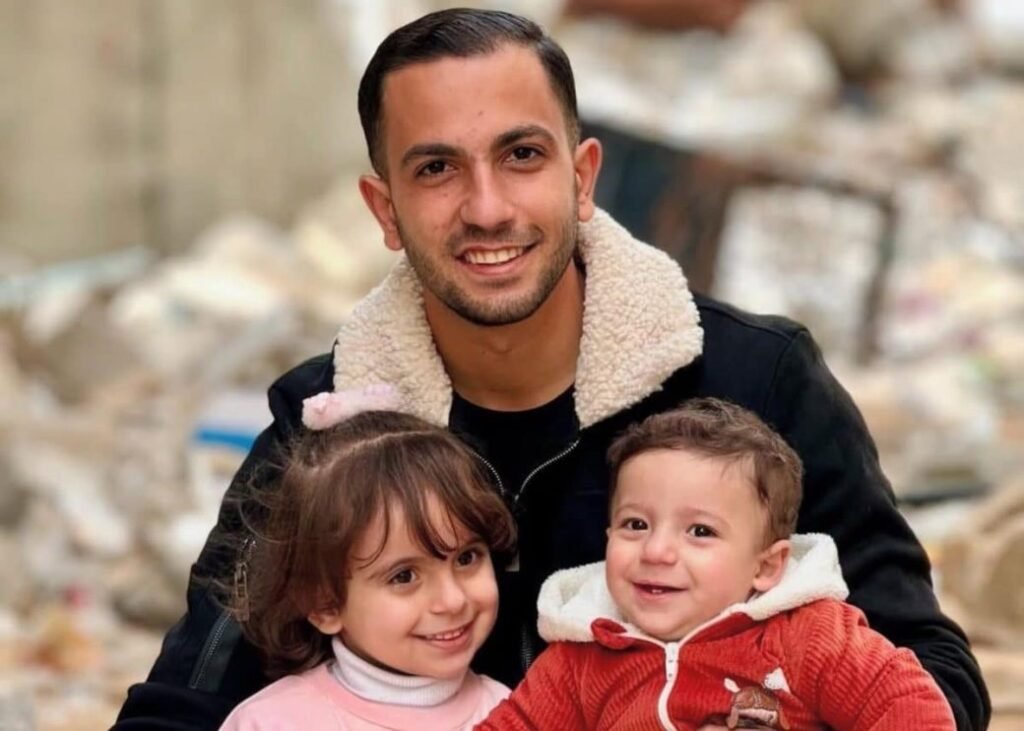
He also wrote about his family: his daughter Sham, whom he feared he might never see grow up; his son Salah, whom he hoped would carry forward his mission; his mother, whose prayers sustained him; and his wife, Bayan.
He asked others to stand by them if he did not return.
He ended with an expression of faith and a final appeal:
“Do not forget Gaza. Do not forget me.”
One year after his killing, those words carry a weight far beyond the circumstances in which they were written.
Al-Sharif spent his final years documenting Gaza’s dead, displaced families, destroyed homes, starving children and overwhelmed hospitals.
He warned the world about what was happening while living through it himself.
The war may have silenced his voice, but the record he left behind remains.
And in a place where so many witnesses were killed, displaced or forced into silence, Anas Al-Sharif’s reporting continues to stand as part of Gaza’s testimony.