Gaza Herald _The Palestinian Prisoners’ Society (PPS) warned on Friday that the renewal of an order banning family visits to Palestinian prisoners in Israeli prisons is intended to perpetuate torture and starvation and further isolate prisoners from the outside world.
In a statement, the organization said Israeli National Security Minister Itamar Ben-Gvir’s decision to renew the visitation ban was not unexpected but rather an extension of a systematic policy aimed at enforcing the prisoners’ complete isolation.
The organization said the decision is turning prisons into closed environments where torture, starvation, slow killing, and concealment from the outside world can continue without effective oversight or accountability, providing cover for some of the most serious violations against Palestinian prisoners.
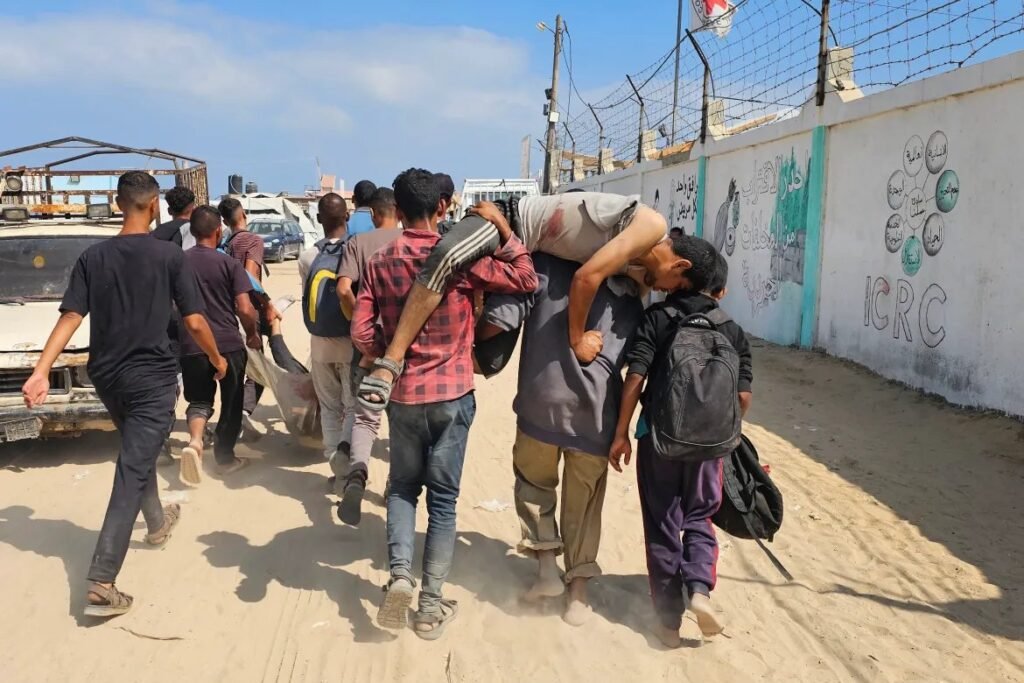
The PPS noted that the renewed ban came shortly after an Israeli Supreme Court ruling that found the continued denial of access to prisoners by the International Committee of the Red Cross (ICRC) unlawful.
However, it said the ruling has had no meaningful impact on prisoners’ conditions. Israeli authorities have continued to prevent the Red Cross from visiting prisoners while simultaneously renewing the order barring their families from visiting them.
The organization said this once again demonstrates what it described as a coordinated policy among Israeli institutions aimed at creating conditions that allow violations against prisoners to continue while keeping them isolated from the outside world and preventing effective monitoring of their conditions.
It said the renewed order represents another component of a broader system of punitive and retaliatory policies imposed since the beginning of the war on Gaza, aimed at exercising total control over prisoners and granting prison authorities greater latitude to commit further violations.
According to the organization, Israeli prisons have since become an integrated system of systematic torture, starvation, humiliation, deliberate medical neglect, sexual violence, enforced disappearance, and slow killing, making them one of the main sites of violations against Palestinian prisoners.
Red Cross access
The PPS recently held a series of meetings with ICRC teams in the occupied West Bank to discuss the consequences of the organization’s restricted role since the beginning of the war, as well as concerns raised by specialized institutions over its diminishing ability to carry out its humanitarian mandate.
The meetings addressed measures allegedly taken by Israeli authorities to undermine the role of international institutions, particularly the Red Cross, and prevent it from accessing prisoners, allowing violations to continue in the absence of independent field monitoring and documentation.
During the meetings, the PPS called on the ICRC to issue a clear and official statement informing the international community that Israel continues to prevent the organization from visiting prisoners despite the Israeli Supreme Court ruling.
It also called on the ICRC to publicly disclose the restrictions and procedures imposed to prevent it from carrying out its humanitarian mandate.
The organization urged the Red Cross to formally state that the continued denial of prisoners’ families access to their relatives constitutes a serious and systematic violation of international humanitarian law, the Geneva Conventions, and other legal protections afforded to prisoners and detainees.
Laws and policies targeting prisoners
Since the beginning of the war, Israeli authorities have imposed a wide range of exceptional orders and measures affecting Palestinian prisoners, foremost among them the prohibition of family visits.
The Israeli Knesset has also passed laws and introduced legislation that, according to the PPS, provides legal cover for torture, starvation, isolation, and the deprivation of prisoners’ basic rights, while turning prisons into environments increasingly removed from oversight and accountability.
The organization linked these measures to what it described as an integrated policy aimed at entrenching violations against Palestinian prisoners and concealing their consequences from the international community.
It stressed that the international community’s continued failure to take effective and deterrent action has encouraged Israel to maintain policies of isolation, torture, starvation, and slow killing while reinforcing a culture of impunity.
The PPS said preventing prisoners from communicating with their families and denying the Red Cross access to them goes beyond violations of basic rights, becoming part of a broader system of isolation and continuing abuses against Palestinian prisoners.
It called for urgent international intervention to compel Israel to end the isolation policy, immediately restore family visits, guarantee prisoners’ protection, and hold those responsible for violations accountable through international justice mechanisms.
According to the Prisoners’ Media Office, 9,400 Palestinians are currently held in Israeli prisons, including 94 women, 350 children, 3,244 administrative detainees, and 1,320 detainees held under what Israel calls the “Unlawful Combatants Law.”
The office also reported that the number of arrests since the beginning of the war on Gaza has exceeded 24,600.