Gaza Herald _ Senior Israeli officials are renewing calls to establish settlements in Gaza while reconstruction remains stalled, fueling fears that the territory is being reshaped through military control and prolonged humanitarian hardship.
Israeli officials revive settlement plans
Israeli Defense Minister Israel Katz has once again called for the establishment of Israeli settlements in northern Gaza, proposing the creation of three Nahal outposts—military-agricultural bases designed to strengthen long-term Israeli control over territory.
Speaking to Israel’s Channel 14, Katz said the outposts would improve Israel’s security and indicated they would be established when conditions and political coordination allowed.
His remarks follow similar statements he made in recent months, including comments that Israeli forces would not fully withdraw from Gaza despite the October ceasefire agreement brokered by the United States, which called for a complete Israeli military withdrawal and prohibited the return of Israeli settlements.
Finance Minister Bezalel Smotrich has also said preparations for new settlements in northern Gaza are already underway. Smotrich, who oversees settlement affairs within the Defense Ministry, has repeatedly advocated for permanent Israeli control over the Gaza Strip.
A long-standing political objective
The proposal reflects goals long promoted by Israel’s settler movement. In early 2024, settlement organizations held a conference attended by several government ministers to promote the re-establishment of Israeli settlements in Gaza.
Israeli settlement construction on occupied Palestinian land is considered illegal under international law. Nevertheless, settlement expansion has remained a central policy of Prime Minister Benjamin Netanyahu’s government, particularly in the occupied West Bank, where expanding settlements have displaced Palestinian communities and altered realities on the ground.
Former Israeli diplomat Alon Liel said the latest proposals are consistent with the ideological priorities of Israel’s current leadership, describing the settlement agenda as an effort to remove Palestinians from Gaza while replacing them with Israeli communities.
Palestinian rights advocates warn of forced displacement
Palestinian human rights defender Issam Younis, director of the Al Mezan Center for Human Rights, said recent developments reinforce concerns that Israel’s broader objective is to make life in Gaza unlivable.
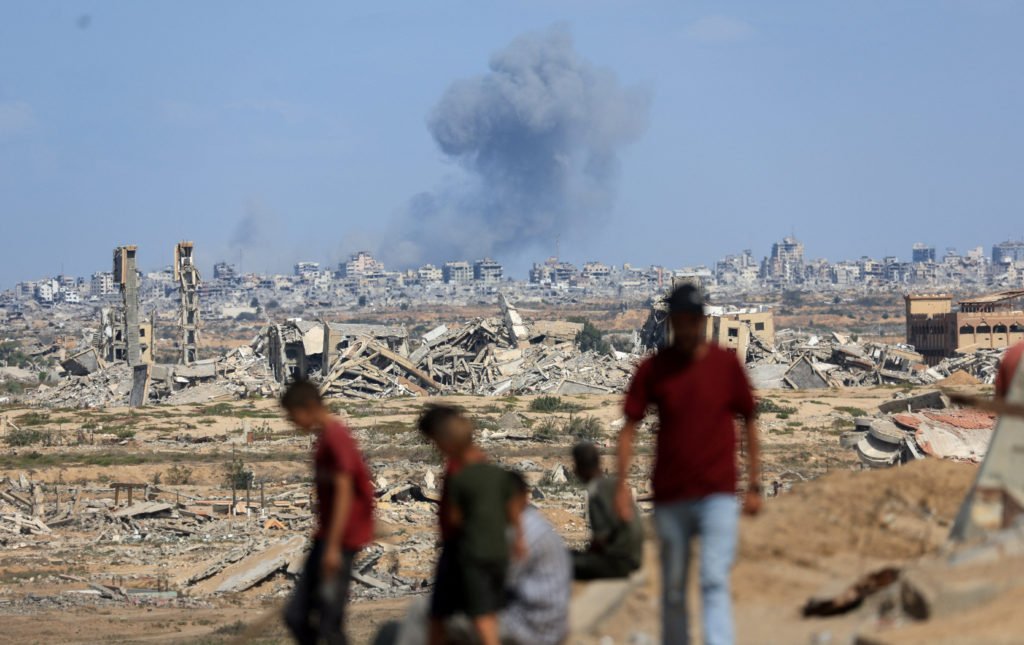
According to Younis, the widespread destruction of homes, civilian infrastructure, and essential services, combined with restrictions on humanitarian aid, has created conditions that leave Palestinians with few options for survival.
He also pointed to repeated public statements by senior Israeli officials describing Palestinians in dehumanizing terms and advocating their removal from Gaza, saying such rhetoric aligns with policies aimed at depopulating the territory and replacing Palestinian communities with settlements.
Humanitarian crisis deepens
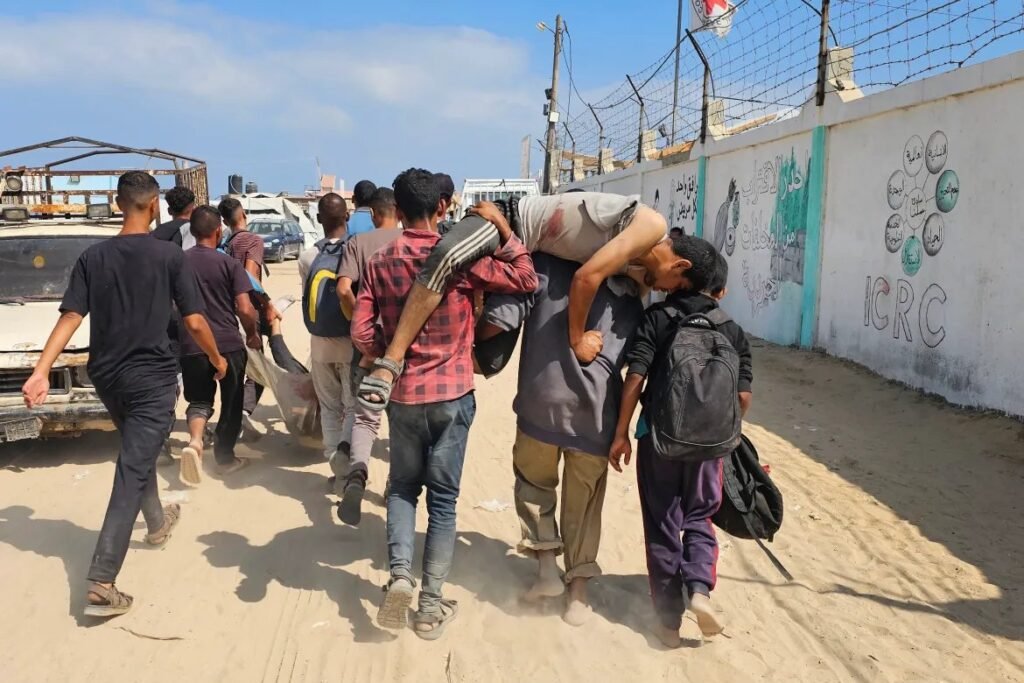
While settlement discussions continue, humanitarian conditions across Gaza remain dire.
Months after the October ceasefire took effect, Israeli military strikes have continued, and hundreds of Palestinians have reportedly been killed. The United Nations has also warned that children continue to be among the victims, while severe shortages of food, medicine, clean water, and medical supplies persist.
Humanitarian organizations say only a fraction of the aid needed to sustain Gaza’s population has entered the territory, leaving hospitals overwhelmed and basic services near collapse.
Younis argued that restricting humanitarian assistance while delaying reconstruction risks creating conditions that encourage the permanent displacement of Palestinians.
Reconstruction remains stalled
Despite international proposals to rebuild Gaza, reconstruction has made little progress.
Former diplomat Alon Liel said Israel appears unwilling to support large-scale rebuilding efforts, despite initiatives associated with U.S. President Donald Trump’s postwar framework.
Many Palestinians have expressed frustration that international mechanisms intended to oversee reconstruction have failed to ensure the delivery of sufficient humanitarian aid or begin meaningful rebuilding projects.
Younis warned that delaying reconstruction while maintaining severe humanitarian conditions could ultimately serve policies aimed at changing Gaza’s demographic reality.
Elections and political calculations
The renewed settlement proposals come just months before Israel’s national elections.
According to Liel, public support for settlement expansion may encourage Israeli political leaders to adopt increasingly hardline positions during the campaign, particularly as right-wing parties seek to appeal to their electoral base.
Observers warn that the political climate could contribute to further escalation in Gaza and the occupied West Bank while making prospects for reconstruction and long-term stability even more uncertain.