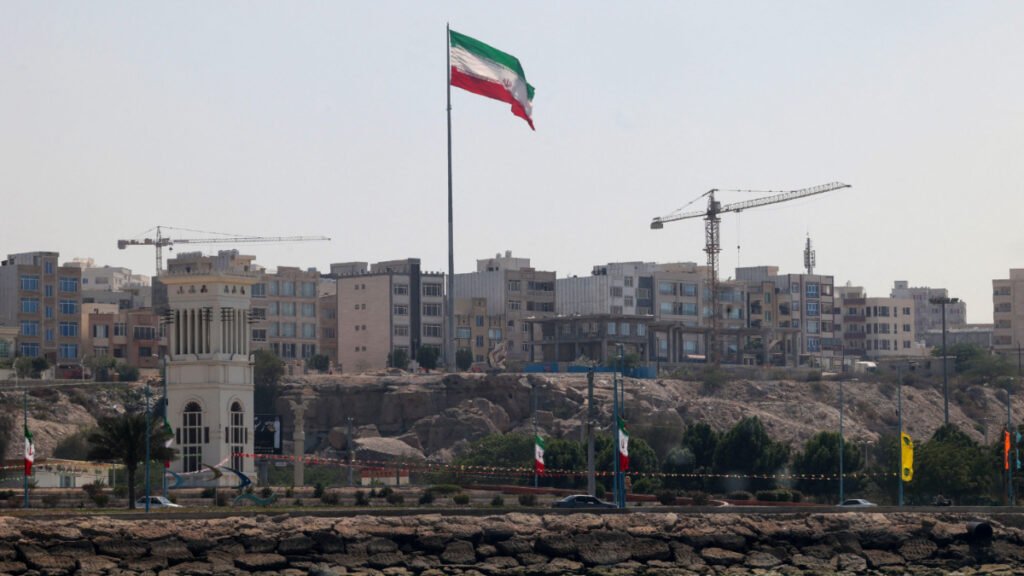
Gaza Herald – Iran cast doubt on the prospects of a deal with the United States on Tuesday after American air strikes targeted Qeshm Island, leaving the fate of urgent negotiations uncertain. The attacks occurred late Monday, shortly after President Donald Trump stated he did not plan to attack Iran following midterm elections and expressed hope for an agreement.
President Masoud Pezeshkian previously indicated that a truce could be renewed, noting his government was authorized to proceed. However, Major General Mohsen Rezaei, head of the Supreme National Security Council, rejected an offer conveyed by Qatari negotiators. He stated that America’s response to Iranian demands was insufficient and insisted Washington must address seven conditions to reopen the Strait of Hormuz.
Last-minute talks aimed at preventing full-scale war took place against this backdrop. The Wall Street Journal first reported the strikes on the strategic island, which Iran uses to assert control over the waterway. A US official described the actions as defensive, according to the report.
The newspaper detailed exchanges where the Islamic Revolutionary Guard Corps fired surface-to-air missiles at a US warplane, prompting self-defense fire. Another strike followed the interception of a missile launched from Qeshm toward a commercial vessel. Iran also claimed it downed a US MQ-9 Reaper drone and two Lucas drones near the Strait of Hormuz on Tuesday.
Parliament Speaker Mohammad Bagher Ghalibaf asserted that the ball remained in Washington’s court after Tehran delivered what he termed a strong and rational response to the Qatari-conveyed proposal. He emphasized that Iran would not submit to threats or military action intended to force compliance.
Foreign Ministry spokesperson Esmaeil Baghaei outlined a seven-step diplomatic solution on Monday, proposing implementation within two days. The plan required the US to end port blockades, lift new sanctions, grant waivers for oil sales, and allow Iran to reopen the Strait of Hormuz before discussing nuclear issues.
A previous ceasefire agreed upon in spring included a fourteen-point memorandum of understanding to advance talks. This agreement was never implemented, collapsing partly due to US reluctance to accept Iranian control over traffic in the Strait of Hormuz.
This report was produced in the Gaza Herald newsroom.