
Gaza Herald — One year has passed since the ceasefire agreement in the Gaza Strip took effect, raising hopes of ending the genocidal war, stopping the bloodshed, opening the way for humanitarian relief, and beginning reconstruction. Yet the agreement has failed to end Palestinians’ suffering, as Israeli violations continue, the entry of aid, fuel, and medical supplies remains restricted, and efforts to recover missing people and rehabilitate destroyed infrastructure remain severely hampered.
A year after the agreement came into force, approximately 1.5 million Palestinians are still enduring harsh displacement conditions. Tents and makeshift shelters continue to deteriorate, food and medicine shortages are worsening, and restrictions prevent residents from accessing even the minimum conditions necessary for a safe and dignified life.
The agreement took effect on October 10, 2025, following weeks of indirect negotiations mediated by Qatar, Egypt, and Türkiye, with US support. Its provisions included a halt to military operations, the withdrawal of Israeli occupation forces to agreed-upon lines, the reopening of crossings, the exchange of Israeli detainees, Palestinian prisoners, and remains, and the entry of humanitarian aid and heavy machinery to prepare for recovery and reconstruction.
However, figures released by Gaza’s Government Media Office reveal a wide gap between the commitments announced under the agreement and what has actually been implemented. Attacks have continued, Israel’s military control has expanded, and the Strip’s most basic humanitarian needs remain unmet.
More Than 5,300 Violations and Hundreds of Palestinians Killed
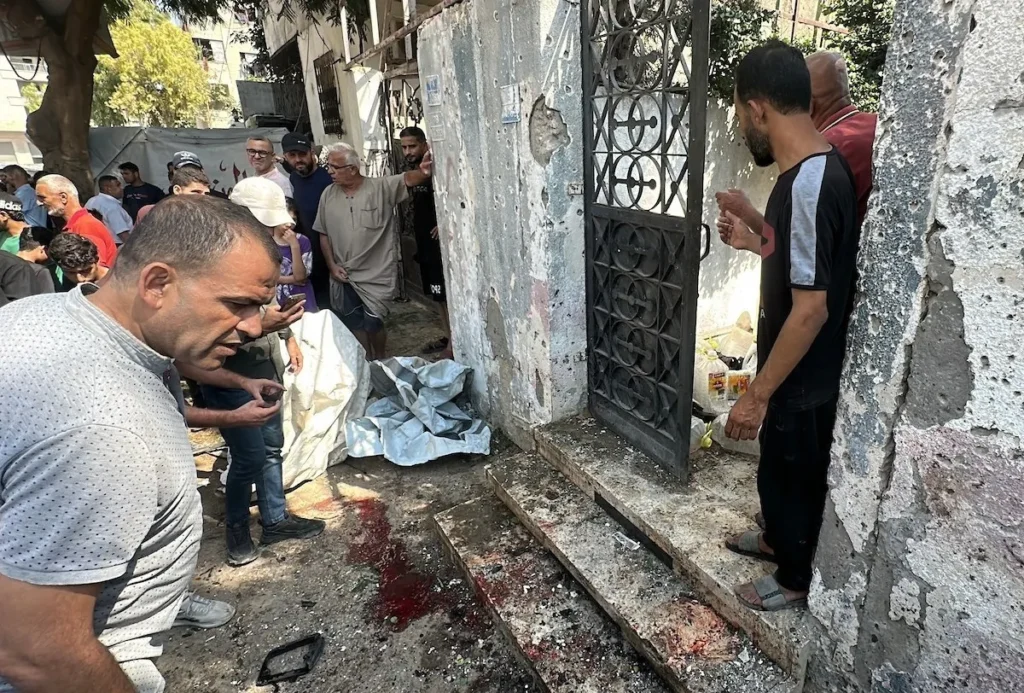
Regarding the cessation of military operations, Gaza’s Government Media Office recorded more than 5,304 Israeli violations during the ceasefire’s first year, averaging approximately 15 violations per day. These included artillery shelling, direct attacks using drones, and the demolition of buildings and entire residential blocks.
According to the same figures, these violations killed 1,471 Palestinians and injured 5,189 others. More than 200 Palestinians were also detained near what is known as the “Yellow Line,” while Israeli military control expanded to approximately 65% of the Gaza Strip, contrary to the arrangements outlined in the agreement.
These figures reflect the continuing threat of death, injury, and detention facing Palestinians despite the ceasefire. Vast areas remain under siege or subject to military restrictions that limit residents’ movement and prevent them from reaching their land and property.
Humanitarian Aid Falls Far Short of Agreed Levels
On the humanitarian front, the agreement stipulated that at least 600 trucks would be allowed into Gaza daily. These were to carry relief and medical supplies, commercial goods, fuel, and cooking gas to meet residents’ basic needs and create the conditions necessary for recovery.
However, figures from the Government Media Office indicate that only 74,506 trucks entered Gaza over the course of the year, averaging 223 trucks per day. This represents approximately 34.4% of the agreed daily target.
The shortfall has coincided with continued crossing closures and restrictions on their operation, obstruction of commercial and humanitarian deliveries, and a ban on more than 400 categories of essential goods, healthcare supplies, energy materials, and generators, according to the same figures.
As a result, markets and essential service sectors continue to face severe shortages of materials needed to meet residents’ needs. Humanitarian organizations have also been unable to expand their response adequately as needs grow due to widespread destruction, displacement, and the loss of livelihoods.
The consequences of these shortages extend beyond food. Hospitals, healthcare facilities, water networks, and sewage systems all require fuel, spare parts, and equipment to restore even their minimum operational capacity.
Patients Remain Stranded as Crossings Fail to Meet Needs
Regarding the movement of people, the agreement provided for the opening of border crossings, including the Rafah crossing, to facilitate Palestinian travel, particularly for wounded people, patients, students, and residency permit holders, while guaranteeing their right to return to Gaza.
However, the Government Media Office reported that only 13,785 people had been able to travel or return, representing an implementation rate of approximately 39%. Thousands of patients and wounded Palestinians continue to be denied travel to receive medical treatment outside the Strip.
Restrictions on medical evacuation compound the suffering of patients and injured people who require specialized treatment unavailable in Gaza. This is particularly serious given the damage inflicted on hospitals and the continuing shortage of medicines and medical supplies. Opening the crossings is therefore an urgent humanitarian necessity that cannot be postponed.
Restrictions on movement also prevent families from reuniting and obstruct students’ travel, as well as the movement of people whose humanitarian circumstances require treatment or residence outside the Strip.
Rubble Keeps Thousands of Missing Palestinians Out of Reach
The agreement also provided for the entry of heavy machinery and specialized equipment for civil defense teams and municipalities to clear rubble, recover bodies, reopen roads, and rehabilitate water and electricity networks. Yet restrictions on the entry of this equipment and its spare parts have created major obstacles to rescue and debris-removal operations.
According to the Government Media Office, more than 8,500 people remain missing beneath the rubble of destroyed homes and buildings. Rescue teams have been unable to reach and recover them because of severe shortages of the necessary equipment and resources.
This crisis is not simply a matter of delayed debris removal. Thousands of families remain trapped in uncertainty, waiting to learn the fate of their loved ones. The lack of heavy machinery also delays road clearance, the removal of structurally unsafe buildings, and the restoration of public facilities, obstructing any meaningful progress toward reconstruction.
Continued destruction further endangers Palestinians returning to their neighborhoods or living near damaged buildings, particularly given the limited capacity to inspect, reinforce, and safely demolish unstable structures.
Deteriorating Tents and an Approaching Winter Deepen Suffering
Across the humanitarian landscape, approximately 2.4 million Palestinians in Gaza continue to face the consequences of widespread destruction and the collapse of essential services. Around 1.5 million displaced people are living in shelters and tents under conditions that offer little protection or stability.
Figures from the Government Media Office indicate that approximately 162,000 tents have deteriorated and become unfit for use, with more than 60% of their structures worn out. The approaching winter raises further concerns about rain, cold, and strong winds threatening families who have lost their homes.
Children, older people, and patients face heightened risks, particularly amid shortages of blankets, clothing, and shelter materials. Many families cannot afford suitable replacements for damaged tents.
Under these conditions, the Government Media Office reported that approximately 95% of Gaza’s population relies entirely on community kitchens and limited humanitarian assistance. More than 200,000 families reportedly search each day for a single meal to feed their children, according to figures cited in the report from international organizations.
This reality exposes the widening gap between residents’ daily needs and the aid available to them. Employment and production opportunities remain severely limited by the destruction of businesses and economic infrastructure, disrupted supply chains, and restrictions on the entry of raw materials and equipment.
A Ceasefire That Has Failed to Open a Path to Recovery
One year after the ceasefire took effect, the central issues determining whether Palestinians can escape their suffering remain unresolved. These include ending attacks, withdrawing Israeli forces, opening crossings, ensuring sufficient humanitarian aid, and allowing the equipment needed for rescue operations and reconstruction to enter Gaza.
The reported figures show that continuing violations and restrictions on humanitarian relief, the movement of people, and the entry of equipment have left the Strip facing a compounded crisis in which human losses intersect with displacement, hunger, deteriorating public services, and the collapse of infrastructure.
Palestinians continue to wait for the agreement to be translated into concrete measures that restore their safety and protect their rights to housing, healthcare, and a dignified life. Yet during its first year, the ceasefire has failed to enable hundreds of thousands of people to resume normal lives or return to their homes. Displaced families remain trapped in harsh conditions, while thousands of families with missing relatives continue to wait for answers about their loved ones.
Addressing this catastrophe requires an end to the attacks, implementation of commitments to open the crossings and allow humanitarian supplies and equipment into Gaza, and the removal of restrictions obstructing rescue and reconstruction efforts. These measures are essential to protecting civilians and ensuring that basic necessities reach every part of the Strip.

