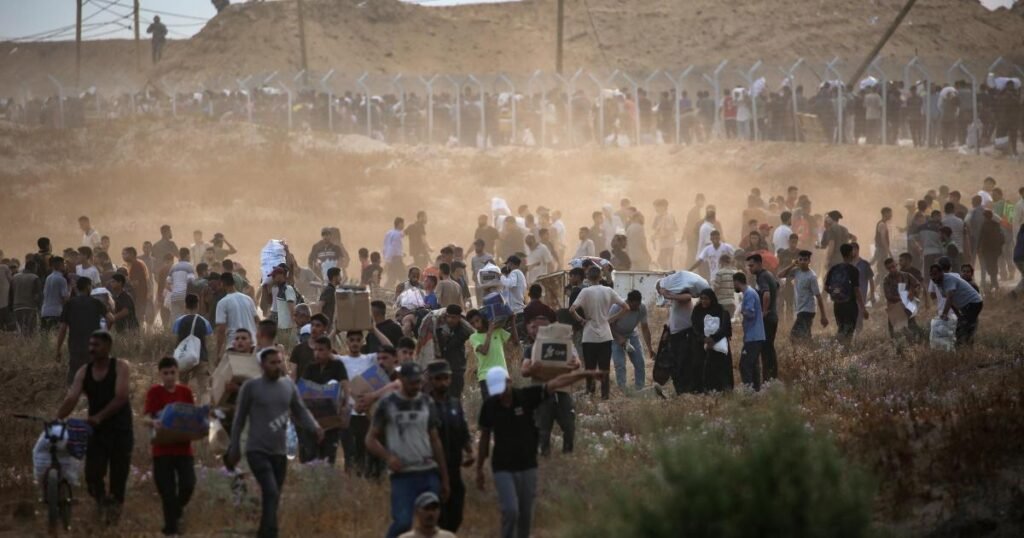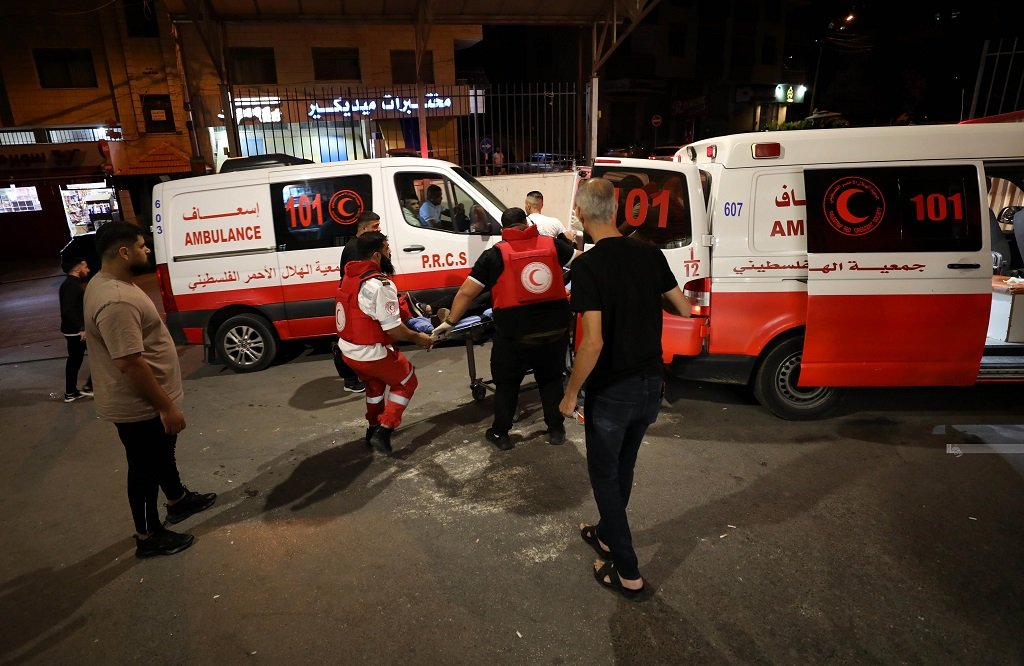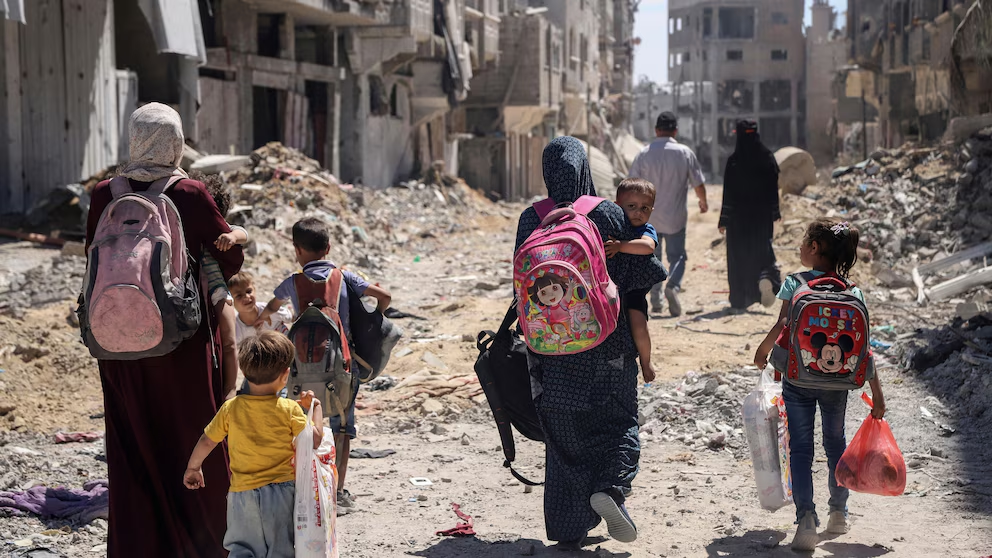
Gaza Herald- Three years into Israel’s genocidal war on Gaza, the Palestinian cause has returned to the center of global politics with a force that governments can no longer easily ignore.
Millions have marched, universities have witnessed unprecedented protests, international human rights organizations have documented grave violations, and public support for Israel has eroded across significant sections of Western societies.
Yet behind this historic wave of solidarity lies a devastating contradiction: the world has become increasingly vocal about Palestinian suffering while many governments continue to maintain the political, military and economic relationships that allow the occupation to persist.
Palestine is dominating international speeches, diplomatic debates and public demonstrations. But for Palestinians living under bombardment, displacement, settlement expansion and military occupation, international attention has too often failed to translate into meaningful protection.
The question confronting the international community is no longer whether it recognizes Palestinian suffering. It is whether governments are prepared to take concrete action against policies they publicly condemn.
Global Sympathy Grows as Political Accountability Lags
The transformation in public attitudes toward Israel has become one of the most significant political consequences of the war on Gaza.
According to a September 10, 2026, Quinnipiac University poll cited in the source report, 38% of registered American voters expressed greater sympathy for Palestinians, compared with 35% who sympathized more with Israelis. Another 48% believed Washington was providing excessive support to Israel.
A Pew Research Center survey published in April 2026 similarly found that 60% of American adults held an unfavorable view of Israel, compared with 53% the previous year.
The figures suggest that the political assumptions that once shielded Israel from sustained public criticism are increasingly being challenged, particularly among younger generations.
However, changing public opinion has not produced an equivalent transformation in government policy.
The United States continues to maintain its strategic relationship with Israel, while European governments remain divided over arms transfers, trade restrictions and diplomatic consequences for violations of Palestinian rights.
This gap between public outrage and government action has become one of the defining failures of the international response to Gaza.
Washington: Growing Opposition, Continuing Military Support
The United States remains central to Israel’s military and diplomatic position.
For decades, Washington has provided Israel with extensive military assistance, strategic cooperation and diplomatic protection. Despite growing criticism of Israel’s conduct in Gaza, that relationship has not undergone a fundamental rupture.
The political divide within the United States has nevertheless become increasingly visible.
Gallup polling published in February 2026 found that 65% of Democrats sympathized more with Palestinians, while 70% of Republicans expressed greater sympathy for Israelis. Among independent voters, 41% sympathized more with Palestinians, compared with 30% who favored Israelis.
These differences reflect a significant shift in how the Palestinian question is debated in American politics.
Yet the persistence of military assistance illustrates how deeply established foreign-policy relationships can remain insulated from public opposition.
On September 29, a Senate measure requiring additional reporting on violence in the occupied West Bank and human rights conditions failed to advance despite receiving support from 47 senators, according to Senator Chris Van Hollen.
The episode illustrated the difficulty of translating growing congressional concern into binding oversight.
For Palestinian civilians, the consequences are not abstract. Diplomatic criticism has limited protective value when weapons continue to be transferred without restrictions capable of preventing unlawful attacks.
The central test for Washington is whether concerns about Palestinian rights will produce enforceable conditions on military assistance, meaningful oversight of weapons transfers and consequences for settlement expansion.
Europe’s Sanctions Expose the Limits of Selective Pressure
European governments have increasingly criticized Israeli settlement expansion, settler violence and the humanitarian consequences of the war in Gaza.
Several countries have moved toward recognizing Palestinian statehood, restricting settlement-related trade or sanctioning individuals and organizations linked to violence against Palestinians.
On September 8, 2026, 12 countries announced plans to introduce or consider national and European restrictions on trade involving Israeli settlements, according to the source report.
Britain, France and Canada also indicated their intention to pursue national measures targeting settlement goods.
Such steps demonstrate that international criticism can move beyond diplomatic statements.
But their effectiveness depends on implementation.
A restriction announced at a conference does not necessarily become binding legislation. Legislation does not automatically produce enforcement. And targeted sanctions against individual settlers do not necessarily disrupt the financial and institutional structures sustaining settlement expansion.
The European Union’s sanctions against individuals and entities linked to settler violence represent a concrete response, but they remain narrower than comprehensive measures addressing the broader occupation.
For Palestinians facing land confiscation, home demolitions and forced displacement, the critical question is whether these policies change conditions on the ground.
If sanctions leave the wider systems of settlement financing, commercial activity and military cooperation untouched, they risk becoming a limited response to a much larger human rights crisis.
Gaza Cannot Be Rebuilt While the Conditions of Destruction Remain
The devastation of Gaza has generated international appeals for reconstruction, humanitarian assistance and the restoration of essential services.
Hospitals need rebuilding. Schools must reopen. Water networks, electricity infrastructure and homes require urgent repair. Hundreds of thousands of displaced Palestinians need adequate shelter and access to basic necessities.
But humanitarian reconstruction cannot substitute for political rights.
A reconstruction strategy that leaves Gaza exposed to renewed military attacks, restrictions on movement and economic isolation cannot guarantee lasting security.
The danger is that the international community becomes trapped in a recurring cycle in which destruction is followed by emergency aid, rebuilding and further destruction.
A September 24 report from the UN Special Coordinator for the Middle East Peace Process, cited in the source material, described the ceasefire as fragile and noted that the 2026 humanitarian appeal remained only 40% funded.
That funding gap illustrates the scale of unmet humanitarian needs.
Yet even fully funded reconstruction would not resolve the underlying questions of occupation, freedom of movement, territorial integrity and Palestinian self-determination.
The issue is not simply how much aid the international community can deliver. It is whether governments will address the policies that repeatedly make such aid necessary.
The Arab World Faces a Test of Political Leverage
The war on Gaza has also challenged the regional diplomatic model that sought to expand relations with Israel while leaving Palestinian political rights unresolved.
Before October 2023, normalization, commercial partnerships and security cooperation increasingly shaped regional diplomacy.
The Palestinian question was frequently treated as an issue that could be postponed while wider strategic relationships developed.
Gaza exposed the instability of that assumption.
Arab governments possess diplomatic, economic and political relationships that could potentially be used to press for Palestinian rights and compliance with international law.
The effectiveness of those relationships, however, depends on whether they are connected to concrete conditions and consequences.
Statements supporting Palestinians are politically significant, but they cannot replace policies capable of protecting civilians, opposing forced displacement and addressing settlement expansion.
The question is whether regional diplomacy will continue to separate normalization from Palestinian rights or make those rights central to future agreements.
International Solidarity Must Produce Institutional Change
The global solidarity movement has brought the Palestinian cause into universities, labor unions, professional associations, municipal councils and national legislatures.
Students have challenged institutional investments, workers have questioned commercial relationships, and civil society organizations have demanded greater accountability for violations of international law.
These movements have expanded public debate and increased scrutiny of government and corporate policies.
But demonstrations alone cannot determine political outcomes.
The deeper test is whether public pressure leads institutions to review contracts, enforce human rights standards, change investment policies and adopt binding safeguards against complicity in unlawful conduct.
A boycott announcement has limited practical effect if commercial arrangements remain unchanged. A parliamentary condemnation carries little immediate weight without enforceable measures. A pledge to protect civilians means little if it is not reflected in policy.
International solidarity becomes more consequential when it changes institutional behavior.
At the same time, the defense of Palestinian rights must remain grounded in universal principles, including civilian protection, equality, freedom, self-determination and accountability. Criticism of Israeli government policies and military conduct must remain distinct from antisemitism and hostility toward Jewish communities.
Palestinian Rights Cannot Depend on Political Unity
The international response also intersects with divisions within Palestinian politics.
The fragmentation of Palestinian institutions has complicated efforts to develop a unified national strategy and negotiate political arrangements concerning Gaza, the West Bank and occupied East Jerusalem.
Representative institutions, broader political participation and a coherent national approach could strengthen Palestinians’ ability to pursue their rights internationally.
But those rights cannot be made conditional on Palestinian political unity.
Internal divisions do not justify occupation, settlement expansion, forced displacement or violations of international humanitarian law.
Nor can they relieve governments of their responsibilities under international law.
The challenge is to ensure that international support advances Palestinian rights rather than becoming a tool for favoring particular factions or postponing accountability.
The Race Between Diplomacy and Settlement Expansion
While governments debate sanctions, diplomatic recognition and peace initiatives, developments on the ground continue to reshape Palestinian territory.
Settlement construction, land confiscation, home demolitions and displacement can alter communities and landscapes long before international negotiations produce results.
This creates a fundamental imbalance.
Diplomatic initiatives may require months or years to secure agreement, while territorial changes can occur far more quickly.
Without timely and effective measures, international actors risk allowing irreversible changes to take place while negotiations remain stalled.
The problem is particularly acute in the occupied West Bank, where settlement expansion and restrictions on Palestinian movement continue to affect territorial continuity and the prospects for Palestinian self-determination.
International recognition of Palestinian statehood carries political and legal significance. But recognition alone cannot prevent displacement or protect land from confiscation.
Its practical value depends partly on whether it is accompanied by policies that uphold the rights recognition is intended to affirm.
Will International Pressure Become Real Accountability?
The coming period presents several possible directions for international policy.
One possibility is the gradual expansion of targeted sanctions, settlement-related restrictions and parliamentary investigations without a fundamental change in major powers’ relationships with Israel.
Another is more coordinated action involving enforceable restrictions on arms transfers, settlement commerce and other activities linked to violations of international law.
A third possibility is that international attention diminishes as other crises emerge or limited humanitarian improvements allow governments to claim progress without addressing the underlying occupation.
None of these outcomes is predetermined.
The consequences will depend on political decisions, institutional enforcement and whether governments are prepared to connect their stated human rights commitments to practical measures.
The most meaningful indicators will not be the number of diplomatic statements issued or conferences organized.
They will be whether restrictions enter into force, weapons policies change, settlement-related measures are enforced and Palestinians experience measurable improvements in safety, freedom of movement and political rights.
Three Years Later, Palestine Needs More Than Sympathy
Three years of devastation in Gaza have transformed the international debate over Palestine.
The war has brought renewed attention to occupation, displacement, civilian protection and the responsibilities of governments that maintain military and diplomatic relationships with Israel.
Public opinion has shifted. International legal scrutiny has intensified. Civil society movements have expanded. Governments have faced growing demands to explain the gap between their stated commitments to human rights and their actual policies.
Yet none of these developments, by itself, guarantees accountability.
Palestinians continue to confront the consequences of a political system in which expressions of concern have often advanced faster than measures capable of preventing violations.
The international community now faces a defining test: whether the renewed attention to Palestine will produce durable policy changes or become another period of intense condemnation followed by limited action.
For Palestinians, the difference is measured not in diplomatic language but in lives protected, homes preserved, land secured and rights realized.
The world has heard Gaza’s suffering. The unresolved question is whether governments will act on what they have heard.