Gaza Herald — For Gaza’s children with special needs, Israel’s war has taken more than homes, schools and a sense of safety. For many, it has erased years of painstaking progress, leaving children who had learned to speak, communicate and care for themselves struggling once again with basic daily tasks.
Thirteen-year-old Heba Alataar is one of them. Before October 2023, years of specialised education and rehabilitation had helped the Palestinian girl, who has Down syndrome, develop comprehension and speech skills, learn personal hygiene and begin reading and writing. Her father, Alaa Alattar, had started imagining a future in which she could become increasingly independent.
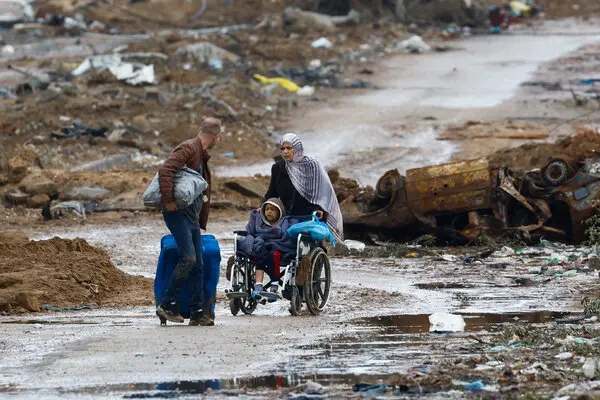
Then came war, bombardment and repeated displacement.
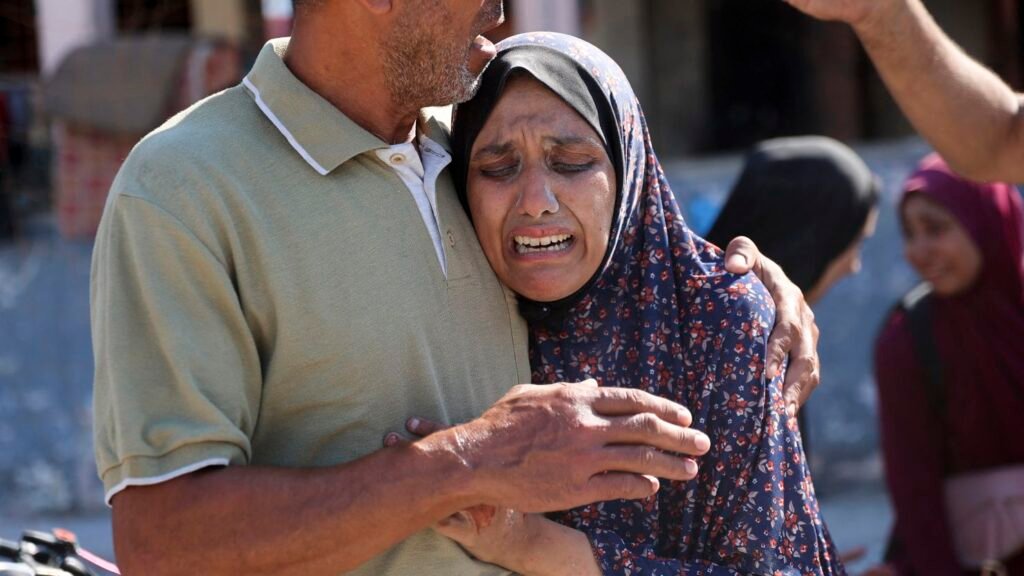
“The war took everything from Heba,” her father said. “She lost all her skills, interests and routine. She returned to square one, as if she never received any education or care.”
Heba is among more than 1,000 children with Down syndrome in Gaza, according to the Right to Live Society (RLS), which for decades provided specialised education, early intervention, rehabilitation and family support.
Israel’s attacks destroyed all three of the organisation’s facilities. Children with Down syndrome were killed, others went missing, and survivors were scattered through displacement camps where specialised care became almost impossible to maintain.
Trauma Erases Years of Progress
For children with developmental disabilities, routine and consistent support can be essential. Gaza’s repeated displacement, explosions, hunger and overcrowded living conditions shattered both.
Nabila Abed Rabbo said her 13-year-old daughter Saja, who has Down syndrome, became terrified whenever she heard an explosion, covering her ears, screaming and refusing to leave her mother’s side.
The consequences went far beyond fear. Saja eventually lost basic skills she had previously developed, including the ability to use the toilet. Her family was forced to rely on diapers at a time when even basic hygiene products were extremely difficult to obtain.
Another father, Bahjat Sultan, described similar changes in his 14-year-old daughter Fatima. After repeated bombing and displacement separated her from her educational environment, she struggled to express herself, developed aggressive behaviour and frequently woke at night crying from nightmares.
These cases reveal a dimension of Gaza’s humanitarian catastrophe that casualty figures alone cannot capture. For children with special needs, survival does not necessarily mean escaping the consequences of war. Years of therapy, education and family effort can disappear when the specialised environments that sustained that progress are destroyed.
Specialised Care Reduced to Tents
Before the war, RLS operated three facilities across Gaza with around 200 staff members, providing services from early childhood into adulthood. Today, after its facilities were destroyed, the organisation is attempting to rebuild those services inside makeshift tents.
It now provides support to more than 1,000 children with Down syndrome and autism at three locations across Gaza.
Teachers work with severely limited resources, sometimes creating educational materials from cardboard taken from aid packages and pieces of coloured paper. Yet even these improvised classrooms remain vulnerable to renewed attacks and displacement, threatening to undo whatever progress children manage to regain.
For children with disabilities, rebuilding Gaza therefore means far more than reconstructing buildings. It means restoring the specialised institutions, trained professionals, medical services and stable routines they need to communicate, learn and develop independence.
Starting Again
Despite everything, families and teachers are trying to recover what the war took from these children.
Heba has returned to learning. Her father says she is happier, more focused and excited to attend classes and see her friends. Other children are slowly relearning communication, personal hygiene, reading and writing.
But their progress remains fragile.
Every airstrike can revive trauma. Every displacement can interrupt treatment. Every destroyed classroom can erase another piece of the stability these children desperately need.
Their experience exposes one of the less visible consequences of Gaza’s destruction: when a child with special needs loses years of rehabilitation, the damage cannot simply be repaired when the bombing stops. Developmental progress requires time, continuity, specialised care and safety — precisely what Gaza’s children have been denied.
For families like Heba’s, the hope is therefore not merely that their children survive, but that they are finally given the conditions necessary to live, learn and grow.
“I hope that the war truly ends and our children no longer fear air strikes or sudden displacement,” her father said.
His dream for Heba remains the same despite everything she has endured: that one day she will grow up to become a teacher for other children with Down syndrome.