Gaza Herald – The Water Authority stated on Thursday that it is actively working to restart the wastewater treatment plant in Sheikh Ajlin, located south of Gaza City. This effort is being conducted in coordination with international entities as part of broader initiatives to reduce the severe risks associated with untreated sewage discharge.
In a statement, the authority explained that rehabilitating this facility is critical due to the shutdown of main treatment stations and damage to pumping networks. These disruptions have led to large volumes of wastewater being discharged directly into the sea without processing, posing significant health and environmental threats to citizens.
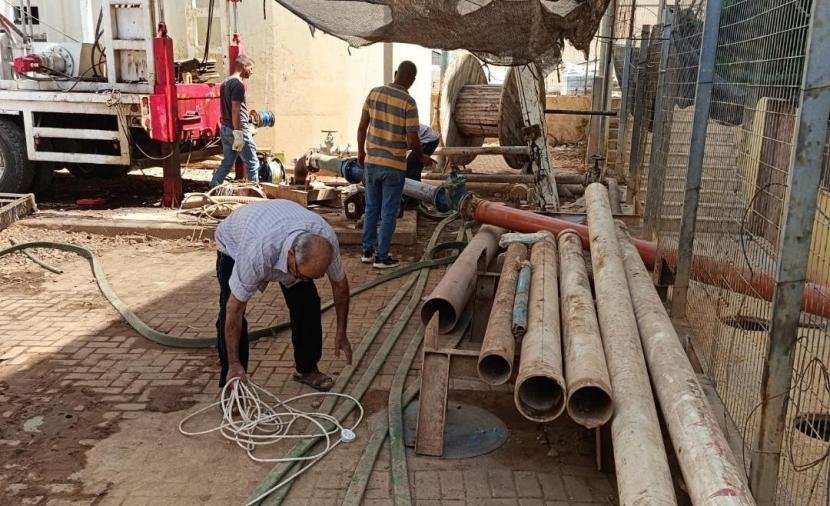
Work at the station is proceeding through coordination with relevant parties and international partners within the framework of emergency response and early recovery pathways for the damaged sanitation system. The design capacity of the Sheikh Ajlin plant is approximately 75,000 cubic meters per day.
Before the current conflict, the facility received wastewater flows from Gaza City and treated the majority of them. It also diverted between 20,000 and 25,000 cubic meters daily to the main treatment station east of Bureij. Currently, however, only about 12,000 cubic meters are generated daily in Gaza City, all of which is discharged untreated due to the widespread destruction of the system.
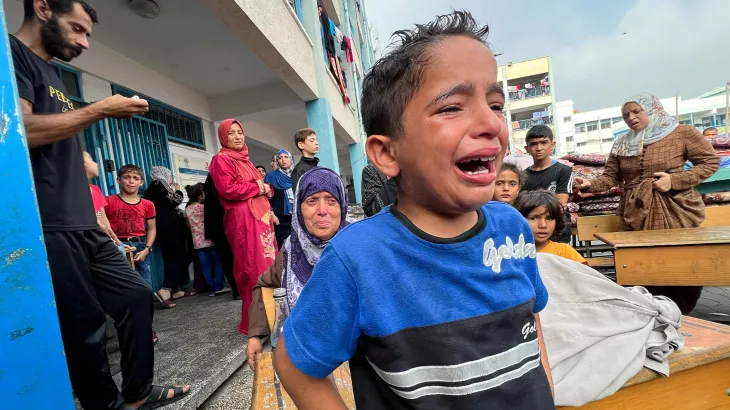
The authority noted that these conditions persist amidst difficult humanitarian circumstances and dense populations of displaced persons. Consequently, the first phase of partial rehabilitation is underway, funded by approximately two million dollars from the International Committee of the Red Cross. This stage aims to restore basic components and achieve a treatment capacity of roughly 22,000 cubic meters per day.
Simultaneously, the Water Authority is coordinating with UNICEF to secure funding of 15 million euros from the German Development Bank (KfW). This second phase targets gradually increasing operational capacity until the plant reaches its full design potential.
This rehabilitation project is part of a wider strategy led by the Water Authority to restore sanitation functions across Gaza. The approach involves prioritizing key infrastructure and driving reconstruction efforts in coordination with the Coastal Municipalities Water Utility, international partners, and implementing agencies.
These collective efforts focus on reducing the discharge of untreated wastewater, minimizing health and environmental hazards, and progressively restoring sanitation services to provide greater protection for residents and the ecosystem.
This report was produced in the Gaza Herald newsroom.